
Refiners told to build up oil stocks


Play
Energy Ministry has more measures in store if conflict breaks out in Middle East
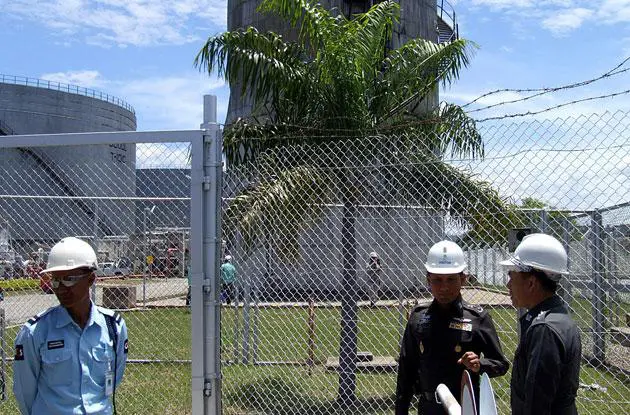
Oil refiners in Thailand have been asked to increase inventories voluntarily, as the first among measures to be adopted in light of growing tensions in the Middle East.
Energy permanent secretary Norkun Sitthiphong said the ministry had several more measures in store, which could lead to a cut in consumption, a ban in crude- and refined-oil exports, and a relaxation in fuel standards. They would be implemented according to the tensions.
Hit by sanctions over its nuclear programme and amid the looming threat of a military strike, Iran has been threatening to shut down the Strait of Hormuz, a choke point between the Persian Gulf and the Arabian Sea. The closure could cut off access to 20 per cent of oil shipped around the world, which would send fuel prices skyrocketing. Economists and oil analysts foresee a barrel of crude soaring to US$200 (Bt6,000) or more if a military conflict erupts.
In 2011, Thailand’s average daily crude-oil import exceeded 800,000 barrels. Thailand has sought voluntary cooperation from refiners in stocking up inventories of crude and refined oil, to protect itself against possible supply disruptions. Energy Minister Arak Chonlatanon yesterday said refiners were capable of raising the inventory from 55 days of crude oil supply to 64 days.
Energy Business Department director-general Viraphol Jiraprad-itkul said that refiners were currently required to stock crude oil at 5 per cent of refining capacity, enough for 18 days of consumption. Excluding deadlock or dirty crude that needs extra refining, stocks ready for use would last only 12 days. But thanks to working reserves – or crude for refining – total crude-oil inventory would last about 23 days.
Meanwhile, refiners are required to stock refined oil for 19 days of consumption. This includes oil in transit, normally about 8.45 million barrels.
Viraphol noted that of the extra reserves for an additional nine days of consumption, refiners could build up working reserves of 1.4 million barrels, which is enough to cover two days of consumption. Meanwhile, some unused oil tanks would be cleaned and ready for 4.68 million barrels, to cover seven days of consumption.
Surong Bulakul, chief executive officer of Thai Oil, said the inventory build-up could be done immediately and refiners would prepare unused tanks and gradually fill them up. Thai Oil has also switched from spot purchases to long-term contracts.
“There is no specific time frame when inventory should be raised to cover 64 days of consumption. It depends on each refiner’s capacity,” he said. Higher oil prices are spiking the price of liquefied petroleum gas (LPG). As Thailand has to import part of its LPG requirements at the global price for sale at a lower price, the Energy Policy Administrative Committee yesterday decided to raise the Oil Fund’s three-year borrowing ceiling from Bt10 billion to Bt30 billion. This is to help cover the increasing subsidies of about Bt23 per kilo, Arak said.
LPG in February averaged $1,022 per tonne. As more vehicles are turning to LPG to save fuel costs, Thailand had to import more than 160,000 tonnes last month, above the 2011 monthly average of 120,000 tonnes. While the global LPG price is expected to rise further to $1,210 this month, the import volume is expected to hit 180,000-198,000 tonnes as the first and sixth gas-separation plants shut down for maintenance.
The committee yesterday also resolved to slap a higher levy on LPG users. From March 15 to April 15, for every kilo of LPG sold for transport use, the Oil Fund will receive Bt2.1027, up from Bt1.408 at present. The retail price will then rise by 75 satang per kilo to Bt20.38 or 41 satang per litre to Bt12.58. The Oil Fund subsidy for natural gas for vehicles will also be cut from Bt1 per kilo to 50 satang. This will push up the retail price of NGV by 50 satang per kilogram to Bt10.
