
Investment guru favours diversity, physical gold amid US-fuelled volatility
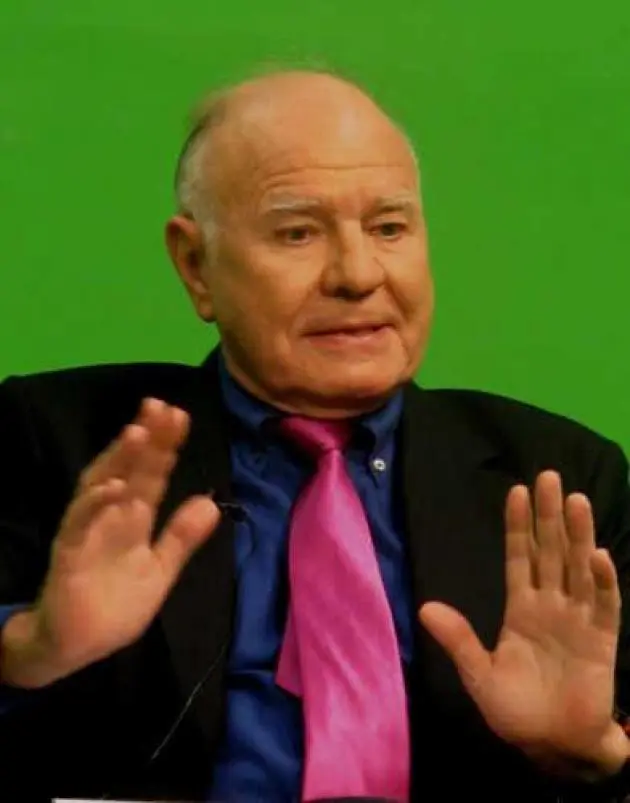


Marc Faber, an internationally renowned guru on cross-border investments, has some advice during this time of unprecedented volatility in global financial and capital markets.
"Basically, what we have seen in the world are the consequences of the crisis the US and world faced in 2008-09 caused by excessive debts brought about by artificially low interest rates.
"For the last four years, the US Fed Fund Rate has been essentially zero, and we have a massive money-printing, monetary inflation that creates a huge pool of liquidity.
"The [US Federal Reserve’s] goal is to lower long-term interest rates via the massive asset-purchase programmes called quantitative easing [QE], but it seems it has lost control of the interest-rate direction" after bond yields shot up, pointing towards a higher long-term rate, whereas short-term rates remain at or near zero.
Regarding the September 17-18 meeting of the Federal Open Market Committee on QE tapering, "I think maybe they will taper 5 or 10 or 20 billion dollars off the current $85-billion monthly purchase of assets, and they would say they will reassess the situation depending on economic and market conditions.
"I believe the US economy is weakening, and if it gets worse they will have to even increase the purchases, maybe even to $150 billion a month.
"In terms of investment, there is nothing safe any more. The US money-printing has distorted all asset prices while cash in the bank has not given you any return when inflation is adjusted. Inflation in Thailand is running at 10 per cent per annum. I don’t look at the government’s statistics. All governments around the world lie" about inflation.
"My investment strategy during this time is that you have to diversify and minimise your risks from economic, political, geopolitical and other factors. Your portfolio should include properties, stocks and equities, corporate bonds, gold and silver, plus cash. It should be 25 per cent of each, or 125 per cent – just to mimic the US accounting standard where things now do not add up.
"Regarding Thai stocks, we bottomed out in November 2008 and peaked with the SET Index at over 1,600 in May this year. The bull is over four years old. In Thai baht, stocks were up over 300 per cent and in dollar terms, they’re up over 400 per cent.
"Thai stocks are now not cheap, but the economic cycle has seen expansion topping four years. I own a lot of Thai shares but I don’t think Thai stocks will go up much [from the current SET Index of around 1,400]. Good stocks like Kiatnakin Bank and CP Food have fallen by more than 50 per cent.
"On properties, we have seen tremendous speculation on Thai real estate as prices have gone up significantly in Chiang Mai, or areas bordering Laos, Cambodia and other countries, but if you look at Hong Kong, Singapore, London, or New York’s Manhattan, they are extremely expensive compared to Bangkok’s high-end condos, which are now not cheap either by local standards.
"On gold and silver, I think people should have 20 per cent of their money in physical gold, not gold papers. I would put the gold bars into deposit boxes at banks. Don’t speculate but buy regularly and keep them safe. We live in a volatile period. Gold is not like other commodities, it’s the only honest currency when paper currencies are not.
"On corporate bonds, I like issues from Russia, Kazakhstan and India with yields of 5-6 per cent, but they are not 100 per cent safe unless they are triple-A. Corporate bonds have an equity character. They don’t move much when stock markets crash. When things go bad, government bonds on the other hand tend to go up in value because of flight to safe havens.
"In terms of cash and paper currencies, I like Malaysian ringgit and Singapore dollars, while the Thai baht is just OK."
