
Political unrest could affect tourism, association warns
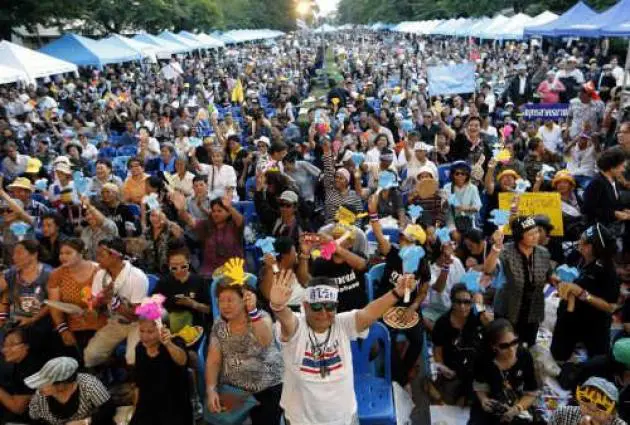


Political demonstrations could have a negative impact on country's tourism, especially if the situation turns violent, Sisdivachr Cheewarattanaporn, president of the Association of Thai Travel Agents (ATTA), has warned.
Key inbound markets for Thailand’s tourism industry – Japan, South Korea and China, which make up 30 per cent of total foreign arrivals – could be especially affected, as they are key drivers for the country’s tourism growth, said Sisdivachr. Those three markets are especially important at the present time, as arrivals from the European Union are down because of its economic downturn.
The Tourism Authority of Thailand (TAT) projects 24.5 million foreign-tourist arrivals this year. Among Asians, Japanese tourists are the most sensitive to economic change.
Sisdivachr said Thailand’s political impasse had so far only slightly affected arrivals to the country, with the number of forward bookings during this year’s high season dropping by only 5 per cent compared with the same period last year. However, he said foreign travel agents were keeping a close eye on the country’s political unrest in case it turned violent.
"When political demonstrations start, they are likely to have a negative impact on the tourism industry – undermining tourists’ confidence," he said.
Local tour operators, said Sisdivachr, had also expressed concern that violence could lead to casualties and travellers from key markets would be warned not to come here.
Sisdivachr recalled the political chaos between the red and yellow shirts in 2008, after which the tourism industry was severely hit – taking six months to recover. Package tours to Thailand were affected the most, with almost 100 per cent of business lost. Many foreign tour agents have quit doing business in Thailand – permanently as well as temporarily, he added.
Sisdivachr urged demonstrators to protest peacefully and not to damage downtown areas and tourism sites – the heart of economic activity.
The TAT projects 1.5 million Japanese arrivals this year and 1.3 million from South Korea, while arrivals from China are expected to be between 4.3 million and 4.5 million. New Chinese legislation on outbound "zero-dollar tours" from that country is expected temporarily to affect the number of arrivals from there.
The new legislation, which took affect on October 1, saw the number of Chinese outbound arrivals to Thailand on package tours drop by 70 per cent, a decline of between 40,000 and 50,000 arrivals in October – down from the average of 140,000-150,000.
TAT offices in South Korea and Japan are also worried about the political situation hurting tourism from those markets. They said domestic politics was the main threat to inbound tourism to Thailand from those two nations. However, the TAT’s office in Kunming said it believed unrest in Thailand would not adversely affect outbound tourism arrivals from China as instability in this country was nothing new.
Nittaya Amubhitaya, director of TAT’s Tokyo office, said that to date, the Japanese Embassy in Thailand had only posted warnings on its website telling people to avoid areas where political protests were taking place. As long as there is no violence, Japanese arrivals to Thailand will not be affected, she said.
Meanwhile, Sutapa Amornvivat, chief economist and executive vice president of the SCB Economic Intelligence Centre (EIC), said she believed political instability in Thailand would only have a short-term impact on business, as many foreign companies had remained in the country despite political instability over the past decade. However, the Kingdom has lost opportunities to attract new local and foreign investment, she added.
