
New Zealand's major business sectors seek bigger footprint in Asean


New Zealand's key business sectors ranging from dairy, food and tourism to the aviation industry are keen on further expansion into the Asean region, including Thailand, to cash in on growing numbers of middle-class people and the upcoming integration of
As this year marks the 40th anniversary of the official relationship between New Zealand and Asean, businesses in that country are shifting their focus more to this region and its large population.
During a meeting in Auckland last week with journalists from Asean countries, New Zealand Prime Minister John Key described Asean markets as fast-growing economies that offered huge opportunities for his country’s economy in the future.
Tony Nowell, chairman of the Asean New Zealand Business Council, said what businesses were looking for after the integration of the Asean economies was a free flow of labour.
"So we are in discussion with senior officials about a special travel card to apply in Asean countries, similar to the Apec Business Travel Card, which [provides] businesspeople with streamlined access to participate and engage in trade and investment activities in Asean countries," Nowell said.
Private enterprises in New Zealand are also eager to work with local businesses in Asean including Thailand.
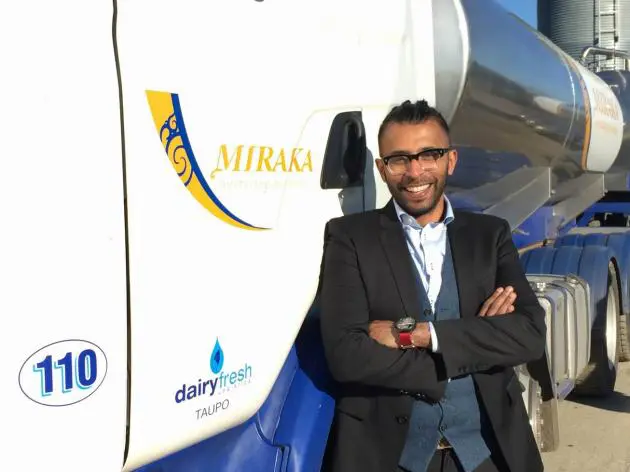
One of these is Miraka, a Maori-owned dairy company based in Taupo, North Island. It is strengthening its focus on Southeast Asia and looking for further development and partnerships in the region. Chief executive officer Richard Wyeth said that since 2011, milk supplied by its 100 contract farmers within an 85-kilometre radius of the facility had been exported to more than 23 countries.
"Despite being a young enterprise, 99 per cent of total annual revenues are from international markets, while of that which are in Asia [accounted for] around 60-70 per cent, and 30 per cent [was exported to] Southeast Asian countries," he said.
Kusal Perera, Miraka’s general manager for business development and innovation, said: "For Thailand, we expect to see concrete progress within the next two years through local businesses and local consumer brands to build a strong dairy-nutrition platform. UHT [ultra-high temperature] milk is anticipated to grow, so the company is also seeking to work with strong local players like Dutch Mill."
Fonterra, a leading supplier of dairy ingredients to food companies, is also planning expansion of its UHT site in Waitoa, also on the North Island, to increase its production capacity, currently estimated at 100 million litres of milk a year. The investment will begin in the near future after the company anticipated increases in demand from Asean countries.
New Zealand’s biggest snack-food producer, Griffin’s, is also studying the possibility of developing brands and products to suit the tastes of Asean consumers, particularly after the company was acquired last year by Philippines-based Universal Robina Corporation.
Griffin’s chief executive officer Alison Barrass said that through the network of Universal Robina, which has a presence in Thailand, Vietnam, Indonesia, Malaysia, Singapore, mainland China and Hong Kong, her company wanted to take the opportunity to expand by developing brands and products for Asean consumers.
The tourism and aviation sectors in New Zealand have also expressed interest in partnering with Asean enterprises. In January, Singapore Airlines and Air New Zealand began an alliance. Through this partnership, Singapore will be the aviation hub for Southeast Asian travellers coming to New Zealand. With this alliance, both airlines aim to increase their capacity between New Zealand and Singapore by up to 30 per cent year-around over time.
Andrew Wallace, in charge of aircraft sales at Pacific Aerospace, said his company was seeking more clients and partners to deliver its multi-role aircraft, the P-750 XSTOL, in Asean countries.
Though Thailand has not purchased any units of this model, the Royal Thai Air Force has purchased 55 of Pacific Aerospace’s CT/4 aircraft for pilot training. Of the total order, 45 are in service.
