
New National Savings Fund begins registrations
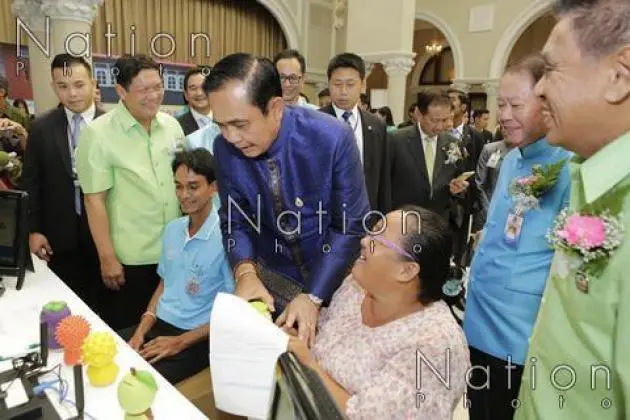


The National Savings Fund (NSF) programme saw 170,000 people keyed into the system as of noon yesterday, along with walk-in registrations via the three state banks that began to offer the scheme yesterday.
This is about 0.68 per cent of the total number of Thais the NSF is expected to be a retirement safety net for. This group includes the almost 25 million self-employed and non-formal workers who are not covered under state pension programmes or private provident funds.
Around 39 million of the Kingdom’s 68 million people are in the workforce.
The government expects about 3 million people to register with the NSF in the first five years. The government will contribute Bt2.7 billion to the scheme in the same period. The total budget for the programme was set at Bt22.537 billion, or about 0.18 per cent of gross domestic product.
"The government will continue to encourage working people to save money via other measures and more schemes of this kind will be introduced in the next period, such as investment funds," Prime Minister General Prayut Chan-o-cha said as he officially kicked off the programme yesterday.
About 144,606 people have registered with the NSF via the Bank for Agriculture and Agricultural Cooperatives (BAAC) so far, about 100,000 of them in the Northeast. Another 30,000 are expected to enter the new system as they exercise their right to choose between it and the state pension savings fund under Article 40 the Social Security Act.
People cannot receive benefits from both schemes at the same time. About a million people are eligible to transfer their savings for state pension schemes or private provident funds to the NSF under Article 40 if they choose to do so but they will not receive the government’s contribution to those savings plans under the NSF scheme.
The BAAC expects to register about 600,000 NSF members by the end of this year and 1.5 million by the end of 2016.
The registration numbers from the Government Savings Bank and Krungthai Bank were not fully rounded up yesterday. The GSB expects about 500,000 NSF registrations by the end of the year.
Thai workers aged 15-60 in the informal sector including farmers, housewives, freelancers, street vendors, doctors, lawyers, politicians and taxi drivers are eligible for the NSF. The must make a minimum monthly contribution of Bt50, with the maximum annual contribution set at Bt13,200.
Govt contribution
NSF members are not required to contribute the same amount every month and they can also suspend contributions, but they will lose the government’s matching contribution of they do so. The government contribution depends on the fund member’s age and will be adjusted every five years according to the economic conditions at the time.
For NSF members aged 15-30, the government contribution will be 50 per cent of the member’s contribution but not more than Bt600 per year. For those aged 31-50, the government contribution will be 80 per cent but not more than Bt960 per year. The government will provide 100 per cent matching, to a maximum of Bt1,200 per year, for those who are over the age of 50.
Somporn Chitphentom, secretary-general of the NSF, said a person who saved more would receive more from the NSF. A person who contributes Bt1,000 per month to the NSF from the age of 15 will receive around Bt7,400 per month from the age of 60 until death. People who start saving with the NSF at the age of 30 will receive around Bt4,400 per month.
Deputy Finance Minister Visut Srisuphan said countries with strong economic stability often had high levels of citizens’ saving, so this kind of behaviour should be promoted in Thailand, which becoming an ageing society.
