
TMB aims for right mix of digital and branch banking


Play
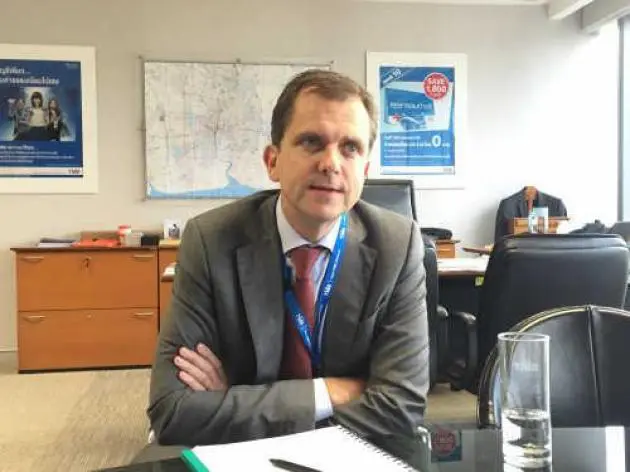
TMB BANK'S new chief of retail banking says the bank will offer the right mix of branch-based and digital services to make it customers' preferred bank.
Roel Huisman joined the bank in July after Dutch multinational ING Group, a strategic shareholder of TMB Bank, sent him to help reinforce the latter’s retail banking business.
Huisman said ING was a market-leading branch-based banking group between 2000 and 2005, and was the most advanced and forward-looking in Internet and mobile banking.
In the Netherlands, ING offers digital day-to-day transactional banking, but also has a footprint in branches to serve all customer segments.
At ING, he worked in Austria as chief executive of a bank that was 100 per cent digital, which became the market leader in deposits and savings and was now expanding into other products.
For Thailand, he noted that TMB was in a different position, even though it is a big player. TMB is a front runner in terms of innovation and going new ways, but it needs new product models.
“What I have seen in a lot other markets is that there is a certain tipping point where the mobile starts to [take] off, and I have the impression that we are coming close to that tipping point in Thailand as well. Mobile is really becoming dominant in Thailand,” he said.
This year, the bank launched the TMB Touch mobile application, which now has about 250,000 users, and has seen significant growth in the past few months, he said.
Before introducing TMB Touch, the bank had Internet banking. Now usage of the mobile app is growing faster than Internet banking, he said.
TMB Touch is on course to become one of the big things for 2016 and the next few years, he said. TMB will continue to build on its strategy of digital banking via mobile devices, combining easy transactions with the most relevant advice to become the preferred bank.
He said TMB could become a digital bank while maintaining its branches as part of the strategy.
If it works well, customers will open accounts and come to the branch to learn how to use the Internet and mobile banking. In the entire lifetime of the customers’ relationship with the bank, they will only come to the branch once or twice to consult staff about buying a home or to get investment advice.
He said in the future, bank branches would play a different role than they do now. The branches will focus on advice, adding value through personal touch by conversations between bank employees and consumers.
He said TMB had enough branches but wanted to change their role.
To him, digital banking is also a branch. The process is digitised end to end, without paper forms, or postal deliveries that take two or three days.
“It’s one big mix. That’s what makes the whole topic challenging to the bank, because you need to think through the mix of all the channels, which is going to lead to the easiest possible customer experience,” he said.
Digital will be dominant in handling transactions. In sales, it will be different from product to product. For mortgages, branches will continue to be the dominant sales channel. But for services, digital should be the leading channel in the future. Sales will be handled differently from product to product.
He believes that small lending such as credit cards will become products for digital banking, for which TMB needs to have an online infrastructure. But for business lending and home loans, customers will still want to talk to bank employees, because this comforts them.
