
Trump, Israel tighten Iran pressure before Hormuz deadline
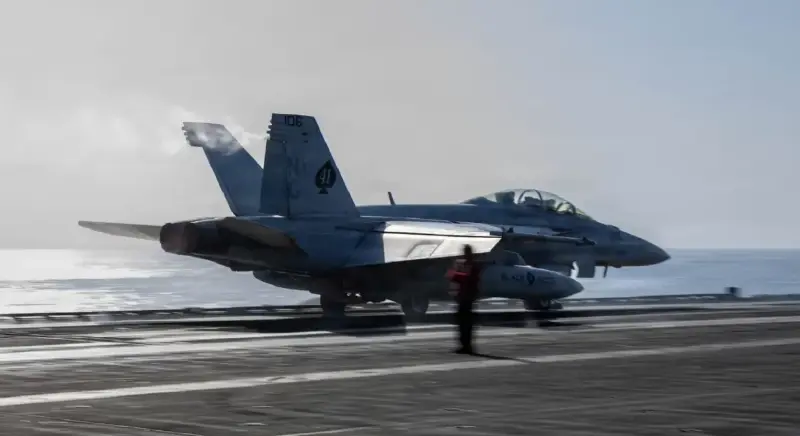


Tehran warned of wider regional turmoil as Israel readied possible energy strikes and Iranian and US teams searched for a missing American crew member.
- The US and Israel have warned Iran that it must reopen the strategic Strait of Hormuz or face strikes on its energy infrastructure.
- President Trump issued a public ultimatum giving Iran 10 days to make a deal or open the strait, with a 48-hour warning before severe retaliation.
- A senior Israeli defense official stated that Israel is preparing for potential strikes on Iranian energy facilities and is awaiting approval from the United States.
- The pressure comes amid an ongoing conflict where Iran has virtually shut down the strait and recently downed two U.S. warplanes.
US President Donald Trump and Israel intensified pressure on Iran on Saturday (April 4), warning Tehran that it must reopen the strategic Strait of Hormuz or face strikes on its energy infrastructure, as Iranian and US forces searched for a missing American crew member from one of two downed warplanes.
As the war moved into its sixth week, Washington faced mounting risks on several fronts: the possibility that a US service member may still be alive and evading capture inside Iran, little prospect of imminent peace talks, and opinion polls showing weak public support for the conflict.
Since the war began with a joint US-Israeli bombardment of Iran on February 28, Trump has swung repeatedly between suggesting diplomacy may still be possible and threatening to bomb the Islamic Republic “back to the Stone Ages”. On Saturday, he said the latest deadline he had set for ending the war was rapidly approaching.
In a post on Truth Social, Trump said he had given Iran ten days to “MAKE A DEAL or OPEN UP THE HORMUZ STRAIT”, adding that there were “48 hours before all Hell will reign (sic) down on them” and ending the message with: “Glory be to GOD!”
In what appeared to be a further effort to tighten the pressure after Trump’s ultimatum, a senior Israeli defence official said Israel was preparing possible strikes on Iranian energy facilities and was waiting for approval from the United States. The official said any such attacks could come within the next week. Trump has also previously threatened to hit Iranian power plants if Tehran refused to comply.
Iran, however, warned both Washington and Israel against broadening the war. Iranian media reported a warning that the “entire region will become a hell for you” if the attacks escalated further.
Even so, Iran’s leadership stopped short of fully closing the door to diplomacy. Foreign Minister Abbas Araqchi said peace talks with the United States remained possible in principle through Pakistani mediation, although he did not indicate that Tehran would accept Trump’s terms.
“We are deeply grateful to Pakistan for its efforts and have never refused to go to Islamabad,” Araqchi wrote on X. “What we care about are the terms of a conclusive and lasting END to the illegal war that is imposed on us.”
Araqchi also warned the United Nations after what he described as a fourth attack near the Bushehr power plant on Saturday. According to Iranian state media, he said in a letter to the U.N. that the situation had become “intolerable” and posed “a serious risk of radiological release”.
The conflict has already killed thousands, triggered an energy crisis and raised fears of lasting damage to the global economy. Iran has virtually shut the Strait of Hormuz, through which roughly one-fifth of the world’s oil and liquefied natural gas normally passes.
Iran has continued to launch drones and missiles at Israel and has also targeted Gulf states allied to Washington, although those countries have avoided entering the war directly for fear of a broader regional escalation.
Iranian state television said the military had launched drones at US radar sites, a US-linked aluminium plant in the United Arab Emirates and the US military headquarters in Kuwait in retaliation for deadly strikes on Iranian industrial centres.
Earlier, Iran also used a drone to hit an Israel-affiliated vessel in the Strait of Hormuz, setting it ablaze, Iranian state media reported, citing the commander of the Revolutionary Guards’ navy.
On Saturday, Yemen’s Iran-aligned Houthis said they had attacked Israel with a ballistic missile and drones in a joint operation with Iran’s Revolutionary Guards, the Iranian army and Lebanon’s Hezbollah. The group did not provide evidence of the damage, and Israel did not confirm the attack.
The downing of two US aircraft underscored the danger still facing American and Israeli pilots, despite repeated assertions by Trump and Defence Secretary Pete Hegseth that US forces had full control of Iranian airspace.
Officials in both countries said Iranian fire had brought down a two-seat US F-15E fighter jet on Friday, while a US official said one crew member had been recovered in a search-and-rescue operation.
Two Black Hawk helicopters involved in the search for the second crew member were also hit by Iranian fire, but managed to leave Iranian airspace, US officials said.
Iran’s Islamic Revolutionary Guard Corps said it was combing a south-western area near the crash site, while a regional governor promised a commendation to anyone who captured or killed “forces of the hostile enemy”.
In a separate incident, US officials said an A-10 Warthog attack aircraft was hit and crashed over Kuwait, though the pilot managed to eject.
After weeks of being battered by US and Israeli air power, many Iranians celebrated the shootdowns as a sign that the country could still strike back. Khatam al-Anbiya, Iran’s joint military command, said it had deployed a new air-defence system on Friday that brought down a US fighter jet and also targeted three drones and two cruise missiles.
“The enemy should know that we rely on new air-defence systems built by the young, knowledgeable, and proud people of this country,” a Khatam al-Anbiya spokesperson said, according to Iranian state media, adding that they were being unveiled “one after another in the field”.
The Revolutionary Guards also said they had targeted multiple locations in Israel in a new wave of missile and drone attacks. Israeli media reported that two warheads from an Iranian cluster missile landed near Israel’s Kirya military headquarters in Tel Aviv. Later on Saturday, the Israel Defence Forces said more missiles had been launched from Iran towards Israel.
Iranian state media also reported airstrikes on a petrochemical zone in the country’s south-west, where five people were said to have been injured. The reports later said the fire had been brought under control.
Israeli Prime Minister Benjamin Netanyahu said Israel had struck the plant. An Israeli military spokesperson said the site produced materials used for explosives and missiles.
At the same time, Israel has continued a parallel campaign against Iran-backed Hezbollah in Lebanon, after the group opened fire on Israel in support of Iran. Early on Saturday, Israel’s military said it was hitting Hezbollah infrastructure sites in Beirut. Later, it said an Israeli soldier had been killed in combat in southern Lebanon.
Reuters
