
AIS to mount subsidised handset promotion, while DTAC vows to fight for market position


Play
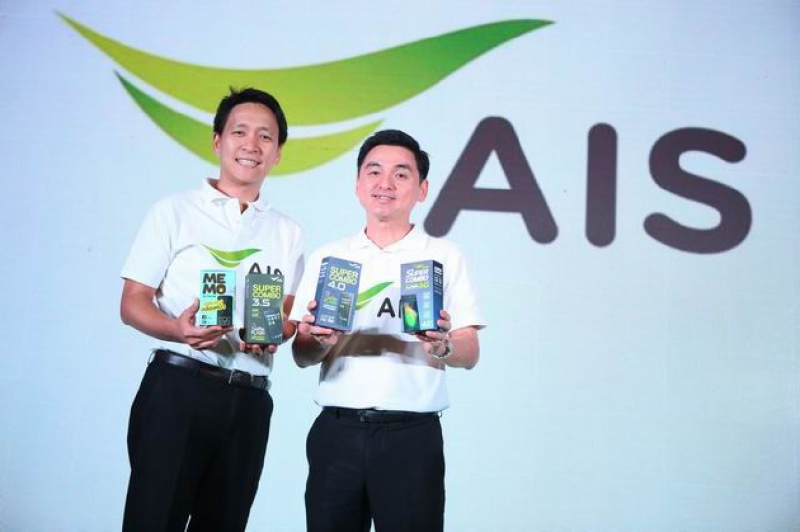
ADVANCED Info Service (AIS) will offer 12 million subsidised handsets, which are expected to cost it at least Bt10 billion, from December 25 to its 2G-900MHz subscribers to get them to upgrade to its 3G or 4G wireless broadband services before the approac
Meanwhile, Total Access Communication (DTAC) yesterday affirmed its long-term commitment to the telecom market and announced its readiness to fight at full force to defend its position.
Both AIS and DTAC failed to clinch licences on the 900-megahertz spectrum at last week’s auction.
AIS has around 38 million subscribers, mostly using its third-generation cellular service, while 11 million are still using 2G. Of the 2G subscribers, 1 million have yet to migrate from AIS’s 900MHz network, and the rest are on the wireless broadband network of its subsidiary Advanced Wireless Network (AWN) but still roam with the 900MHz network.
AIS 2G customers can get a basic 3G handset worth Bt890 by paying Bt100 for airtime for the first time. However, they must agree to stay with the service for at least a year.
They can also get a 3G smartphone worth Bt1,690 if they pay Bt790 worth of airtime and those buying airtime worth Bt1,290 will get a 4G smartphone.
AIS chief executive officer Somchai Lertsutiwong said this was a better way to “return happiness to the people” than paying an exorbitant price for a 900MHz licence.
AIS will also allocate its existing bandwidth on the 1,800MHz and 2.1-gigahertz spectra to serve wireless broadband subscribers after failing to grab a 900MHz licence at the auction.
AIS has asked the National Broadcasting and Telecommunications Commission to allow it to keep providing service on 900MHz for another eight months to complete its subscriber migration. But NBTC secretary-general Takorn Tantasith yesterday said the request could not be granted. The 2G service will be switched off once either of the two winners of 900MHz licences pays the first instalment of the upfront fee.
To strengthen its service, AIS will sign a contract early next year with TOT for a partnership to provide 3G on the 15MHz the state telecom agency holds on the 2.1GHz frequency. AIS will deploy 80 per cent of the bandwidth to offer the service.
No accretive value
Somchai said AIS decided to stop bidding at last week’s auction after the price neared Bt76 billion, more than 470 per cent of the minimum starting bid, as that price would not yield accretive value to the company and its shareholders.
He gave his assurance that AWN had sufficient frequencies to develop a quality network for its customers. It has 15MHz of the 2.1GHz spectrum and 15MHz of the 1,800MHz frequency.
Meanwhile, DTAC chief executive Lars Norling yesterday said the auction results would not affect its goal of becoming the leading operator of both 4G and 3G services.
“You are going to see DTAC fighting like never before,” he said.
Norling said DTAC aimed to have 4.5 million 4G subscribers by the end of next year, up from the present 2.2 million, through further network expansion and offers of competitive handset and airtime packages. The company’s capital expenditure next year is expected to be the same as this year’s Bt20 billion.
Norling said DTAC had enough spectrum to provide quality service.
DTAC is also in talks with CAT Telecom on a possible partnership to provide 4G service on the state agency’s idle 20MHz of the 1,800MHz spectrum on a wholesale/resale basis.
DTAC is counting on the rapid expansion of 4G service on the 1,800MHz spectrum, covering Bangkok and its vicinity, and on 2.1GHz currently covering Bangkok and 40 other provinces.
It will add 2,200 4G-1,800MHz cell sites in major provinces by early next year and expand 4G-2.1GHz service in all 77 provinces by midyear.
Sigve Brekke, president and CEO of Telenor Group, strategic partner of DTAC, said the group remained committed to the development of a digital Thailand and would continue to invest for the betterment of mobile services and Internet for all.
He added that DTAC had a strong position in the market and would be able to leverage its current spectrum portfolio to offer competitive 4G services in the years to come.
He also encouraged the NBTC to establish a clear road map for utilisation of spectrum including planning for auctioning of more licences on the 1,800MHz band along with the 850MHz, 700MHz and 2.6GHz spectra.

