
Thais warm to global auctions
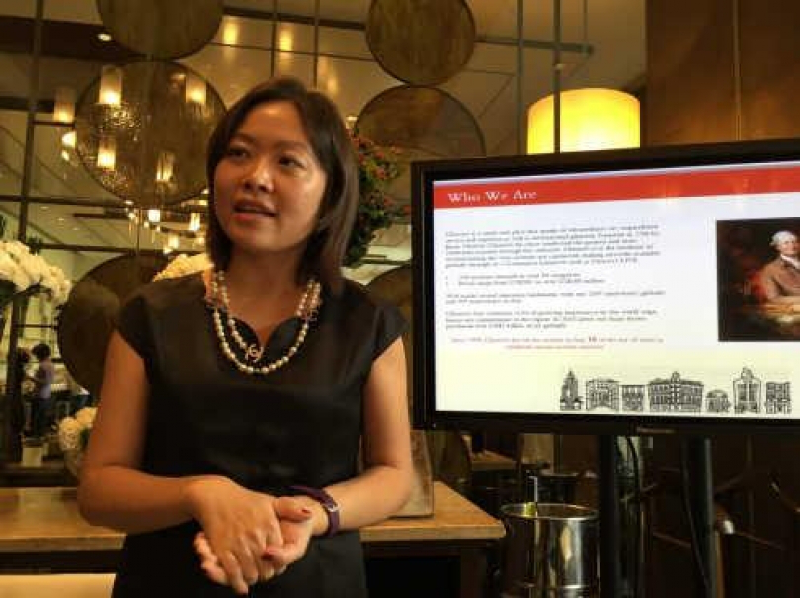


THAI CLIENTS’ participation in international auction sales will show growth potential over the next few years when the local market environment becomes stable, said Julia Hu, Christie’s vice president in charge of regional offices in Asia.
This growth will be in line with Asia in general, which has posted a significant increase in the sales contribution to Christie’s global auction business, from only 12 per cent in 2008 to 22 per cent in 2011, and 28 per cent last year, or around US$2 billion (Bt35 billion). In five years, the auction house hopes to drive Asian clients’ sales contribution to 30 per cent or above, Hu said.
In contrast, the contribution from Europe to Christie’s sales has declined gradually, from 49 per cent in 2008 to 39 per cent in 2011 and 36 per cent last year. Meanwhile, the contribution from North America also declined slightly from 39 per cent in 2008 to about 36 per cent last year, while Asians have become more and more active in global auction markets.
Hu said Thai collectors were able to cope with barriers such as language to engage in international auction events. They are also familiar with the auction process and able to submit bids even for high-priced items. They find information about luxury products and artworks and make their own judgements before participating in the auction process. “Since Christie’s set up its representative office in Bangkok about 18 years ago, the business in Thailand has surged by 23 times,” she said.
Hu said Christie’s expected transactions by its Thai clients to be stable over the next two to three years, and to reach double-digit annual growth once the current market difficulty settles down.
She added that in times of economic difficulty, rich families in Thailand were looking to park their money somewhere. They bid for luxury and art objects either for investment purposes or to pass them on to the next generation.
Hu said Christie’s expected auction transactions from Asia to be stable this year, but the region is expected to show strong annual growth once the global economy stabilises.
“Amid [the] economic difficulty, we will focus on strengthening the relationship with clients via providing high-quality objects to meet their demand. Thailand, however, has a lot of potential to grow in the future,” she said.
Christie’s has 11 offices in Asia: in Bangkok, Kuala Lumpur, Singapore, Jakarta, Hong Kong, Manila, Taipei, Shanghai, Beijing, Seoul and Tokyo.
The company’s regional headquarters is in Hong Kong, and there are two auction venues, the biggest in Hong Kong and the other one in Shanghai.
Since its inaugural Hong Kong auction in 1986, the transaction value from Asian auctions increased by about 430 times to $769 million last year.
In Hong Kong, the auctions are conducted twice a year, at the end of May and in November. Between 3,000 and 4,000 objects, including jewellery, watches, art, wines and handbags, are auctioned each time. Participants can bid in writing, by telephone, in the auction room, or online.
Lee William Bingle, Christie’s corporate communications manager for Asia, said e-commerce sales recorded exceptional growth in the first half of this year, almost doubling the equivalent period last year. Asian participation in digital sales increased by 40 per cent, compared with 33 per cent for Europe. Total online sales reached $100 million in the first six months of this year.
In the past, Asian collectors preferred works from artists of their home countries, but as tastes and knowledge evolved, they started looking abroad towards Western art, which now forms a major buying pattern for Asians.
The growth potential in Asia remains robust. The percentage of new buyers from Asia increased by almost 20 per cent in the first half of 2016. For example, Chinese collectors are very active, purchasing works for multiple reasons, from storing their wealth to enriching their collections.
As the digital trend emerges, Christie’s has prepared for the change by investing in online platforms. Bingle said 26 per cent of all new buyers so far this year had made digital transactions. New buyers are willing to try online platforms because of the ease of access as well being able to participate in more than 300 auctions around the world.
He added that Thais were enthusiastic buyers of luxury items, including jewellery, watches and handbags, while there is increasing passion for Asian contemporary arts. Christie’s has acknowledged this interest by eagerly encouraging and advocating products in this field.
“Thailand’s collector base is very international, with an open and knowledgeable collecting culture. Thailand has a long culture of appreciating luxury items like jewellery as well as arts. Moreover, we see solid potential in Thailand’s economy and among its collector base,” Bingle said.
Punchalee Phenjati, vice president of Christie’s Auction (Thailand), said Thai customers preferred luxury items such as jewellery and watches. The company would also like to promote local art so as to bring talented Thai artists to the world market. This will also encourage greater interest among Thais themselves who had previously not appreciated Thai art.
