
China’s top 10 ports cement role as global supply chain hubs
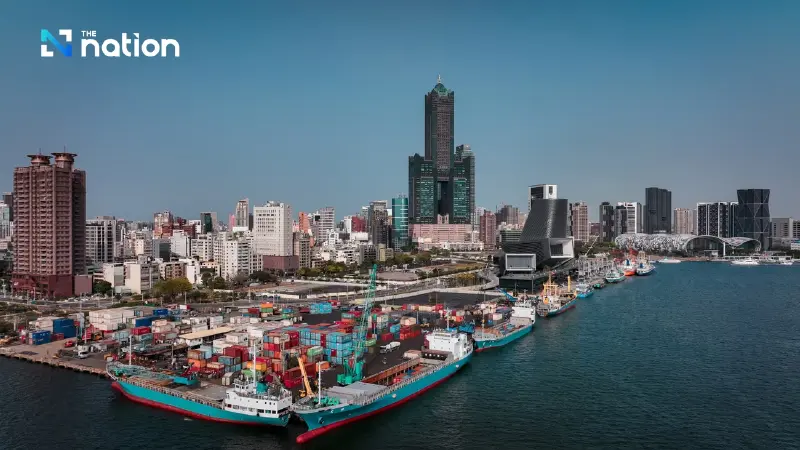


China’s port industry posted strong growth in 2025, with nationwide container throughput rising by 6.8% as its top 10 ports strengthened their role in global supply chains.
- In 2025, China's port industry showed strong growth, with national container throughput increasing by 6.8% and Shanghai Port retaining its title as the world's busiest for the 16th consecutive year.
- The ports are strategically transitioning from serving as the network for the "world's factory" to becoming central hubs in the global supply chain, supported by government policies and their location in major economic zones.
- This enhanced role is driven by a shift in exports towards high-tech products like new energy vehicles and solar cells, as well as investment in "smart" and "green" port technologies to improve efficiency.
China’s port industry demonstrated strong resilience in 2025 despite global economic volatility, with 10 major ports led by Shanghai emerging as key hubs in the global supply chain, according to the Office of Commercial Affairs at the Royal Thai Consulate-General in Chengdu.
The latest data from China’s Ministry of Transport showed that container throughput at ports nationwide reached 354.47 million TEU in 2025, up 6.8% from the previous year. International import and export container volume rose even faster, increasing by 9.8% and exceeding forecasts made earlier in the year.
The top 10 Chinese ports are not only the backbone of China’s port industry, but also important nodes in the global supply chain.
China’s 10 busiest ports by container throughput
- Shanghai Port handled 55.063 million TEU, retaining its position as the world’s busiest port for the 16th consecutive year.
- Ningbo-Zhoushan Port handled 43.87 million TEU, surpassing the 40 million TEU mark for the first time after expanding by 11.6%.
- Shenzhen Port handled more than 35 million TEU, including 33.156 million TEU in foreign trade containers.
- Qingdao Port handled 34.2 million TEU, an increase of 6.3% from the previous year.
- Guangzhou Port handled 27.68 million TEU. When inland waterway transport data is included, the figure exceeds 28 million TEU.
- Tianjin Port handled 20.81 million TEU, although some statistics put the figure at more than 24 million TEU.
- Xiamen Port handled 12.5077 million TEU, up 2.06% year on year.
- Suzhou Port handled 10.21 million TEU, crossing the 10 million TEU threshold for the first time.
- Beibu Gulf Port handled 10.06 million TEU, also exceeding 10 million TEU for the first time.
- Rizhao Port handled 7.37 million TEU, up 9.84% from the previous year.
Outlook for China’s leading ports
Shanghai Port and Ningbo-Zhoushan Port are expected to maintain their global leadership and place greater pressure on Singapore’s port in the years ahead.
Shenzhen Port is likely to benefit from the continued growth of exports in China’s “new three” product categories, particularly new energy vehicles.
Qingdao Port and Tianjin Port are expected to gain support from economic growth in northern China and integrated port reforms in Shandong, which should help drive their next phase of development.
Suzhou Port, as a model for inland river ports, is also expected to continue benefiting from the expansion of exports in the “new three” product groups.
Beibu Gulf Port, seen as a rising growth star, is likely to maintain a high rate of expansion over the next several years.
Overall, China’s port industry is moving from a model based on massive import and export volumes towards high-quality development. Its role is also shifting from serving as the port network of the “world’s factory” to becoming a central hub in the global supply chain.
These 10 leading ports are not only witnesses to that transition, but also key drivers of the change.
Chengdu trade office points to China’s logistics strength
The Office of Commercial Affairs in Chengdu noted that the ranking of China’s top 10 ports by container throughput in 2025 reflected the country’s continued status as one of the world’s most important maritime trade and logistics centres.
Although the global economy is facing uncertainty and international supply chains are being restructured, China’s major ports have continued to record strong growth, particularly Shanghai, Ningbo-Zhoushan and Shenzhen. These ports are closely connected to China’s large manufacturing bases and major economic zones.
A key factor behind the continued expansion of China’s ports is their geographical advantage, combined with support from national strategies. Most coastal ports are located in major economic regions, including the Yangtze River Delta, the Pearl River Delta and the Bohai Rim Economic Zone, all of which are major production bases and export centres.
At the same time, the Chinese government has promoted key policies such as the Belt and Road Initiative, the development of the Guangdong-Hong Kong-Macau Greater Bay Area, and the New International Land-Sea Trade Corridor in western China. These strategies have strengthened the role of ports as gateways connecting China with global trade.
Another notable factor is the growth of exports in the “new three” product categories: new energy vehicles, lithium batteries and solar cells. These products have become important growth drivers for several ports, especially Shenzhen and Suzhou, reflecting China’s export shift from general industrial goods towards more advanced technology and innovation-driven products.
China is also prioritising the development of “smart ports” and “green ports” through the use of artificial intelligence, automation, driverless transport vehicles and clean energy technologies, including LNG and shore power systems. These upgrades are improving operational efficiency, reducing costs and aligning the industry with China’s sustainable development goals.
Competition between China’s major ports and global ports such as Singapore is expected to intensify, particularly as Shanghai and Ningbo-Zhoushan continue to expand their capacity.
At the same time, emerging ports such as Beibu Gulf are rapidly increasing their role through stronger links with ASEAN and southwestern China.
This underlines how China’s port industry is moving more clearly from being part of the world’s manufacturing centre to becoming a hub of the global supply chain.
