
Thailand EV investment tops 137bn baht as BOI targets ASEAN hub
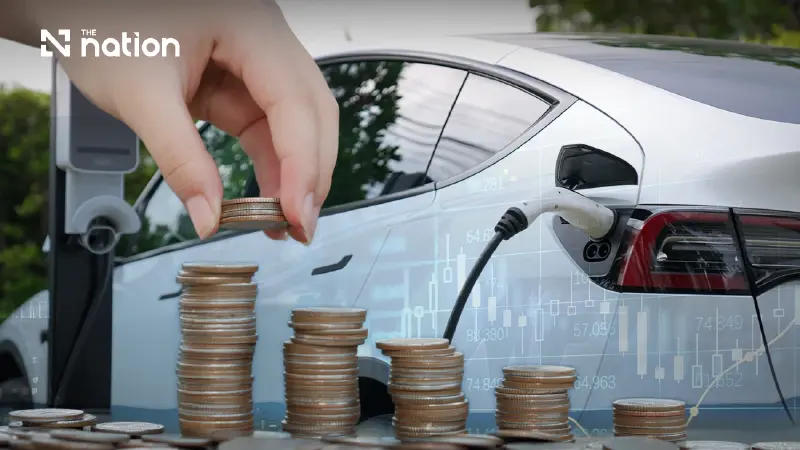


Thailand has approved 198 EV projects worth more than 137 billion baht, strengthening its push to become ASEAN’s electric vehicle hub.
- Thailand's Board of Investment (BOI) has approved 198 projects in the electric vehicle (EV) industry, attracting over 137 billion baht in investment to establish the country as an ASEAN production hub.
- The investment covers the entire EV ecosystem, including vehicle manufacturing, batteries (33.5bn baht), key components, and charging infrastructure with over 22,900 planned outlets.
- Major global automakers such as BYD, BMW, Mercedes-Benz, and Hyundai have established production facilities in Thailand under the BOI's promotion, creating over 16,000 jobs.
Thailand’s ambition to become a leading electric vehicle production hub in ASEAN has gained further momentum, with investment promotion approvals in the EV industry reaching 198 projects worth more than 137 billion baht as of May 2026.
The approved projects cover the full EV ecosystem, from electric vehicle production, batteries and key components to charging stations and battery-swapping facilities, according to Narit Therdsteerasukdi, secretary-general of the Board of Investment (BOI) and secretary of the National Electric Vehicle Policy Committee, known as the EV Board.
The battery electric vehicle (BEV) segment accounts for 39.5 billion baht across 18 projects, while hybrid electric vehicles (HEVs) represent 29.9 billion baht across seven projects. Plug-in hybrid electric vehicles (PHEVs) account for 9.429 billion baht across seven projects, and other EV categories, including electric buses and electric motorcycles, represent 3.1 billion baht across 18 projects.
Investment in batteries and energy storage systems totals 33.5 billion baht across 57 projects. Key EV components, including traction motors, battery management systems and EV power control systems, account for 12.5 billion baht across 49 projects.
Charging stations and battery-swapping projects account for 9.788 billion baht across 42 projects. These projects will support the installation of more than 22,900 charging outlets nationwide, including more than 10,000 fast chargers, helping to strengthen Thailand’s EV ecosystem from production to infrastructure.
Most BEV manufacturers granted BOI promotion over the past three to four years have already started production in Thailand. Mercedes-Benz was among the first, followed by Great Wall Motor, SAIC Motor-CP, BYD, AION Automobile, Changan, EV Primus and, most recently in 2026, BMW, Hyundai Mobility and Omoda & Jaecoo.
Narit noted that measures introduced by the BOI and EV Board had translated into actual investment, manufacturing activity and employment in Thailand. Together, these companies employ more than 16,000 Thai workers, reinforcing the country’s potential as a regional EV production base.
Thai suppliers move into the global EV chain
To help domestic parts makers adapt to technological change and enter global supply chains, the BOI has introduced measures to promote joint ventures between Thai operators and foreign companies. It has also stepped up activities encouraging the use of locally made parts, including Subcon Thailand and Sourcing Day.
Over the past two years, the BOI has organised 18 business-matching events connecting Thai parts manufacturers with EV makers. These activities have generated more than 1,200 business matches involving more than 800 capable Thai suppliers.
The agency expects these matches to create more than 60 billion baht in local parts procurement, opening the way for Thai suppliers to enter next-generation production lines and grow alongside a new wave of EV investment.
Thailand positions itself for clean mobility growth
The transition to electric vehicles is a major challenge for the global automotive industry, but it also presents Thailand with an important opportunity to become a centre for the region’s EV supply chain and ecosystem.
Thailand aims to serve as a platform for international cooperation, enabling both established and new manufacturers from different countries to build stable business bases and expand in the country. The strategy is also intended to create opportunities for Thai people through employment, skills development and the upgrading of local enterprises into new supply chains.
Thailand’s automotive development strategy has progressed through successive product-champion phases, from one-tonne pickup trucks and internal combustion engine vehicles to globally competitive eco-cars. The latest phase focuses on clean-energy and intelligent vehicles, particularly the development of production bases for various types of EVs.

Incentives adjusted to cover every technology
The BOI has adjusted its investment promotion measures to cover all vehicle technologies, allowing manufacturers across the industry to invest and grow in Thailand.
The approach aims to build a fully connected future automotive supply chain, covering vehicle makers, parts manufacturers, batteries, intelligent systems, software, research and development centres, and testing facilities.
The broader goal is to increase the role of Thai enterprises in the global supply chain and support sustainable industrial growth.
The BOI’s approach has helped Thailand maintain its position as the region’s strongest automotive production base and one of the leading bases globally. In the EV segment, Thai consumers have responded strongly.
In 2025, all types of electric vehicles together accounted for more than 44% of new vehicle registrations, compared with just 3% five years earlier. HEVs held the largest share at 21.8%, followed by BEVs at 19.6% and PHEVs at 2.9%.
The figures show that different technologies can advance together, with hybrids expected to play an important role during the transition towards electric mobility.
