
‘Worawat – Bitnance’ Strikes Back with lawsuit against SEC
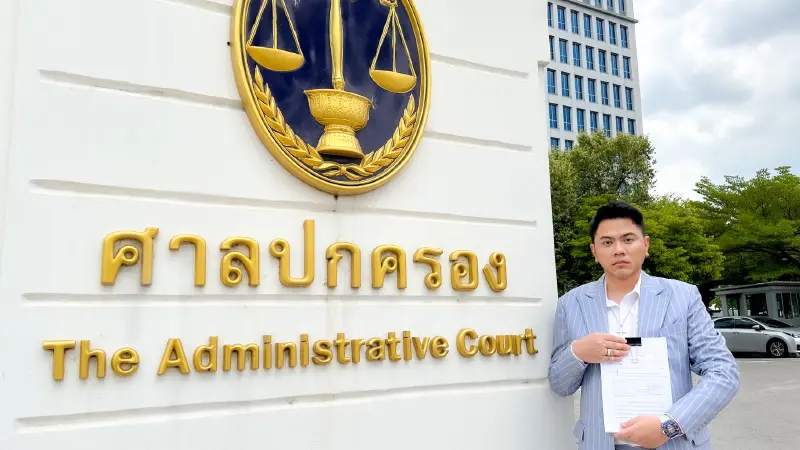


‘Worawat - Bitnance filed a lawsuit against the Securities and Exchange Commission (SEC), its former secretary-general and the SEC committee with accusations of alleged unlawful and dishonest actions and violations resulting in initial damages of over THB324 million.
Worawat Narknawdee, the chief executive officer (CEO) of Bitnance Co., Ltd. and his legal team have visited the Administrative Court to file a lawsuit against the Securities and Exchange Commission, also known as the 'SEC' (the 1st Defendant in the Case) and Ruenvadee Suwanmongkol, the former SEC secretary-general (the 2nd Defendant in the Case), along with the SEC committee during Ruenvadee's tenure (the 3rd Defendant in the Case).
The lawsuit alleges unlawful and dishonest actions, issuance of wrongful orders, delayed performance of duties, and violations, resulting in initial damages of THB324,803,339.32.
This amount does not include the ongoing damages of at least 300,743.83 baht per day.
The lawsuit has been filed as Black Case Number 1727/2566 and Black Case Number 1728/2566 in the Administrative Court.

Previously, Bitnance applied for a digital asset business operator license from the SEC on March 1, 2022, in order to conduct digital asset trading.
However, during the tenure of Ruenvadee, the former SEC secretary-general, and the SEC committee at that time, who were responsible for examining documents, evaluating the qualifications of license applicants, and providing recommendations to the Minister of Finance regarding permission to engage in a digital asset business, they claimed that the company and Worawat lacked sufficient documentation, work systems, and qualifications of the board members, executives, and major shareholders.
Contrary to their claims, Bitnance received notification from the SEC on August 10, 2022, that they had successfully passed the qualification assessment according to the requirements of the Ministry of Finance.
The company's business- and IT-related documents had been approved, connectivity tests with the SEC's Industry Wide Test (IWT1) system had been conducted, and the license application fees had been paid. Therefore, both plaintiffs firmly believed that Bitnance was fully qualified and deserving of a digital asset business operator license within the mandated 150-day timeframe.
Despite their eligibility and the specified timeframe outlined in the public guide, the SEC did not grant the license within the required period, which is considered a delay in fulfilling their legal obligations.
In this regard, the actions of all three defendants issuing regulations in the public guide after both plaintiffs had undergone document examination, system evaluation, and scrutiny of the qualifications of the board members, executives, and major shareholders are considered the issuance of wrongful orders, an unjustifiable restriction upon personal rights or freedom beyond what is reasonable, and in violation of the rule of law as stipulated in Section 26 of the Constitution of the Kingdom of Thailand B.E. 2560 (2017).
Furthermore, even though the three defendants may argue that their issuance of orders is conducted under the authority of the Emergency Decree on Digital Asset Businesses B.E. 2561 (2018), it is still considered in breach of Section 5 in the first clause of the Constitution of the Kingdom of Thailand B.E. 2560 (2017), which reads, "The Constitution is the supreme law of the country. The provisions of any law, rule, or regulation or any acts, which are contrary to or inconsistent with the Constitution, shall be unenforceable." Therefore, the court shall determine whether they acted out of malice in order to harass the first and second plaintiffs.
Worawat stated, "Dear fellow citizens, there is no need for you to fear those in power and holders of high positions who do wrong to you. Instead, they should fear us. As citizens, if we commit wrongdoing and face the legal consequences, we still retain our status as citizens. However, if those in any positions of power commit wrongdoing against people, they will no longer have any power or hold any positions. At the end of the day, we are all equal humans."
