
Asian Regulators Shift From Watchdog to Co-Creator at Money20/20
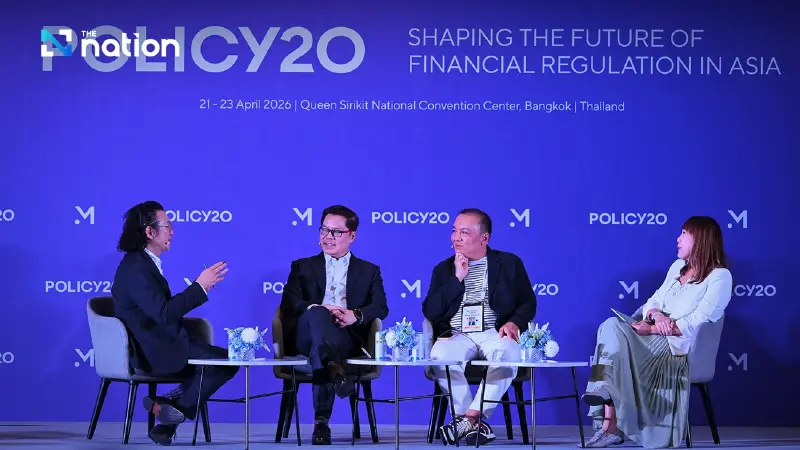


Policymakers and central bankers across Asia have pledged a collaborative approach to governing artificial intelligence and digital finance, marking a decisive shift away from traditional rule-setting
- Asian financial regulators are shifting from a traditional, compliance-focused "watchdog" role to a collaborative "co-creator" model, partnering with the private sector to design adaptive frameworks.
- This change is driven by the rapid evolution of technologies like AI, digital assets, and stablecoins, which are developing faster than traditional regulatory cycles can accommodate.
- At the Money20/20 Asia summit, policymakers established core principles for this new approach, including proactive engagement in setting global standards and shared governance of cross-border financial infrastructure.
- The new model emphasizes using AI and real-
Policymakers and central bankers across Asia have pledged a collaborative approach to governing artificial intelligence and digital finance, marking a decisive shift away from traditional rule-setting.
More than 80 senior policymakers, regulators and central bank governors gathered in Bangkok this week to chart a new course for financial oversight in the age of AI – one defined less by rigid compliance frameworks and more by real-time, intelligence-led governance built on cross-border co-operation.
The Policy20 summit, held as part of Money20/20 Asia 2026 at the Queen Sirikit National Convention Centre from 21 to 23 April, produced three core principles that delegates said would underpin the region's regulatory direction: proactive engagement in setting global standards, shared governance of cross-border financial infrastructure, and the deployment of AI and real-time data tools to strengthen systemic oversight.
Discussions were held under Chatham House Rule, allowing senior officials to speak candidly about the pressures of maintaining national policy sovereignty as digital assets, stablecoins and AI-driven financial systems evolve faster than traditional regulatory cycles can accommodate.

A defining theme throughout was the industry's transition from compliance-driven supervision towards what delegates termed "co-creation" — a model in which regulators act less as enforcers and more as partners to the private sector, designing adaptive frameworks that can respond to technological change as it happens.
Trust emerged as an equally central concern. As digital ecosystems expand, participants argued that confidence in financial systems would hinge not on innovation alone but on transparency, robust governance and consistent regulatory alignment — particularly as AI and digital assets continue to outpace conventional oversight mechanisms.
The summit also addressed the practical limits of innovation without adoption. Delegates stressed that genuine financial inclusion across Asia would require intelligent infrastructure that is not merely accessible but also affordable and straightforward to use — conditions they said remained unmet for large segments of the region's population.

Looking further ahead, participants sketched a multi-rail financial future in which tokenised deposits, stablecoins and traditional banking systems operate in concert, interoperable across borders through harmonised standards and frameworks.
"The conclusions today reflect that policy leaders and regulators across the region are moving from observation to operationally actionable governance," said Ian Fong, vice president of content – Asia at Money20/20. "They are not merely managing technology — they are defining the architecture of sovereign intelligence to safeguard the future of the global financial system."
The summit closed with broad consensus that growth and safety need not be in tension — and that "meaningful adoption", defined as tangible improvements to people's financial lives, rather than access metrics alone, should serve as the true measure of progress.
