
Mint Condition: Treasury Department to Auction Rare 1990 10-Baht Coin Valued at 1 Million Baht
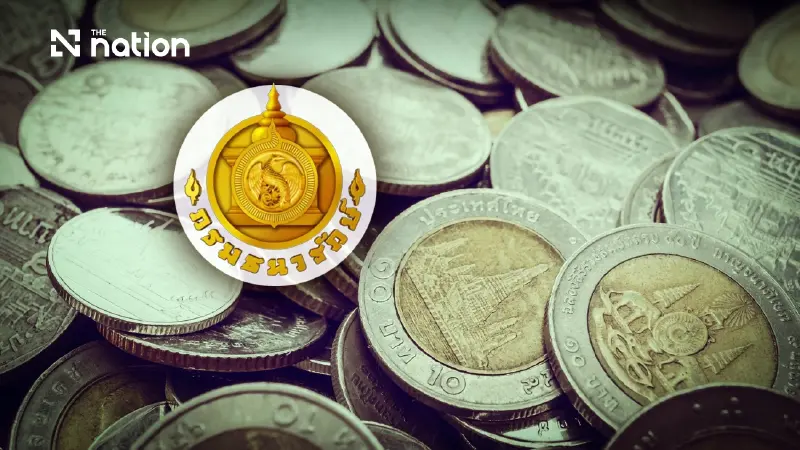


The Treasury Department launches 'Coin Market' platform to counter the rise of a cashless society and safeguard collectors against counterfeit scams
- Thailand's Treasury Department is auctioning a rare 1990 10-baht coin with a valuation of up to 1 million baht.
- The coin's high value is due to its extreme scarcity, as it is one of only 100 ever minted and part of the first batch made with a brass core.
- The specific coin being auctioned is in pristine, uncirculated condition and comes directly from the department's secure vaults.
- The auction will be the main event for the launch of the new state-backed "Coin Market"
The Treasury Department launches the 'Coin Market' platform to counter the rise of a cashless society and safeguard collectors against counterfeit scams.
The Treasury Department is to auction an incredibly rare 1990 (B.E. 2533) 10-baht coin, a legendary piece in the numismatic community valued at up to 1 million baht.
The coin’s extraordinary value stems from its extreme scarcity; only 100 pieces were ever minted. The specimen slated for auction is a pristine, uncirculated coin sourced directly from the department’s secure vaults.
The auction will serve as the headline event for the official launch of "Coin Market" on 19 August. The new state-backed secondary platform aims to stimulate the collector’s market and provide ironclad guarantees of authenticity.
As Thailand steadily transitions into a fully cashless society, the demand for physical coinage in the everyday economy is dwindling. As the primary custodian of the nation's currency, the Treasury Department is aggressively adapting its strategy to generate new revenue streams and unlock value from existing state assets.
Safeguarding the Craft against Fraud
Treasury Department Director-General Akarut Sonthayanont announced that the "Coin Market" platform will be unveiled at the Ministry of Finance. The launch will be presided over by Ekniti Nitithanprapas, Deputy Prime Minister and Minister of Finance. The platform has been specifically designed to cater to and protect the coin-collecting community.
To mark the occasion, the department is releasing just one of its vaulted 1990 coins. Akarut noted that the starting reserve price will be set below the 1 million baht valuation to encourage competitive bidding.
"The unique appeal of the 1990 10-baht coin is that it belongs to the very first batches minted with a brass core," Akarut explained. "Crucially, only 100 were ever made. Today, about 50 are out in the wild, while the remaining 50 have been meticulously preserved in mint condition inside our vaults."
Buying directly from the state will offer collectors ultimate peace of mind. The market has been plagued by sophisticated scams where fraudsters alter the more common 1994 (B.E. 2537) coins—shaving away the tail of the Thai numeral "7" to make it look like a "3"—to artificially inflate the price.
The rollout of the platform represents a vital pivot for the Royal Thai Mint. With everyday coin usage projected to plummet over the next decade, the Mint's long-term vision is shifting away from mass circulation towards high-value commemorative and collectible editions.
The Mystery of the Vanishing Coins
Despite the digital shift, physical coins still play a crucial role in retail—particularly 10-baht and 1-baht coins used for change. The Treasury Department currently mints an average of 200 million to 270 million 10-baht coins annually, but authorities are facing a peculiar challenge: coins are disappearing from circulation.
The return rate for 10-baht coins is significantly lower than projected. Officials suspect a vast number are being trapped inside private-sector vending and washing machines, while data indicates a substantial portion are flowing across borders into neighbouring countries. The 1-baht coin faces similar stagnation.
In a fascinating twist of modern economics, the department revealed that religious institutions have become the currency's primary lifeline.
"Currently, the largest source returning coins to the system is temples," Akarut said. "Monks regularly bring vast quantities of coins collected from merit-making rituals and donation boxes to exchange for banknotes."
Rising Pressures on Production
The department is also grappling with tightening margins. While the 10-baht coin still generates a healthy level of seigniorage—the profit made between the physical cost of minting and the coin's face value—the 1-baht coin is becoming a financial burden.
The 1-baht coin is currently sustained by low-cost metal blanks from older stock. Once these reserves run dry, the state may have to outsource production overseas to mitigate rising material costs and dwindling public demand.
