
T-Beauty's $9 Billion Test: Can Thai Cosmetics Scale Beyond Southeast Asia?
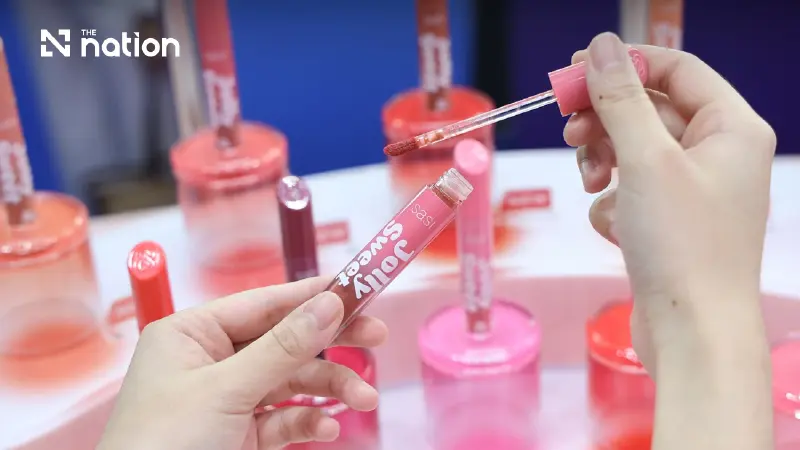


As Thailand's beauty sector draws record international interest, domestic brands are mounting a credible challenge to global giants — armed with climate science, cultural diplomacy, and hard financial results
- Thailand's beauty market, projected to reach $9 billion by 2031, is attempting to scale globally by specializing in products formulated specifically for tropical climates, a niche not fully addressed by major international brands.
- To facilitate international expansion, leading Thai brands like Srichand are using asset-light business models (outsourcing manufacturing to focus on R&D) and "Cultural Bridges" marketing to build trust in new regions.
- The primary challenges to T-Beauty's global growth are intense price competition from rapidly expanding Chinese cosmetics brands and the need to navigate complex international regulatory standards.
As Thailand's beauty sector draws record international interest, domestic brands are mounting a credible challenge to global giants — armed with climate science, cultural diplomacy, and hard financial results.
When Cosmoprof CBE ASEAN 2026 opened at the Queen Sirikit National Convention Center this week, it did so with more than 730 exhibitors — a 30 per cent increase on the previous year — spread across 33,000 square metres of space.
For the first time, the event incorporated Cosmopack CBE ASEAN, a dedicated supply-chain showcase covering ingredients, contract manufacturing, and packaging. The expansion was structural rather than ceremonial: Thailand is no longer positioning itself as a consumer market for international beauty brands. It is bidding to become the industry's next major origin.
The commercial case is growing. Thailand's beauty and personal care market is projected to expand from USD 7.4 billion in 2026 to USD 9 billion by 2031, according to Statista.
Custom Market Insights places the country 17th globally in beauty product manufacturing, with the sector recording average annual growth of between 10 and 20 per cent. These are third-party assessments of an industry already in motion, not aspirational targets drawn up by trade bodies.
Whether Thai brands can convert that momentum into a durable international scale, however, remains the central and unresolved question facing T-Beauty — the term now widely used to describe the distinct identity, formulation philosophy, and cultural positioning of Thai cosmetics.

Climate as Competitive Advantage
T-Beauty is not, at its core, a marketing construct. It is a response to a genuine gap in global product development. European conglomerates, American multinationals, and South Korean brands have historically formulated for temperate climates.
Products engineered for skin concerns in Paris or Seoul do not necessarily perform optimally under the heat, humidity, intense ultraviolet exposure, and urban pollution characteristic of Bangkok, Ho Chi Minh City, or Jakarta.
Thai brands have identified this as a defensible competitive moat. By centring their R&D on "T-SKIN" formulations — engineered specifically for tropical and subtropical conditions — they are building a category that global incumbents cannot easily replicate without significant regional investment.
The logic extends internationally: a sunscreen that maintains its SPF efficacy in 35-degree heat and 80 per cent humidity is, almost by definition, effective in any climate.

Srichand: A Financial Case Study
Among domestic companies offering the clearest evidence of this thesis is Srichand United Dispensary, a 78-year-old brand that has become an analytical reference point for observers of the T-Beauty movement.
Its recent results are notable: sales of 2,055.50 million baht over the past year, a 34 per cent increase in net profit, and 135 per cent growth in international business between 2024 and 2025. An IPO is planned for 2027, with Bualuang Securities appointed as financial adviser.
What makes Srichand analytically useful beyond the headline numbers is the operational model underpinning them. During the COVID-19 pandemic, the company divested its factories entirely, transitioning to an asset-light structure in which production is handled by OEM partners whilst internal resources are concentrated on R&D and marketing.
By decoupling innovation from manufacturing, it retained the agility to reformulate and expand internationally without the capital constraints that factory ownership imposes.
The R&D outputs are beginning to attract independent verification. Its latest sunscreen range incorporates Damask Rose extract from northern Thailand, which the company states enhances SPF longevity whilst meeting ISO 23675 standards. Its Skin Moisture Burst Gel Cream has held the number-one position in Thailand's face moisturiser category for two consecutive years.
The Sachet Economy
One of the more revealing commercial signals from the current period is the extraordinary growth of the sachet segment — single-use cream portions sold at a low per-transaction cost. The moisturiser sachet category in Thailand is valued at approximately 5,000 million baht, and the segment is growing rapidly.
The phenomenon is not simply a product-format trend. It is a behavioural economic indicator. During periods of financial pressure, consumers restructure purchasing to manage cash flow per transaction rather than abandoning trusted brands altogether.
For manufacturers, the format also accelerates product discovery in new markets, where brand recognition is limited and consumer trust must be earned incrementally.

Cultural Diplomacy as Commercial Strategy
The internationalisation of Thai beauty brands has prompted a rethinking of conventional endorsement marketing.
According to Srichand's chief executive, Rawit Hanutsaha, rather than deploying celebrity association primarily for reach, brands are using what they describe as "cultural bridges": presenters whose global profiles embody a connection between Thai identity and international aspiration, generating trust and identity association in markets where the brand has no established heritage.
Early international results are encouraging. Srichand reports 162 per cent growth in Lao PDR, whilst its Japanese market entry — which involved developing powder formulations specifically for Japanese skin characteristics — demonstrates a willingness to localise rather than simply export domestic products unchanged.
Vietnam has been identified as the primary priority market, given its large, young population, high e-commerce penetration, and sustained consumer preference for 'Made in Thailand' products.
Beyond Vietnam, Srichand’s international expansion strategy targets Malaysia, Indonesia, and Singapore. The medium-term ambition is for international sales to account for 30 to 40 per cent of total revenue, up from an estimated seven per cent at present.
Headwinds and Hard Questions
A balanced assessment requires acknowledging the forces working against T-Beauty. The most significant is the rapid expansion of Chinese cosmetics brands across Southeast Asia, which compete aggressively on price at a cost structure most Thai manufacturers cannot match.
Thai brands are, by necessity, competing on formulation suitability, ingredient provenance, and brand trust rather than price — a differentiation strategy that depends entirely on consumers valuing those attributes over cost.
There are also regulatory dimensions to navigate. Srichand's chief executive, Rawit, used his platform at Cosmoprof to urge regulators to ensure domestic and international brands are subject to equivalent standards — a pointed observation about the current playing field.
Government support, he suggested, would be most effective if precisely targeted at specific bottlenecks such as regulatory harmonisation and the commercialisation of academic research, rather than broadly distributed.

The 2027 Horizon
The planned IPO is, in one sense, a corporate financing event. In another, it is a statement about where the T-Beauty industry believes competition will be decided.
Srichand's stated intention to use proceeds primarily for R&D investment and international testing infrastructure signals that the next phase will be won in the laboratory and on the regulatory filing, not merely on the shelf.
The broader question — whether T-Beauty can achieve the sustained international recognition that Korean beauty has built over the past decade — remains open.
K-Beauty's rise involved product innovation, cultural export, government support, and distribution infrastructure assembled over years. T-Beauty is at an earlier stage of that journey.
What the current moment demonstrates, with some clarity, is that the structural conditions for Thai cosmetics to compete internationally are more favourable than at any previous point.
The manufacturing base is maturing, the R&D capability is advancing, and the cultural soft power underpinning the T-Beauty narrative is increasingly credible to international buyers.
Whether that proves sufficient to build a genuinely global industry, or whether T-Beauty remains a regionally dominant force with global aspirations, is a question the next three to five years will begin to answer.
