
Thailand’s Industrial Estates to Get a Major Makeover
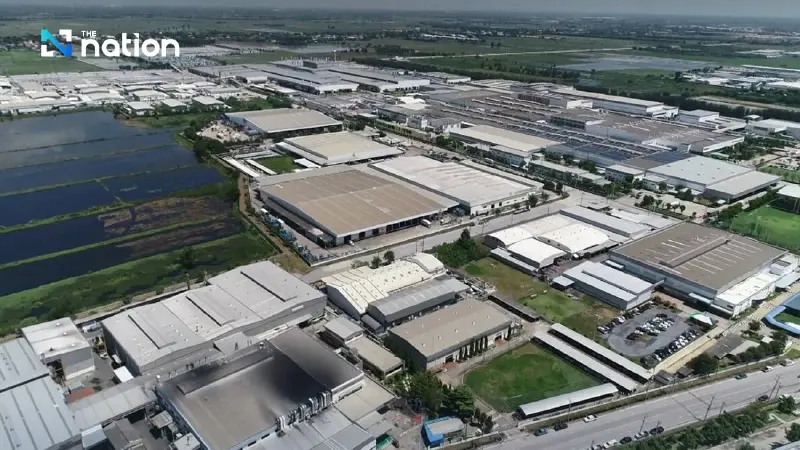


The Industrial Estate Authority of Thailand launches a new "Econopolis" vision to lure global investors and boost the nation's stagnant economy
- To combat declining foreign direct investment (FDI), Thailand's Industrial Estate Authority (IEAT) is transforming its industrial estates into modern, sustainable "Econopolis" hubs.
- The new "DIY" (Do It Yourself) strategy is built on three pillars: diversifying supply chains, increasing investment in key sectors, and making sustainability a core selling point.
- The plan aims to attract investment in high-growth areas such as the Bio-Circular-Green (BCG) economy, electric vehicles (EVs), and smart electronics, supported by a review of tax incentives.
- A major focus is on environmental responsibility, incorporating renewable energy and a circular economy to meet global climate goals and attract green-focused investors.
Thailand is facing a long-term problem with low foreign direct investment (FDI), and the Industrial Estate Authority of Thailand (IEAT) is taking a bold step to fix it.
The IEAT has unveiled a new vision to transform the country's industrial estates from mere factory zones into "Econopolis" hubs—modern, sustainable economic centres designed to attract new global investment.
The goal is to increase Thailand's investment-to-GDP ratio to 27%, a crucial step for the country to escape the "middle-income trap."
According to IEAT chairman Yuthasak Supasorn, this strategic pivot is necessary after a decade of slow industrial growth and declining FDI compared to regional competitors like Singapore, Vietnam, and Malaysia.

Between 2020 and 2023, Thailand’s average annual FDI inflows dropped to just USD 5.94 billion, while countries like Singapore saw over USD 125 billion.
This slump, combined with technological shifts and factory closures, particularly in the automotive sector, has stalled Thailand's industrial growth.
"We have lost significant growth momentum," said Yuthasak. "We need new economic engines for the next 15 to 20 years, and our industrial estates must adapt."
To combat this trend, the IEAT is launching a "DIY" (Do It Yourself) strategy focused on three key pillars:
Diversify Supply Chains: The IEAT plans to help companies reduce risk and increase resilience by expanding their production networks. This includes creating more industrial zones to accommodate businesses relocating their manufacturing bases to Thailand and increasing the use of local content.
Invest More: The authority will push for increased investment in key sectors such as the Bio-Circular-Green (BCG) economy, electric vehicles (EVs), smart electronics, and digital technology. The strategy also includes a review of tax incentives to make them more appealing to international investors.

Yield on Sustainability: In a world increasingly focused on green practices, the IEAT wants to make sustainability a core selling point for Thailand. This involves a commitment to renewable energy, a circular economy, and reducing greenhouse gas emissions to meet global climate goals. The vision is for industrial estates to not only be economically productive but also environmentally and socially responsible.
By implementing this new strategy, the IEAT hopes to revitalise Thailand's industrial landscape and attract the foreign investment needed to propel the economy forward.

