
World Bank approves US$140.76m Thailand transport and dolphin project
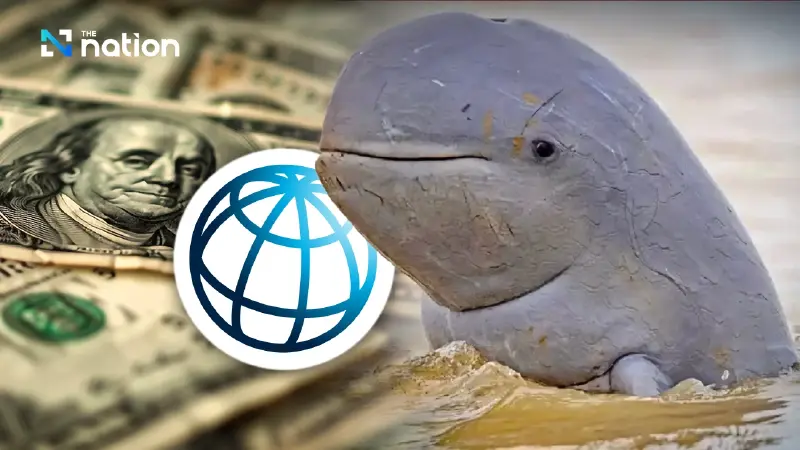


World Bank approves US$140.76m TRIP: two southern bridges, flood resilience and Irrawaddy dolphin conservation in Songkhla Lake.
The World Bank’s board has approved a US$140.76 million package for the Thailand Resilient Transport and Irrawaddy Dolphin Conservation Project (TRIP), aimed at strengthening flood- and storm-resilient transport links while supporting conservation efforts for a critically endangered Irrawaddy dolphin sub-population in Songkhla Lake.
The project combines infrastructure development with biodiversity protection, including the construction of two bridges and support for Thailand’s newly approved Irrawaddy dolphin conservation plan, which targets dolphins in the upper part of Songkhla Lake, north of one proposed bridge site.
The World Bank said the programme is expected to boost job creation and economic opportunities for about 350,000 people. A separate US$4 million PROBLUE grant, administered by the World Bank, will co-finance implementation of the dolphin conservation plan and help Thailand access international best practices.
Melinda Good, the World Bank’s country director for Thailand and Myanmar, said the project marked an important milestone in the renewed partnership between the World Bank and Thailand.
She said it would help deliver essential infrastructure for local communities while protecting the country’s unique natural resources, which underpin local economies.
“The World Bank is committed to supporting Thailand’s future economic growth and improving the quality of life of communities nationwide,” she said.
According to the World Bank, Thailand’s growth has slowed to an average 2.6% since 2010, with the North, Northeast and South lagging behind. The poverty rate in the South stands at 7.4%—more than double the national average—with transport bottlenecks limiting access to markets, jobs and services, particularly outside Bangkok.
The 7-kilometre Songkhla Lake bridge is expected to cut travel time by up to two hours, reducing an 80-kilometre detour to just 8 kilometres and improving access to markets and tourism destinations.
The 2-kilometre Lanta bridge will link the islands to mainland Krabi, strengthening tourism competitiveness and improving access to schools, health centres, markets and other essential services.
The project will also strengthen evacuation routes and improve resilience to floods, storms and sea-level rise.
Chanin Manopiniwes, the World Bank’s task team leader for the project, said the two bridges would create jobs during construction and support longer-term employment in tourism and conservation-related work.
He said the project would also help strengthen Thailand’s tourism industry, which accounts for about 20% of GDP and supports more than 4.3 million jobs nationwide.
“The project will also support ongoing efforts to manage protected areas that serve as dolphin habitats by reducing the risk of entanglement in fishing gear, supporting alternative livelihoods for fishing communities, and investing in research and monitoring of dolphin populations,” he said.
The project was developed through extensive engagement with civil society groups, domestic and international non-governmental organisations, individual experts and local communities, which will continue to provide technical guidance throughout implementation.
The loan marks the World Bank’s first lending operation in Thailand in 15 years and reflects the country’s commitment to integrating climate-resilient infrastructure with environmental sustainability as it prepares to host the 2026 International Monetary Fund (IMF)–World Bank Group Annual Meetings in Bangkok.
According to reports, Deputy Prime Minister and Transport Minister Phiphat Ratchakitprakarn recently welcomed Carlos Felipe Jaramillo, the World Bank’s vice president for East Asia and the Pacific, to receive an update on negotiations for the TRIP loan and to discuss potential technical assistance and lending for other transport ministry projects.
World Bank cooperation under TRIP covers:
- A bridge across Songkhla Lake (Songkhla–Phatthalung)
- A bridge linking Koh Lanta to the mainland in Krabi, overseen by the Department of Rural Roads—expected to cut travel time, improve safety and help drive growth in Thailand’s South
- Irrawaddy dolphin conservation in Songkhla Lake.
Thailand is financing the programme with World Bank support totalling about US$141.51 million, comprising US$137.51 million in lending from the International Bank for Reconstruction and Development (IBRD) and a US$4 million grant from PROBLUE.
