
Thailand Warned Against Monopolistic US Rare Earth Deal in 'Trade War' Fallout
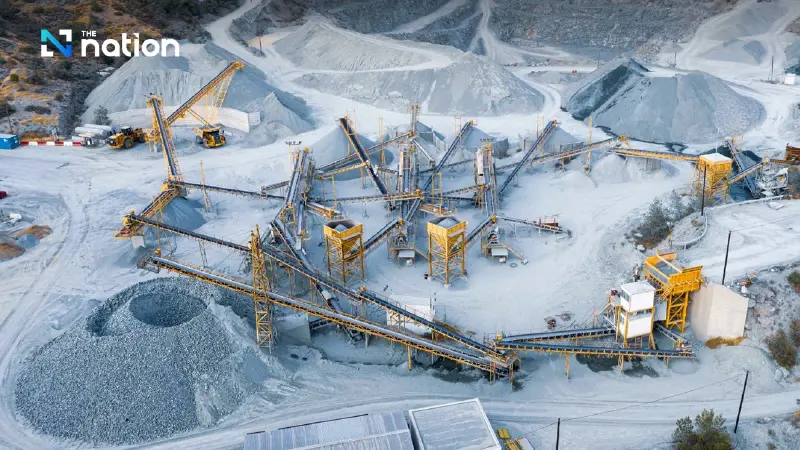


Academic warns Bangkok against granting Washington exclusive rights to its critical minerals, fearing Chinese retaliation and trade leverage
- A Thai academic is warning the government that a recent Memorandum of Understanding (MOU) with the U.S. could lead to a monopolistic deal, granting Washington exclusive rights to Thailand's rare earth minerals.
- The U.S. is urgently seeking to secure new sources of rare earths due to recent export controls imposed by China, which dominates the global market for these critical minerals.
- The expert fears that an exclusive contract with the U.S. would provoke economic retaliation from China, placing Thailand in the middle of the superpowers' trade conflict.
- While the current agreement is a non-binding MOU, the academic urges caution in future negotiations to avoid any binding, exclusive clauses that could harm Thailand's national interest.
Academic warns Bangkok against granting Washington exclusive rights to its critical minerals, fearing Chinese retaliation and trade leverage.
A Thai academic has issued a sharp warning to the government concerning its recent Memorandum of Understanding (MOU) with the United States, cautioning that a subsequent binding agreement could grant Washington exclusive rights to Thailand’s rare earth elements and risk retaliation from China.
The MOU, titled “Cooperation to diversify global critical minerals supply chains and promote investments,” was recently publicised on the US government’s White House website following its signing by the two nations.
Somjai Phagaphasvivat, an independent expert in economics and political affairs, told Krungthep Turakij that the US is rapidly prioritising the securing of rare earth materials.

This has become an urgent strategic necessity after China, over the past month or two, announced new, tighter controls on rare earth exports, requiring companies to report even small volumes to Beijing.
This action has heightened US awareness of the need to find new, secure sources of critical minerals, particularly given that China currently controls an estimated 80 to 85 per cent of the world’s rare earth reserves.

Somjai explained that by using rare earths as a tool for trade barriers—in addition to existing tariffs—China can severely impact US industries.
Rare earths are indispensable components in high-tech sectors, including electric vehicle manufacture, advanced technology, and military/defence hardware, making them a strategic priority for both global superpowers.
The academic noted that Washington's strategy involves forging agreements with numerous nations possessing rare earth potential or existing reserves, citing recent deals with Australia and a previous, more stringent agreement with Ukraine.
He specified that the Ukrainian deal is a binding contract which compels Kyiv to sell its rare earths exclusively to the US.
In contrast, the agreement with Thailand is currently only an MOU and is not yet legally binding. However, Somjai stressed that the Thai government must be vigilant about the next phase of negotiations.
The crucial point, he argued, is that any future contract must not contain monopolistic clauses that force Thailand to sell its rare earths solely to the United States.

“If we make an agreement of that nature, Thailand would be granting the US an exclusive contract,” Somjai stated. “This would inevitably displease the other major power, which is China, and could provoke retaliatory measures against Thailand.”
He concluded by stressing the importance of protecting the national interest: "While the US is diversifying its rare earth deals, the one with Thailand is currently just an MOU. But I believe that if significant new reserves are discovered, the US will seek a formal contract. We must beware of binding or exclusive contracts, as allowing a major power to enter into this format will be more harmful to Thailand. It could even be used as a mechanism to pressure us on tariffs. Therefore, we must consider carefully and weigh all proposals against the national interest as the main priority."
