
Thailand sets task force to aid vessels stranded near Hormuz


Thailand has approved a new integrated task force to help stranded commercial vessels leave the Strait of Hormuz safely, as ministries step up efforts to manage energy risks, curb hoarding and ease living costs amid the Middle East conflict.
Thailand has approved the establishment of an integrated task force to help stranded Thai commercial vessels leave the Strait of Hormuz safely and in an orderly manner, while also stepping up close communication with the international community, officials said on Monday.
The measure was announced at a briefing by the Joint Management and Monitoring Centre for the Situation in the Middle East, which also outlined steps to address energy volatility, rising living costs and supply chain risks linked to the escalating conflict in the region.
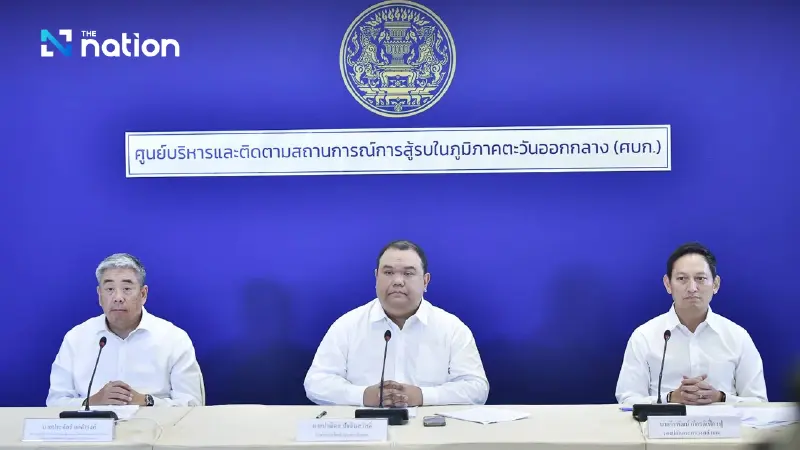
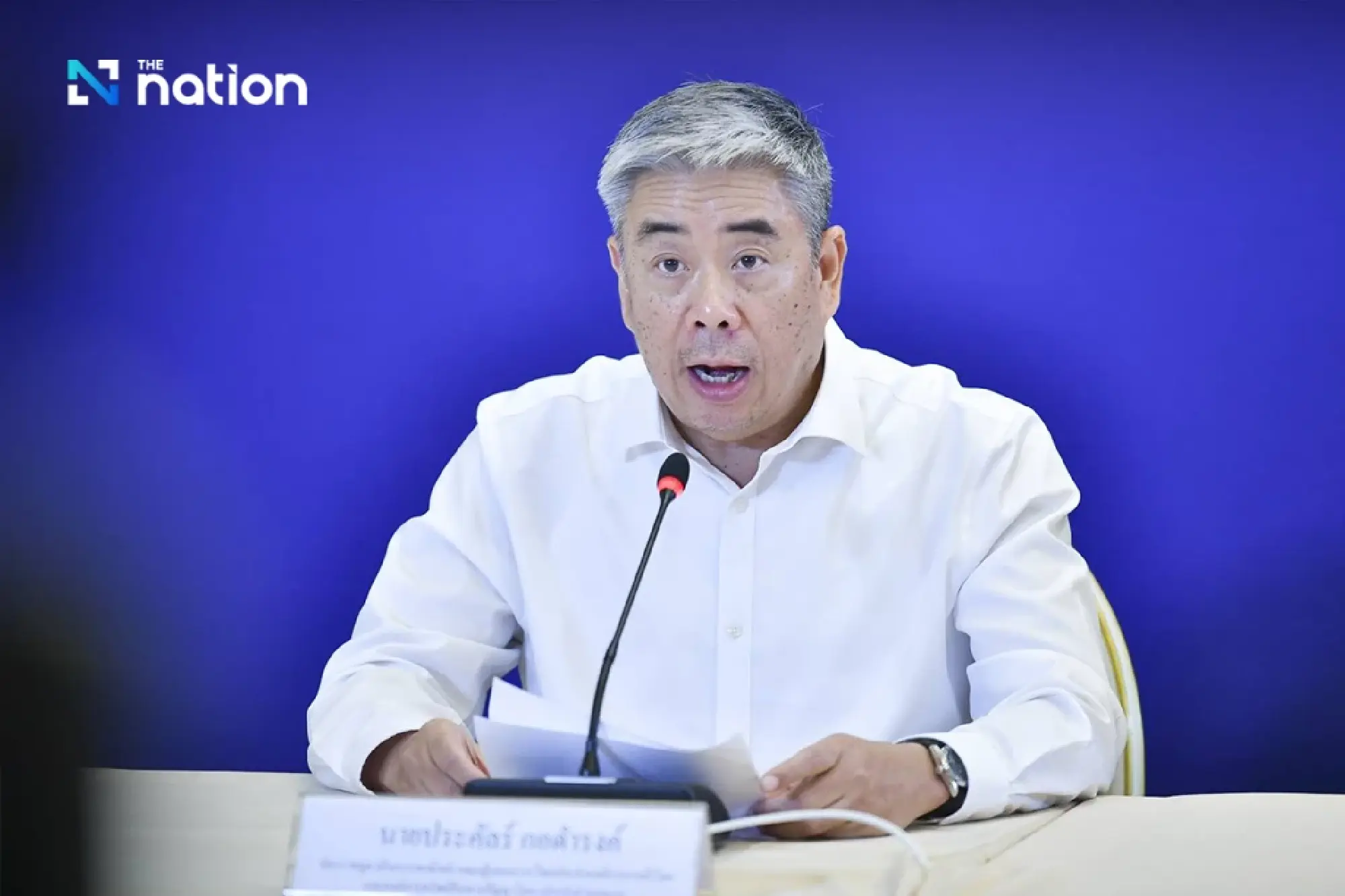
Panidol Pachimsawat, acting director-general of the Department of Information and deputy spokesperson for the Ministry of Foreign Affairs, joined Veerapat Kiatfuengfoo, deputy permanent secretary of the Ministry of Energy, and Prakarn Kodamrong, ambassador and permanent representative of Thailand to the World Trade Organization and the World Intellectual Property Organization in Geneva, in the joint briefing on March 30.


Thai vessels and nationals remain a priority
Panidol said tensions in the Middle East had intensified after Iran seized vessels linked to certain countries in the Strait of Hormuz, while Yemen’s Houthi group had announced its entry into the fighting, directly affecting maritime security in the Red Sea and the Bab el-Mandeb Strait.
He added that Iran’s Islamic Revolutionary Guard Corps had also warned it would attack US military targets and educational institutions in Gulf countries in retaliation for a US-Israeli strike on a university in Tehran on March 28.
Although some Thai commercial vessels have already managed to leave the Strait of Hormuz safely, he said the situation remained highly uncertain, prompting the centre to approve the new task force to support stranded vessels and coordinate the response more systematically.
Panidol also said that during the closure of Israeli airspace and the period of limited flights, the Royal Thai Embassy in Tel Aviv had worked with the Thai Embassy in Jordan to facilitate the return of Thai nationals.
In Oman and Yemen, following IRGC attacks on US coalition forces on March 28, the Royal Thai Embassy in Muscat found no Thai nationals injured and warned Thais in Yemen to exercise the highest degree of caution.
Since the outbreak of the conflict, a total of 1,532 Thai nationals have been assisted to leave high-risk areas and return to Thailand or travel onward to third countries. The Foreign Ministry reiterated its call for Thais in high-risk areas to leave as soon as possible and register their contact details with the nearest Thai embassy.


Energy prices remain under pressure
Veerapat said the global oil market remained highly volatile, with Dubai crude standing at more than US$120 per barrel on March 27, up 72% from before the conflict.
Refined diesel prices had climbed to more than US$200 per barrel and at one point surged to US$240 per barrel, more than double previous levels, he said.
Despite that, Thailand’s retail diesel price remained at 38.90 baht per litre, an increase of just 30%, supported by 4.05 baht per litre from the Oil Fuel Fund. He said this remained lower than in neighbouring countries, where fuel prices had risen far more sharply, including Malaysia, where diesel had increased by 50% to 45.41 baht per litre, as well as Vietnam, the Philippines and Laos, where prices had risen by 10% to 50%.
He added that average marketing margins in the first two weeks of March remained below pre-crisis levels at about 2 baht, plus or minus.
Government tightens oversight on oil supply
On fuel supply, Veerapat said fast-turnover diesel production stood at 55 million litres, while total sales reached 82.326 million litres, comprising 67.66 million litres sold at service stations and 15 million litres sold through jobbers, industry and government agencies.
Petrol production stood at about 20 million litres, while sales totalled 32 million litres, including 30 million litres sold at service stations and 1.8 million litres sold through jobbers.
To improve transparency, the ministry has ordered Section 7 fuel traders to display ex-refinery prices, clearly show remaining stock volumes and report data daily to the Department of Energy Business between 5pm and 6pm. They are also prohibited from selling above the prices recommended by the Energy Policy and Planning Office.
The Department of Energy Business, working with 76 provincial energy offices, has already inspected 53 oil depots and is developing an e-gateway system to allow Section 7 traders to gradually connect real-time data during 2026.
Any customer buying more than 3,000 litres at a time must now be reported daily to prevent hoarding, he said.
Authorities found three offenders in Kaeng Khoi district of Saraburi on March 15, with two fined and one case involving 18,000 litres of oil still under legal action. On March 28, two more sites were found in Bang Pahan district of Ayutthaya, where more than 60 drums were discovered and are being investigated by the Department of Special Investigation and police.
To help lower costs, the ministry is also promoting B20 diesel, which is priced 5 baht per litre lower, with PTT and PTG already starting sales.

Commerce rolls out relief measures
Prakarn said the Commerce Ministry had inspected 3,477 retail outlets nationwide between March 5 and 27, taking legal action against 15 offenders, most of them for failing to display price tags.
He added that the 1569 hotline had received 429 complaints in total, with 263 already checked, 29 offenders penalised and 51 complaints still under urgent review.
To ease the burden on consumers, the ministry will launch the “Thai Help Thai” project nationwide on April 1, offering discounts of up to 50% on more than 1,000 items.
Officials have already inspected the readiness of Makro and Lotus’s Nakhon In branch, Tops Supermarket at Central Westgate and Go Wholesale in Rangsit.
The campaign will run alongside more than 500 Blue Flag low-cost sales points and mobile units serving remote areas, beginning in Prachin Buri in April and in Trat after Songkran. Special-price raw materials will also be supplied through Bangkok’s central market to help reduce costs for curry-and-rice shops.
Fertiliser support to expand
Prakarn said the ministry was also preparing to roll out the “Green Flag Plus Fertiliser” scheme to help farmers cut costs.
The project builds on the current discount of 200 baht per sack of chemical fertiliser for up to five sacks, or 1,000 baht per person. Farmers with a Good Soil Card, GAP certification or membership in a community soil and fertiliser management centre will receive an additional 200 baht, plus another 200-baht coupon for organic fertiliser.
That means each farmer could receive support worth up to 1,400 baht.
The scheme will begin in the final week of April in Kamphaeng Phet before expanding to 50 provinces, with a target of reducing costs on 1 million sacks of fertiliser.
Supply chains under watch
Prakarn said the Commerce Ministry had also coordinated with the Ministry of Foreign Affairs to help Thai cargo vessels carrying raw materials leave the Strait of Hormuz.
At the same time, Thai commercial counsellors worldwide have been instructed to accelerate efforts to find alternative fertiliser import sources and expand trade opportunities with South Africa and Latin America, in a bid to minimise the impact on Thai exports.
