
Xi and Putin stress strategic ties and energy security in Beijing
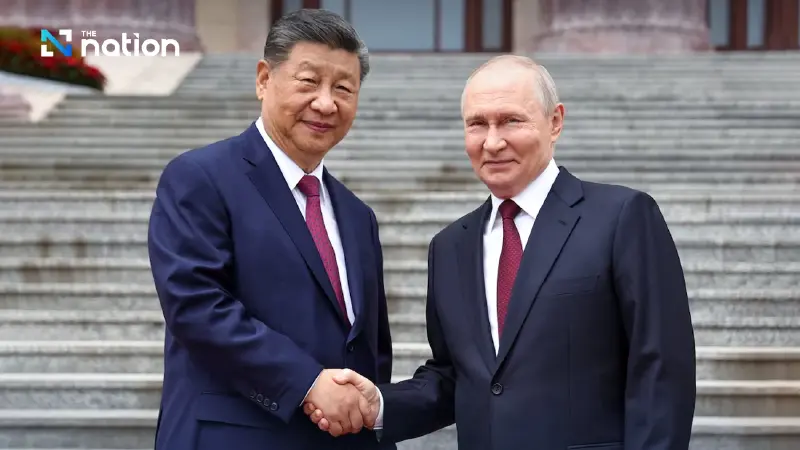


Moscow seeks momentum on Power of Siberia 2 as Beijing balances Russian energy, US trade ties and a summit heavy with ceremony and symbolism.
- Russian President Vladimir Putin and Chinese leader Xi Jinping met in Beijing to reaffirm their "no limits" strategic partnership, describing it as a pillar of global stability.
- A key focus of the visit was energy security, with Russia pushing for progress on the long-delayed Power of Siberia 2 gas pipeline deal and stressing its role as a reliable energy supplier.
- The leaders emphasized deepening political trust and promoting a "more just" global order, with plans to sign dozens of agreements and issue a joint statement on their strengthening partnership.
Vladimir Putin opened a high-profile visit to Beijing on Wednesday (May 20) with a renewed show of unity with Xi Jinping, as Moscow sought movement on a gas supply agreement that has been under discussion for more than a decade.
Xi received the Russian president at the Great Hall of the People with an honour guard and a gun salute, while children waved Chinese and Russian flags. The two leaders were scheduled to hold formal talks before a more private meeting over tea later in the day.
The visit came shortly after US President Donald Trump’s trip to the Chinese capital, placing extra attention on both the optics and the outcome of Xi’s meeting with Putin.
According to the Chinese state news agency Xinhua, Xi said China and Russia should concentrate on a long-term strategy and help promote a “more just and reasonable” global governance system.
“The reason China-Russia relations have reached this level is that we have been able to deepen political mutual trust and strategic cooperation,” Xi said at the start of the talks.
Putin said the relationship was helping support global stability and stressed that Russia remained a reliable energy supplier amid disruption in the Middle East.


“The comprehensive partnership and strategic cooperation between Russia and China in the new era is an example of international relations in the modern world,” Putin told Xi. He also invited the Chinese leader to visit Russia next year.
China is already the largest buyer of Russian oil, taking both pipeline supplies and sea-borne shipments. Even so, the Kremlin indicated before the Beijing talks that it wanted further energy agreements.
During Putin’s previous visit in September 2025, Russian gas company Gazprom said the two sides had agreed to advance the Power of Siberia 2 gas pipeline. Beijing, however, has said little publicly about the project.
Important issues, including gas pricing, remain unresolved, and talks could still take years. Energy shortages linked to the conflict in Iran may strengthen Russia’s case for the pipeline as a long-term gas source, although Beijing may prefer to keep its supply diversification strategy.
Xi often hosts visiting leaders over tea, but the location and style of such meetings can be seen as a signal of his regard for a guest.


When Xi hosted Putin in May 2024, the pair removed their ties and spoke over tea outdoors in Zhongnanhai, a former imperial garden that now houses the offices of the Communist Party and the government.
Trump’s tea with Xi in the same compound, his walk through a secret garden and his tour of the Temple of Heaven last week appeared more choreographed by comparison.
Kremlin spokesman Dmitry Peskov said on Wednesday there was no point comparing China’s ceremonies for Putin and Trump, adding that attention should be placed on substance.
As Xi and Putin began their meeting, China’s commerce ministry confirmed a purchase of 200 Boeing jets that Washington had announced after the Trump-Xi summit. The move signalled Beijing’s wish to stabilise economic and trade ties with the US separately from its commitments to Russia.
The ministry also said Beijing would seek an extension of the trade truce with the US and push for reciprocal tariff cuts covering $30 billion or more of goods on each side.
China and Russia’s “no limits” partnership has deepened since the West imposed sanctions over Russia’s war in Ukraine.
The Kremlin had set “serious expectations” for Putin’s visit, which includes talks, a signing ceremony and a banquet, followed by tea, where the two leaders are expected to discuss key international issues informally.
About 40 documents are expected to be signed, and the Kremlin said a 47-page joint statement on the strengthening partnership would be issued.
Patricia Kim, a foreign policy fellow at the Washington-based Brookings Institution, said that if the summit produced a joint statement and dozens of agreements, the symbolism would be significant even if the substance was limited.
“It would reinforce the message that the China-Russia partnership remains strong, institutionalised, and coordinated across a broad range of strategic issues,” she said.
Putin, who has called Xi a “dear friend” while being described by the Chinese leader as an “old friend”, arrived as bilateral trade was improving after a downturn last year.
Putin has acknowledged the need to reverse that decline, reflecting China’s importance as an economic lifeline for sanctions-hit Moscow as the war in Ukraine continues to weigh on Russia’s economy.
Reuters
