
Cabinet approves THB176bn Thai Help Thai Plus cost relief scheme
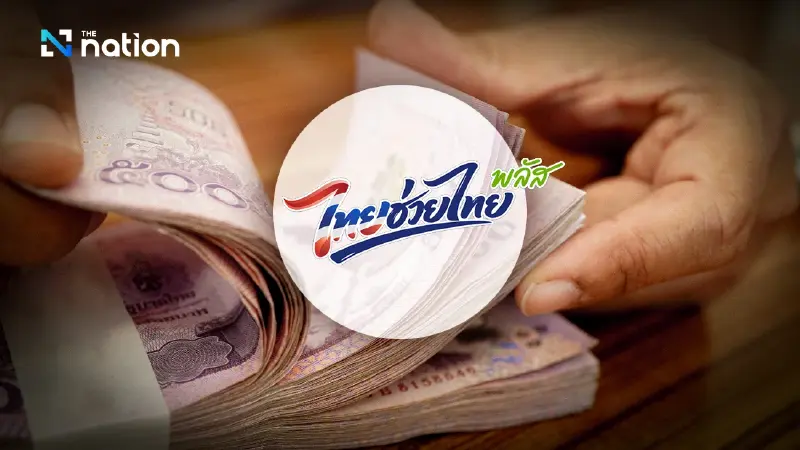


The package covers welfare card holders and a 60/40 co-payment scheme, while the Cabinet adjusts the public debt plan for new borrowing.
- The Thai Cabinet has approved the "Thai Help Thai Plus" program, a THB176 billion cost relief scheme designed to combat rising living costs.
- The scheme allocates THB52 billion to support 13.2 million low-income individuals with state welfare cards, increasing their monthly aid to THB1,000 for four months.
- A separate THB120 billion is designated for a 60/40 co-payment program targeting 30 million middle-class individuals, with the government contributing 60% of purchases up to a THB1,000 monthly limit.
- The initiative aims to ease financial pressure on the public, stimulate purchasing power, and support small businesses impacted by inflation and the economic crisis.
While the Emergency Decree authorising the Ministry of Finance to borrow to address the impact of the energy crisis and support the country’s energy transition in 2026 has gone before the Constitutional Court for a ruling, the government has pressed ahead with borrowing and its loan spending plan.
The Cabinet approved the Thai Help Thai Plus programme, with a budget of THB176 billion, allocated in two parts:
- Targeted support for vulnerable groups, aimed at helping low-income people who hold state welfare cards, with a budget of THB52 billion, covering 13.2 million people. The monthly support will rise from THB300 to THB1,000, an extra THB700, for four months.
The Cabinet also instructed the Ministry of Interior and the Ministry of Finance to update the database so that those left out can register anew.
- A 60/40 co-payment programme, with a budget of THB120 billion, covering 30 million people. Members of the public will pay 40%, and the state will contribute 60%, with a THB1,000-a-month limit for four months.
The measure is intended to assist middle-class people and salaried workers who still have purchasing power but have also been affected by higher living costs, with the government helping to ease daily expenses through co-payment.
It is also intended to give small retailers breathing space, as they are considered key to bringing consumers with purchasing power back to inject liquidity and extend the lifeline for small businesses.
AI will be used to upgrade small shops and familiarise them with digital systems, helping them manage costs and creating a stepping stone for access to formal credit.
Ekniti Nitithanprapas, Deputy Prime Minister and Minister of Finance, said the measure would ease living-cost pressures on the public and small businesses to prevent public purchasing power from contracting too sharply.
This would break the cycle of businesses closing and laying off workers, enabling all Thais to get through the crisis together.
Thailand faces a crisis of high prices
Ekniti said Thailand was entering a third wave of crisis after the energy crisis: a crisis of high prices, driven largely by inflation in April 2026, which reached 2.9%.
There was a very high chance it would rise further, and it could reach 5%.
He said the situation was also part of a global crisis in which concern was focused on sharply higher US government bond yields, or Bond Yield, which, from the perspective of financiers and economists, confirmed that global financial markets expected inflation to rise sharply.
If the high-price crisis cannot be halted, it will lead to a purchasing-power crisis, because higher living costs will reduce the value of money in people’s pockets and hit low-income people hard, including small businesses that lack accumulated profits to absorb the shock.
“If this is allowed to continue, businesses will close, people will lose jobs, and the economy will stay subdued for a long time. The current unemployment rate of 1% could surge to almost 2%, which is a point the government does not want to reach,” Ekniti said.
He said the economic crisis was global, with wide-ranging effects and an unclear direction.
The loan screening committee had designed the programme to be flexible, with conditions subject to review and adjustment.
Finance Ministry hopes to support 43 million people
Lavaron Sangsnit, Permanent Secretary for Finance, said Thai Help Thai Plus would support more than 43 million people.
The first group, 13.2 million state welfare card holders, would receive an increase of THB1,000 between June and September 2026 to buy consumer goods.
For the general public under the 60/40 programme, the government is targeting 30 million people, up from the previous programme, which had 28 million registrants, so that it covers people who did not register in time.
Participants must be aged 18 or over, in line with labour market criteria.
Conditions for participating shops have also been changed to exclude service businesses such as hair salons, massage shops or spas, so that funds are used to buy necessary goods.
The THB1,000 monthly allocation must be spent within one month.
Registration will be open from May 25 to 29, from 6am to 10pm.
Existing shops that previously joined the programme must confirm their identity, while new shops can register at all Krungthai Bank branches from May 25 to 30.
Krungthai confirms readiness of Pao Tang app
Payong Srivanich, President of Krungthai Bank Public Company Limited, said the bank had prepared its operating system so that people could register via the Pao Tang application, covering all 30 million entitlements.
People who previously joined the Khon La Khrueng Plus programme can press to confirm their entitlement and receive the result immediately.
New applicants must register first, and data checks with the Department of Provincial Administration will take three days.
Shops can access the Thung-Ngern application to confirm acceptance of the conditions and will be ready to receive payments from Monday (June 1, 2026).
New shops can apply to join at bank branches, the website or the Thung-Ngern application.
For food delivery, operators can apply through the Thung-Ngern application from Wednesday (June 10, 2026), and members of the public can start choosing services from all four providers from Monday (June 15, 2026).
“Whispering Bird” feature to help traders
Payong said the bank had developed a new AI-powered “Whispering Bird” feature, known in Thai as Nok Krasip, to help small operators in three areas:
- Answering general questions about the Thai Help Thai Plus programme.
- Analysing daily sales so shops know their best-selling periods and average sales per transaction, which will help them manage fresh-food stock and allocate staff appropriately.
- Linking daily raw material price data from the Department of Internal Trade, Ministry of Commerce, such as pork or chicken prices, so shops can manage costs and set sales prices with appropriate profit margins.
Cabinet adjusts debt plan for THB220 billion in extra borrowing
Ekniti said the Cabinet had approved the second revision to the public debt management plan for fiscal year 2026 to support the urgent need to address the energy crisis by increasing net new borrowing by THB220 billion.
This would lift the estimated public debt-to-gross domestic product (GDP) ratio to 68.03%, still within the fiscal discipline ceiling of 70%.
The key point of this revision to the public debt management plan is an increase in planned net new debt creation of THB221.2 billion.
This raises the new debt creation limit from THB1.21 trillion to THB1.44 trillion, mainly because of three key factors:
- Government borrowing to address the crisis under the Emergency Decree authorising the Ministry of Finance to borrow THB400 billion to respond to the Middle East crisis. It will initially accommodate THB200 billion in borrowing, based on the amount to be used in fiscal year 2026.
- Liquidity support for the Oil Fund through borrowing by the Oil Fuel Fund Office (OFFO), totalling THB20 billion, to maintain domestic retail fuel price stability. This debt is guaranteed by the Ministry of Finance.
- State enterprise investment, including an additional THB1.2 billion in borrowing by the Metropolitan Electricity Authority (MEA) for projects to expand areas and improve the electricity distribution system. This debt is guaranteed by the Ministry of Finance.
In addition, the existing debt management plan, or debt restructuring, has had its net amount reduced by THB23.96 billion, while the debt repayment plan has been increased by a net THB27.668 billion, to a total of THB560.79328 billion.
This is an increase under the repayment plans of the Financial Institutions Development Fund (FIDF) and the Bank for Agriculture and Agricultural Cooperatives (BAAC).
For this revision, the government confirmed it remained within the relevant legal framework, particularly the public debt-to-GDP ratio, which is estimated at 68.03% at the end of fiscal year 2026 and remains below the 70% fiscal discipline ceiling set by the State Fiscal and Financial Policy Commission.
