
Trump warns Iran of fresh US strikes as deal pressure grows
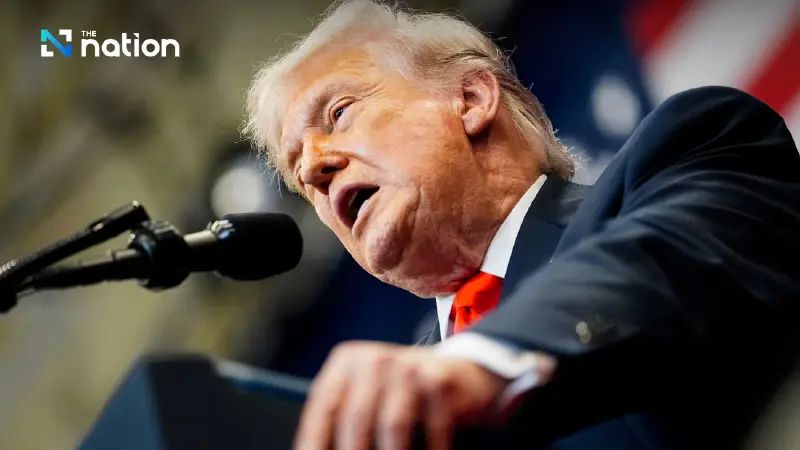


Trump says the US may strike Iran again within days if no deal is reached, while Tehran warns any attack will face a decisive response
- President Trump has warned of new military strikes against Iran if a peace deal is not reached, stating he was close to ordering an attack before delaying it.
- Trump is facing growing domestic political pressure to secure an agreement, driven by high fuel prices and falling approval ratings ahead of congressional elections.
- The goal of a potential deal is to end the nearly three-month-old conflict and reopen the Strait of Hormuz, a critical route for global oil supplies.
- While the White House claims progress in talks, Iran has responded to the threats by warning that any new attack would face a "decisive military response."
US President Donald Trump has warned that the United States may strike Iran again if negotiations fail, even as he claimed Tehran’s leaders were now seeking a deal to end the US-Israeli war.
Speaking at the White House on Tuesday, Trump said he had been close to ordering a new attack before deciding to delay the move.
“I was an hour away from making the decision to go today,” Trump told reporters.
He said Iran’s leaders were “begging for a deal”, but added that a fresh US attack could take place in the coming days if no agreement was reached.
His remarks came one day after he said he had paused a planned resumption of hostilities following what he described as a new proposal from Tehran aimed at ending the conflict.
The United States has been trying to bring an end to the war it launched alongside Israel nearly three months ago. Trump has repeatedly said an agreement with Tehran was close, while also threatening heavy strikes if Iran refused to accept a deal.

The president is under growing political pressure at home to secure an accord that would reopen the Strait of Hormuz, a vital route for global oil and commodity supplies. Fuel prices remain high, while Trump’s approval ratings have fallen ahead of congressional elections in November.
Oil prices settled lower on Tuesday after Vice President JD Vance said Washington and Tehran had made “a lot of progress” in talks and that neither side wanted to see the military campaign resume.
“We’re in a pretty good spot here,” Vance said.
Speaking at a White House briefing, Vance also acknowledged the difficulty of dealing with what he described as a divided Iranian leadership.
“It’s not sometimes totally clear what the negotiating position of the team is,” he said, adding that Washington was trying to make its own red lines clear.
He said one goal of Trump’s policy was to prevent a nuclear arms race from spreading across the region.
Iran warns of response to any new attack
In Tehran, Ebrahim Azizi, head of the Iranian parliament’s national security committee, said on X that Trump had paused the attack because he understood any move against Iran would mean “facing a decisive military response.”
Iranian state media said Tehran’s latest peace proposal included ending hostilities on all fronts, including Lebanon, the withdrawal of US forces from areas near Iran, and reparations for destruction caused by US-Israeli attacks.
Deputy Foreign Minister Kazem Gharibabadi, cited by the IRNA news agency, said Tehran was also seeking sanctions relief, the release of frozen funds and an end to the US maritime blockade.
The terms reported by Iranian media appeared largely similar to a previous offer from Tehran, which Trump rejected last week as “garbage.”

Pakistani source says both sides keep shifting positions
Reuters said it could not determine whether military preparations had been made for strikes that would mark a renewed phase of the war.
Trump said on Monday that Washington would be satisfied if it could reach an agreement preventing Tehran from obtaining a nuclear weapon.
A Pakistani source confirmed that Islamabad, which has carried messages between the two sides since hosting the only round of peace talks last month, had passed Iran’s proposal to Washington.
The sides “keep changing their goalposts,” the Pakistani source said, adding: “We don’t have much time.”
Ceasefire mostly holding despite tensions
The US-Israeli bombing campaign killed thousands of people in Iran before it was suspended under a ceasefire in early April. Israel has also killed thousands more and displaced hundreds of thousands in Lebanon after invading in pursuit of the Iran-backed Hezbollah militia.
Iranian strikes on Israel and neighbouring Gulf states have killed dozens.
The ceasefire with Iran has mostly held, although drones have recently been launched from Iraq towards Gulf countries, including Saudi Arabia and Kuwait, apparently by Iran and its allies.
The Wall Street Journal reported on Tuesday that the United States had seized an Iran-linked oil tanker in the Indian Ocean overnight, citing three US officials. The tanker, known as the Skywave, was sanctioned by Washington in March over its role in transporting Iranian oil.
Trump and Israeli Prime Minister Benjamin Netanyahu have said the war was launched to curb Iran’s support for regional militias, dismantle its nuclear programme, destroy its missile capabilities and create conditions for Iranians to topple their rulers.
But the campaign has not yet deprived Iran of its stockpile of near-weapons-grade enriched uranium or its capacity to threaten neighbours through missiles, drones and proxy militias.
Iran’s clerical leadership, which had faced a mass uprising at the start of the year, has so far survived the assault by the superpower and its ally, with no visible sign of organised opposition emerging.


