
Retail recovery still missing as Q2 confidence sinks below 50
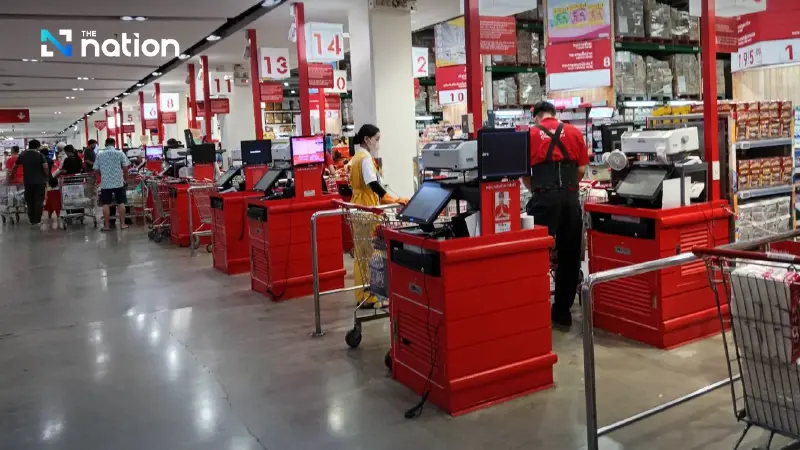


Thai retail confidence rose in March on panic buying, but Q2 sentiment fell below 50 as high oil prices, rising costs and weak spending cloud the outlook
Thailand’s retail sector showed a temporary improvement in March, but the industry is still flashing warning signs for the months ahead, with confidence for the second quarter falling back below the 50-point threshold as oil prices, higher operating costs and weak purchasing power weigh on the outlook. The Retailer Sentiment Index, or RSI, is compiled jointly by the Thai Retailers Association and the Bank of Thailand.
The March 2026 survey, conducted from March 16 to 30, found that the retail index rose by 13.5 points from February. The increase was seen across every component of the index, all regions and key retail categories, including FMCG and construction materials. But the rise did not reflect a broad-based consumption recovery. Instead, it was driven largely by consumers rushing to stockpile goods in anticipation of higher energy prices and possible product shortages.
That pattern was reflected clearly in the sub-indices. Confidence in same-store sales growth rose from 31.1 points to 52.8, while confidence in spending per bill increased from 36.1 to 49.3. Frequency of shopping also edged up from 43.9 to 49.3. Even so, the improvement was not seen as normal demand, but as a rush of precautionary buying, with middle- to upper-income consumers already beginning to cut back on non-essential purchases.

The sharper signal came from the forward-looking survey for the next three months. Confidence for the second quarter fell by 14 points and slipped below the neutral 50-point mark, underlining the sector’s lack of faith in a genuine recovery. Retailers cited concern over the Middle East conflict and lingering scepticism about the government’s economic stimulus measures. Around 60% of respondents said they expected sales in the second quarter of 2026 to be worse than in the same period of 2025. The 50-point level is significant because the Bank of Thailand uses it as the neutral line, indicating whether business sentiment is improving or deteriorating.
Retailers said the conflict between the United States and Iran has already had a severe and immediate impact on the retail and wholesale structure, largely because the flashpoints are directly linked to global trade routes. They warned that the fallout could stretch to the end of 2026 through three main channels.
The first is an energy and inflation shock. Higher oil prices are expected to push up product costs, logistics expenses and electricity bills, leaving retail and wholesale operators facing margin squeeze as their cost of goods sold rises faster than they can pass on prices to consumers whose spending power remains fragile.

The second is supply chain disruption. With the Strait of Hormuz and the Red Sea route, including the Suez Canal and Bab el-Mandeb, facing heightened risk, major shipping lines may be forced to reroute around the Cape of Good Hope, adding two to four weeks to transport times. That raises the risk of out-of-stock situations, especially for construction materials such as steel and aluminium, where shortages and price volatility could intensify.
The third is the direct hit to consumer demand. Retailers warned that Thailand’s economy faces rising recession risk if the war drags on, with some research houses projecting that 2026 GDP growth could fall below 0.7% or tip into contraction. In that environment, confidence would deteriorate further, households would focus almost entirely on essentials, and department stores as well as lifestyle retailers would come under heavier pressure.
Even so, the survey said the sector is not without support factors for the rest of the year if businesses can adapt quickly enough.
One is public investment, with state infrastructure spending expected to become more visible from mid-year and help spread income to workers and provincial communities, particularly those linked to construction wholesale and essential consumer goods.
Another is the growing opportunity in private-label products. As consumers become more familiar with own-brand goods during a period of economic strain, the second half of the year could be when those products gain more lasting traction. Retailers able to develop private-label lines with quality close to national brands could see stronger profitability.
The third support factor is a shift in operating strategy, from a traditional focus on efficiency towards what the survey described as “hyper-velocity”. After the first quarter, often a period of stock management, the businesses most likely to survive and grow are expected to be those that prioritise inventory velocity rather than relying solely on gross margin.
A deeper regional breakdown of same-store sales confidence in March showed that sentiment remained below the 50-point midpoint across every region, even where there were some month-on-month improvements.
In Bangkok and surrounding areas, which account for 43% of the country’s retail, wholesale and services GPP value, sales rose most clearly in hypermarkets and construction-material stores, while department stores and fashion-lifestyle outlets saw declines. The modest improvement came mainly from panic buying, with basket size rising on Middle East-related anxiety while shopping frequency remained largely unchanged.
In the Central region, sales were broadly stable at department stores and major restaurant chains, but increased at convenience stores, supermarkets, hypermarkets and construction-material retailers. Again, the rise was most evident in spending per basket rather than shopping frequency, reinforcing the stockpiling trend.
In the North, stores selling consumer essentials and construction materials posted sales growth of more than 5%, while smaller supermarkets, small-format convenience stores, bakery supply shops and restaurant businesses recorded declines of less than 5%. The pattern again pointed to fewer shopping trips but larger purchases each time, suggesting the same precautionary buying behaviour. Department stores, building materials, fashion, leather goods, cosmetics, and food and beverage outlets were broadly flat.
The Northeast remained the weakest region, with sentiment improving only slightly compared with others. The region is still under pressure from falling crop prices, weaker agricultural employment and household purchasing power that has yet to recover fully, as well as unrest linked to clashes along the Thai-Cambodian border. What spending gains there were came mainly from essential-goods shops and were relatively limited, suggesting the region’s consumer demand remains softer than elsewhere.
The South, where tourism income plays a leading role alongside rubber and palm as key economic crops, recorded a comparatively stronger increase in sentiment. As in other regions, the gains were concentrated in essential-goods retailers and construction-material outlets, driven mainly by higher basket spending while shopping frequency stayed flat.
Taken together, the March figures suggest that retail spending in Thailand has not truly turned a corner. The short-term uplift was fuelled more by fear than confidence, and retailers are now looking into the second quarter with growing unease over energy costs, disrupted supply chains and the risk of a broader consumer slowdown.
