
Procurement For Prosperity: How Governments Are Rethinking Public Spending To Drive Lasting Growth
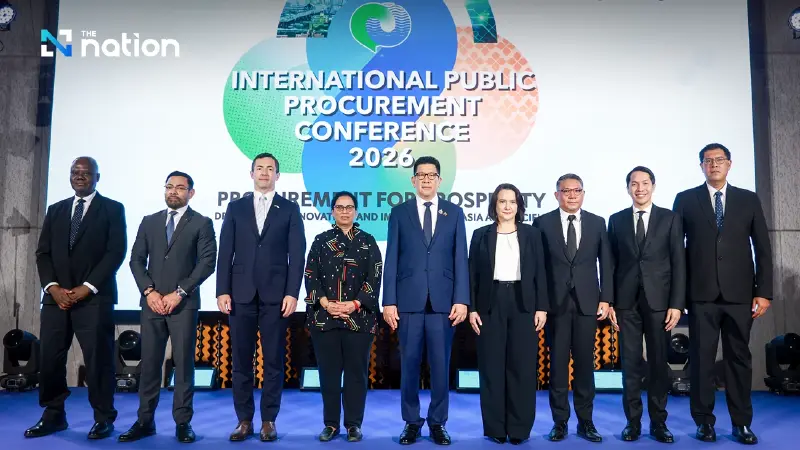


Global leaders gather in Bangkok to reimagine public procurement as a strategic driver of jobs, innovation, and inclusive economic growth across East Asia and Pacific
- Governments are shifting their view of public procurement from a simple administrative function to a strategic tool for driving economic growth, creating jobs, and fostering innovation.
- Constituting 10-20% of GDP in many Asia-Pacific economies, public procurement is a powerful economic lever that can be used to shape national development.
- The focus of procurement reform is moving beyond compliance and lowest-cost bidding to prioritize strategic outcomes like sustainability, innovation, and overall value.
- Digital transformation, through e-platforms and data analytics, is a key accelerator for modernizing public spending, increasing transparency, and improving decision-making.
- A primary goal is to align procurement with policy objectives, such as supporting small and medium-sized enterprises (SMEs) to ensure government spending translates into inclusive growth.
Global leaders gather in Bangkok to reimagine public procurement as a strategic driver of jobs, innovation, and inclusive economic growth across East Asia and the Pacific.
Public procurement, long regarded as a dry administrative exercise in government budgeting, is undergoing a profound transformation.
Across East Asia and the Pacific, policymakers, development finance institutions, and private sector leaders are repositioning how governments spend public money — not merely as a mechanism for purchasing goods and services, but as one of the most powerful tools available to shape economies, create jobs, and drive sustainable development.
That was the central message on Monday as the International Public Procurement Conference 2026 (IPPC 2026) opened its three-day programme in Bangkok, Thailand.
Co-hosted by Thailand's Comptroller General's Department, the World Bank, and the Asian Development Bank (ADB), with partnership from the Asian Infrastructure Investment Bank (AIIB), the conference convened hundreds of procurement leaders and policymakers from across the region under the theme Procurement for Prosperity: Driving Jobs, Innovation and Impact in East Asia and Pacific.

The scale of the opportunity
The sheer weight of public procurement in national economies underscores why its reform is so consequential. Public procurement accounts for between 10 and 20 per cent of GDP across many economies in the Asia-Pacific region, making government purchasing decisions among the most significant economic forces in operation.

"Public procurement often accounts for 15 to 20 per cent of GDP across Asia-Pacific economies," said Aaron Batten, the ADB's Country Director for Thailand, in opening remarks. "It is one of the most important policy instruments at the hands of government. It simultaneously touches markets, firms, service delivery, and directly on how citizens perceive the effectiveness of their government's institutions."
The implications are substantial. If even a fraction of that spending can be redirected with greater precision, transparency, and strategic intent, the downstream effects on employment, industrial competitiveness, and public service quality could be transformative — particularly at a moment of heightened global economic uncertainty.
From compliance to strategy
For decades, procurement reform has centred on process integrity: establishing clear rules, ensuring fair competition, and building public trust.
Those foundations remain essential. But speakers at Monday's opening session were united in arguing that procurement systems must now be asked to deliver considerably more.
Lalita Moorty, the World Bank's Regional Director for East Asia and the Pacific, framed the challenge in terms of the relationship between public spending and broader prosperity.
"Procurement sits at the intersection of three pillars of prosperity — strong public institutions, dynamic private markets, and inclusive economic growth," she said. "When procurement systems are predictable, transparent, and efficient, they lower the cost of doing business, crowd in private investment, and create space for innovation. But when they are not, they discourage participation, raise costs, and delay development outcomes."
The transition she described — from procurement as a compliance function to procurement as a strategic policy tool — is already under way in parts of the region, accelerated by digital technology and a growing body of evidence on what works.
Finland, she noted, is among those leading the way, deploying procurement dashboards as senior management instruments to identify bottlenecks and track portfolio performance across government spending.

Thailand's 4T approach
For Thailand, which is hosting the conference as part of a broader agenda of economic modernisation, the moment carries particular significance.
Deputy Prime Minister and Finance Minister Ekniti Nitithanprapas outlined the government's policy framework — which he described as the "4T approach" — encompassing Thailand market, transition, transformation, and together.
"Public procurement is no longer just about buying goods. It's about shaping the future of our economy," he said, noting that improving procurement efficiency alone could generate savings of up to 10 per cent of total project value, freeing resources for reinvestment in resilient and inclusive growth.
The government is advancing three connected reform pillars.
The first is digital procurement, through enhanced e-government platforms and expanded data use, to improve decision-making and transparency.
The second is clean procurement, embedding sustainability considerations directly into purchasing decisions to account for long-term environmental and fiscal impacts rather than short-term costs alone.
The third is innovation procurement, shifting emphasis from lowest-price outcomes towards performance-based criteria that create openings for new technologies, start-ups, and novel solutions.
Small and medium-sized enterprises (SMEs) — which the minister described as the backbone of the Thai economy and its largest source of employment — are a particular focus.
SME participation in public procurement rose by nearly 10 per cent in 2025, reflecting improved access and streamlined procedures. The government is also connecting its electronic procurement platform to banking supply chain financing systems to help SMEs secure working capital.

Technology as accelerator
Across all three speakers, digital transformation emerged as both the means and the measure of procurement modernisation.
The shift towards data-driven government purchasing — underpinned by analytics, interoperable systems, and artificial intelligence — is remaking how public institutions plan, execute, and oversee spending.
Batten from the ADB noted that his institution is working across its regional investments to move beyond lowest-cost bidding, introducing mandatory merit-point criteria that weigh quality, technical capability, innovation, and environmental and social performance.
"Procurement is evolving from a purely transactional task into one of the most strategic instruments of public policy," he said.

Moorty echoed the theme, arguing that digital procurement platforms are compressing timelines, improving transparency, and generating the data governments need to make better decisions.
"Technology is a very powerful accelerator of this transformation," she told delegates.
Jobs, inclusion, and the road to 2030
Running through the day's discussions was an acute awareness of the human stakes. Across East Asia and the Pacific, a young and ambitious workforce is entering labour markets at a time when global economic shocks are testing the resilience of even the strongest economies.
Whether public procurement translates government spending into productive employment — particularly for young people — will depend on deliberate choices about how those systems are designed.
"How government spends public resources can determine whether growth translates into jobs and shared prosperity," Moorty said.

Finance Minister Ekniti put it in similarly direct terms. When procurement is aligned with policy objectives, he argued, it delivers outcomes that extend well beyond cost efficiency.
"It creates jobs by supporting local businesses and economic participation for all. It drives innovation by opening doors of opportunity for new technologies and new ideas."
The conference continues through Wednesday, with participants exchanging tools, innovations, and partnership models to help governments across the region design procurement systems capable of delivering those outcomes.

The gathering builds on momentum from previous IPPC events in Seoul in 2024 and Manila in 2025 and is intended to help position procurement reform as a cornerstone of national development strategies heading into 2030.
"If the job is done well," Moorty concluded, "procurement becomes more than a process. It becomes a platform for prosperity."
The International Public Procurement Conference 2026 runs from 27 to 29 April in Bangkok, Thailand.
