
Thai pig farmers squeezed as prices fall below cost despite demand rebound
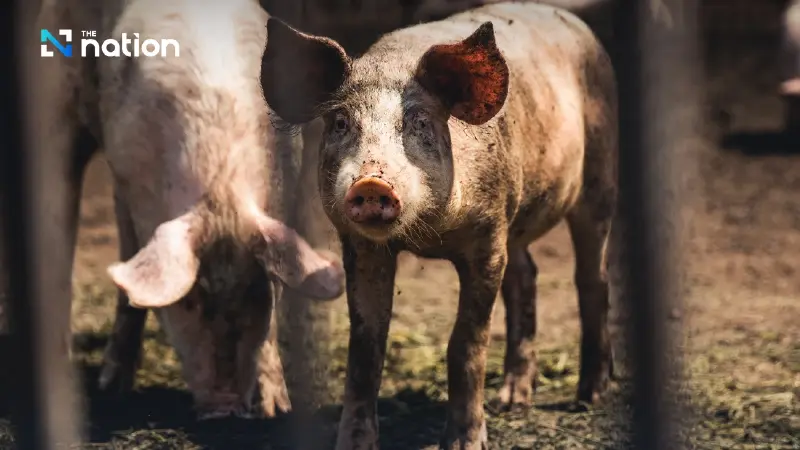


Thai pig farmers are facing mounting losses as farm-gate prices fall below production costs, despite recovering pork consumption, amid rising feed costs and fierce retail competition.
Thai pig farmers are facing mounting losses as farm-gate prices continue to fall below production costs despite a recovery in pork consumption, prompting the National Swine Raisers Association to warn of possible market distortion from aggressive pork-shop competition and suspected external supply.
Dr Kiattiphum Pruksawan, secretary-general of the National Swine Raisers Association, said the association had raised its concerns with the Department of Internal Trade during a meeting to monitor the pig price situation.
The meeting was chaired by Jirawut Suwan-ard, deputy director-general of the Department of Internal Trade.
Farm-gate prices plunge while costs rise
Kiattiphum said the pig price situation had changed sharply. Earlier, the main concern was that prices could rise, but the situation has now reversed, with farm-gate prices falling continuously while production costs remain high.
“At the first meeting, pig prices were around 68-70 baht per kilogramme. Today, prices in some areas have dropped to only 54-58 baht per kilogramme, while costs have risen, especially the price of feed corn,” he said.
He added that feed corn prices had risen from around 10.25 baht per kilogramme in April to 12.20-12.90 baht per kilogramme.
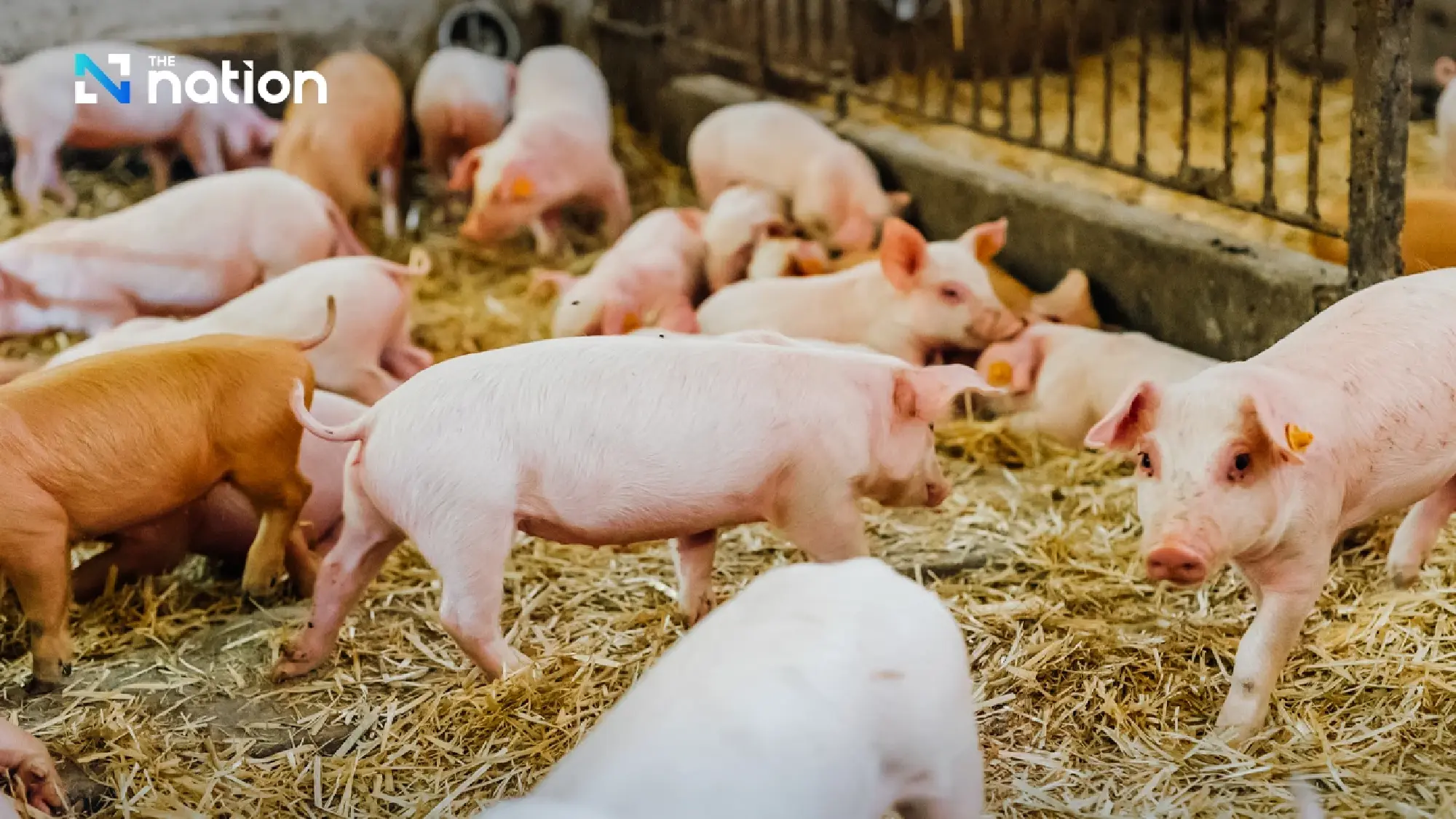

Feed corn pushes up production costs
The increase in corn prices has directly affected animal feed costs, as corn accounts for around 40-50% of pig feed formulas.
As a result, pig-raising costs have increased by around 2-3 baht per kilogramme. At the same time, lower farm-gate prices have left pig farmers facing average losses of about 1,500-1,800 baht per animal.
Consumption recovers, but prices remain weak
The association said pork consumption slowed in April to an average of around 61,600 pigs per day.
However, consumption recovered in May to around 65,000-66,000 pigs per day, close to the first-quarter average slaughter volume of 66,000-67,000 pigs per day.
Kiattiphum said this showed that consumer demand had not fallen significantly. Instead, the association believes farm-gate prices are being pressured by other market factors.
Pork-shop competition puts pressure on farmers
The association pointed to intense price competition among pork retail shops, or “pork shops”, as a key factor weighing on farm-gate prices.
Traditionally, Thailand’s main pork retail channels were pork stalls in fresh markets and modern trade outlets. However, pork shops have expanded rapidly in recent years, including outlets operated by large companies, farms selling directly to consumers, and new investors.
Some operators now have hundreds of branches nationwide, increasing price competition across the retail market.
Although pork shops have helped improve hygiene standards, the association warned that fierce retail price competition has weakened bargaining power at the farm-gate level, especially for small-scale farmers who rely mainly on farm-gate sales.
Farmers seek return to cost-covering prices
Sitthiphan Thanakiatphinyo, president of the National Swine Raisers Association, said farmers were still trying to push farm-gate prices back towards production cost levels of around 70-72 baht per kilogramme.
However, they have not yet succeeded, despite stronger consumption since the Songkran festival.
He said a project to cut the piglet production cycle had now entered its third month. Participating farms have been strictly implementing the measure to reduce output in the second quarter and help rebalance the market.
Even so, farm-gate pig prices have not recovered as expected.
“When consumer demand has not declined, but farm-gate prices remain below 70 baht, there are concerns that the market may have additional supply from unknown external sources. This still needs to be monitored and investigated,” Sitthiphan said.
Regional prices remain below production cost
In week 21 of 2026, farm-gate live pig prices remained below production costs across several regions:
- East: 56-60 baht per kilogramme
- Northeast: 64-66 baht per kilogramme
- North: 62-64 baht per kilogramme
- South: 62 baht per kilogramme
The association said the price levels were continuing to put pressure on domestic pig farmers, particularly smaller operators with limited bargaining power.
Association to seek DSI update on pork-smuggling cases
The National Swine Raisers Association is preparing to submit a letter to the Department of Special Investigation to follow up on progress in pork-smuggling cases.
The association said it remains concerned that illegal imports of pork parts may still be affecting the market’s price structure and weakening the competitiveness of local pig farmers.
