
NESDC warns Thai exports still exposed to fresh US tariff measures
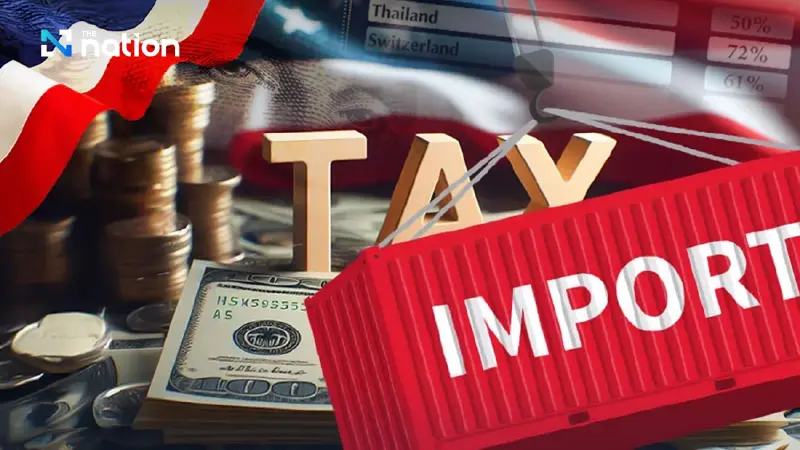


Thailand’s exports to the US remain vulnerable to renewed tariff pressure despite lower current import duties, as Washington may deploy fresh trade measures under Section 301.
Thailand’s exports to the United States remain exposed to renewed tariff pressure despite a recent decline in effective US import duties, as Washington is likely to deploy other trade measures, including Section 301 investigations, the National Economic and Social Development Council has warned.
The NESDC said US trade policy remained uncertain and that the US government could invoke additional legal tools to impose higher import tariffs in the next phase.
The agency identified Section 301 of the Trade Act of 1974 as a key risk for Thailand, amid US scrutiny of several trading partners, including Thailand.
US probes Thailand over trade surplus and production capacity
According to the NESDC, the United States has announced investigations into 16 trading partners, including Thailand, over several trade-related concerns.
One key issue is structural excess capacity. The US has raised questions over Thailand’s rapidly widening trade surplus with the US, especially in major export industries such as automobiles and auto parts, machinery and components, and rubber.
The NESDC said Thailand’s manufacturing sector has also shown signs of relatively high excess capacity, reflected in capacity utilisation that has remained below 60% for a prolonged period, even as exports to the US continued to expand strongly.

Forced-labour inquiry also under way
Another area of concern is forced labour.
The US has been reviewing policies and measures aimed at banning imports of goods produced with forced labour from 60 trading partner countries.
The Thai government, led by the Commerce Ministry, has submitted its views to the US for consideration. The process is now moving towards a public hearing involving stakeholders.
The NESDC said the US is expected to announce the results of the inquiry by July 2026.
Tariff pressure eased after reciprocal duties cancelled
The NESDC said US tariff pressure on Thai goods had eased after the US Supreme Court ruled on February 20, 2026, to cancel reciprocal tariffs imposed under the International Emergency Economic Powers Act.
Thailand had previously been subject to a 19% US import tariff under the reciprocal tariff measure.
However, Washington later invoked Section 122 of the Trade Act of 1974, imposing a 10% import tariff on goods from all countries for 150 days, from February 24 to July 24, 2026.
As a result, the average tariff rate imposed by the US on Thai goods and other major import markets declined significantly.
Thailand’s effective tariff rate falls to 5.3%
The NESDC said Thailand’s average real effective tariff rate across all product categories fell to 5.3% in March 2026, down from 8.2% in August 2025, when reciprocal tariffs began to take effect.
By comparison, Vietnam faced a rate of 7%, the Philippines 5.1%, and Malaysia 4.2%.
The NESDC said tariff rates had dropped sharply after Section 122 replaced the earlier IEEPA-based reciprocal tariff measure.
Brazil saw the largest decline at 15.56%, followed by China, India and Vietnam. Thailand’s US tariff rate fell by 4.57 percentage points from the period when reciprocal tariffs were in force.
Key Thai exports see tariff reductions
The NESDC said most key Thai exports to the US recorded a significant decline in actual effective tariff rates in March 2026, in line with the broader reduction across all product categories.
Major products affected included:
- Electrical transformers, accounting for 3.62% of Thailand’s exports to the US, with the tariff rate falling to 8.68% from 17.10% in the previous month
- Air conditioners, accounting for 2.86%, with the tariff rate falling to 13.30% from 18.67%
- Solar cells, accounting for 1.76%, with the tariff rate falling to 10% from 16.99%
- Electrical control panels, accounting for 1.55%, with the tariff rate falling to 11.96% from 19.51%
Compared with Thailand’s major ASEAN competitors, most Thai products faced broadly similar actual tariff rates.
China, however, continued to face relatively high US import tariffs, despite a decline from previous levels.
Exempted products continue strong growth
The NESDC said products exempted from Section 122 tariffs accounted for 61.2% of all US imports from Thailand.
Thai exports in this exempted group continued to expand strongly, growing by 64.4% in March 2026.
Most of the exempted goods were in the same categories as products previously exempted from reciprocal tariffs, particularly machinery and electronics.
Key export items included:
- Processing units, accounting for 34.4% of the exempted group, with exports expanding by 247%
- Radio transmitters and receivers, accounting for 33.9%, with exports rising by 87.3%
- Assembled printed circuit boards, accounting for 4.7%, with exports surging by 297.8%
However, exports of most agricultural products and processed agricultural goods continued to decline, in line with weaker demand and intense price competition in the global market.
US trade measures remain key risk to Thai economy
NESDC secretary-general Danucha Pichayanan said US trade barriers remained a major risk to Thailand’s economy in 2026.
Although current US import tariff rates are lower than in 2025 following the cancellation of reciprocal tariffs, the US government is likely to introduce additional trade measures, he said.
Danucha said political pressure ahead of the US midterm elections in late 2026 could increase the risk of further trade action.
Possible measures include tariffs on transshipment goods, the return of high US import tariffs on Chinese goods after the end of the tariff-relief period on November 10, 2026, the removal of import-tariff exemptions under the USMCA, and product-specific tariffs.
Thailand urged to prepare for Section 301 risks
The NESDC said macroeconomic policy for the rest of 2026 should focus on reducing the impact of US trade barriers.
Thailand should prepare for the Section 301 investigation process and guard against possible risks from Section 201 of the Trade Act of 1974, the agency said.
The council also urged the government to accelerate the use of domestic goods, raw materials and intermediate goods to reduce exposure to external trade shocks.
NESDC calls for faster market diversification
The NESDC said Thailand should expand economic cooperation and seek new export markets to diversify risk, particularly for products that could lose market share under stricter US trade measures.
It also urged the government to speed up free trade agreement negotiations currently under way with the European Union, South Korea, Pakistan and Turkey.
The agency said Thailand should also begin preparing studies for possible future trade negotiations with new high-potential partners, including countries in the Middle East, Africa and South Asia.
