
BOT points to global economic structural shift and rising uncertainty
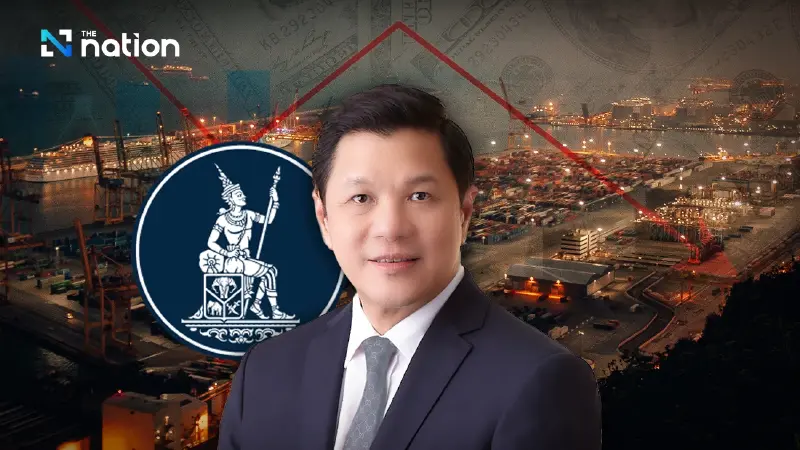


Bank of Thailand governor says policymakers need short- and long-term measures as conflict, fragmentation and uncertainty reshape the global economy
- The Bank of Thailand (BOT) has identified a major structural shift in the global economy, moving away from the previous order driven by trade liberalization and financial integration.
- This shift is accompanied by rising uncertainty, fueled by intensifying geopolitical tensions and global conflicts that disrupt international trade, investment, and production.
- In response, the BOT advises policymakers to focus on short-term macroeconomic stability to handle external shocks and long-term economic restructuring to boost growth potential and resilience.

Vitai Ratanakorn, governor of the Bank of Thailand (BOT), said in his opening remarks at the IMF Economic Review Conference, held under the theme “Power, Markets, and Strategy in a Changing Global Order”, that over recent decades, trade liberalisation, global financial integration and regional co-operation had been key drivers of economic growth and opportunities for countries in Asia and around the world.
However, this global economic order is changing, with the world economy facing a major structural shift alongside rising uncertainty, while international political tensions are intensifying and the dividing line between geopolitics and economics is beginning to blur.
Conflicts in several parts of the world are having a direct impact on international trade and investment, production, inflation and, ultimately, people’s livelihoods.
This is a period in which global economic power is shifting, and market structures are being reorganised.
Policy strategies need to be reviewed and adjusted to align with the new context.

From a policy perspective, policymakers need measures to respond in both the short and long term.
In the short term, macroeconomic policy must preserve stability to deal with external shocks.
Inflation expectations that remain anchored within an appropriate range have allowed many countries, including Thailand, to retain policy space, although policy must still be conducted cautiously.
In the long term, he viewed economic restructuring as necessary to raise growth potential and strengthen the ability to cope with volatility.
This applies especially to developing countries in Asia and other regions that still rely on economic openness and international co-operation, amid a world that is likely to become more fragmented and increasingly uncertain.
Vitai said that, in this context, rigorous and credible economic research plays an important role in supporting policymaking, because it helps policymakers organise facts, test ideas and clearly understand economic mechanisms that may otherwise be difficult to see.
In addition, the conference is also an important milestone on the path towards the Annual Meetings of the International Monetary Fund (IMF) and the World Bank Group, which Thailand will host later this year.
The issues of power, markets and strategy amid a changing world order will form an important basis for the meetings’ theme, “Thailand’s New Horizons: Empowering People, Building Resilience”.
Thailand aims to promote a global exchange of views on strengthening economic resilience and empowering people and the business sector to adapt and grow amid future changes in the global economy.
