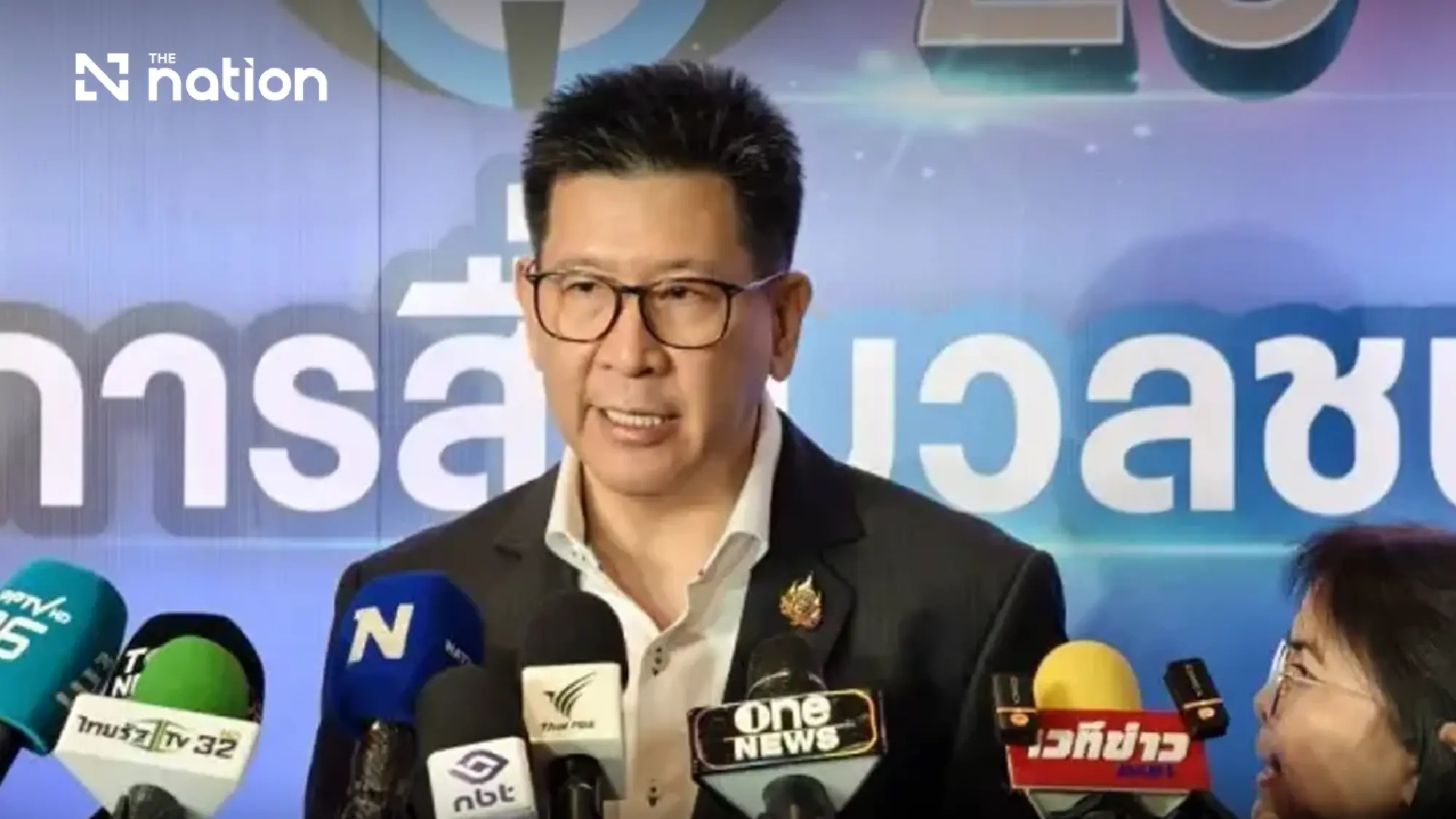
Ekniti backs energy transition and a 5T economic model to tackle import dependence, low growth, inequality and competitiveness risks
Finance Minister Ekniti Nitithanprapas cited a recent 500 billion baht current-account deficit, caused by high energy import costs, as the primary justification for an urgent energy transition.
The deficit highlights Thailand's economic vulnerability due to its heavy dependence on imported oil and gas, which accounts for over 10% of its GDP.
The government's transition plan, funded by a 400 billion baht emergency decree, focuses on three priorities: shifting to cleaner energy, moving the transport sector to EVs and biofuels, and upskilling the workforce for green industries.
Deputy Prime Minister and Finance Minister Ekniti Nitithanprapas has defended the government’s urgent push for energy transition, warning that Thailand could face deeper economic pressure if it remains heavily dependent on imported oil and gas.
Speaking at the 29th anniversary event of the National Press Council of Thailand at the Royal River Hotel on July 4, Ekniti addressed the Constitutional Court’s scheduled ruling on the emergency decree authorising 400 billion baht in borrowing to address the energy crisis, including the Finance Ministry’s 200-billion-baht borrowing portion.
He said the decree was currently in force and the government had already begun work under it to accelerate the country’s energy transition. The shift, he said, must be pursued immediately because delaying reform could expose Thailand to a more severe economic crisis.
Ekniti said the use of funds under the decree was therefore urgently needed to reform Thailand’s energy infrastructure.
Heavy energy imports expose Thailand to economic risk
Ekniti said Thailand imports both oil and natural gas, with energy imports accounting for more than 10% of gross domestic product, the highest share in ASEAN.
He said the risks became clear during the recent Middle East crisis, when Thailand recorded a current-account deficit of nearly 500 billion baht over two months.
The figure, he said, showed why Thailand must accelerate energy transition. Without such a shift, the country could face both economic stress and a future cost-of-living crisis.
Three priorities for energy transition
Ekniti said the government had set three main objectives for the use of funds under the energy transition plan and was ready to move ahead immediately if the Constitutional Court’s ruling did not halt implementation.
The three priorities are:
Energy use transition: The government will promote cleaner energy, including sunlight and solar power, with the aim of helping people reduce electricity bills and sell electricity back to the system through net metering. This requires investment to upgrade the grid so it can support power trading and electricity buy-back.
Transport transition: Thailand will seek to reduce costly diesel imports by shifting the transport sector towards electric vehicles, or EVs, and alternative fuels that can be produced domestically, such as B20 biodiesel and ethanol, described as “fuel from the land”.
Workforce transition: The government will focus on building skills and developing Thai workers for the clean-energy and EV industries, so they can become more capable and earn higher incomes from the transition.;
Future Fund to support clean-energy infrastructure
Ekniti said the energy transition would not rely only on borrowing under the emergency decree.
The government also plans to mobilise funding through other channels, including the Thailand Future Fund, to invest in infrastructure projects such as solar farms operated by electricity agencies.
He said this approach would help reduce reliance on direct borrowing and ease pressure on public debt.
Funds from the renewable energy fund would also be used to support business reform and help the transition towards clean energy.
“This transition is not merely short-term relief, but an investment in the future to strengthen the country’s long-term competitiveness,” Ekniti said.
5T model to reshape Thai growth
Ekniti said driving the economy with limited resources required a clear framework. He proposed a “5T” model to help Thailand use public resources effectively while preparing the economy for long-term change.
The 5T approach includes:
Target: Budget spending and policy measures must be directed to the right groups, including cost-of-living support, investment and assistance for SMEs, so limited resources are used efficiently.
Transition: Thailand must accelerate its shift towards a green economy through a Green Energy Transition, while supporting investment in clean-energy infrastructure.
Transform: The country must be transformed through three core investment areas:
Infrastructure investment: Investment in people and AI-related skills.
Regulatory reform to make investment easier
Ekniti said this would include pushing the FastPass system for BOI investors and supporting investment in data centres, chips and AI-related industries.
Transparency: The government must improve transparency by disclosing budget data in formats that can be analysed further by AI, making public scrutiny more efficient.
Teamwork: Economic policy must be driven through cooperation between the state, the private sector and economic agencies, including the Joint Public and Private Sector Consultative Committee, or JSCC. The aim is to jointly push investment, regulatory reform, workforce development and fiscal stability.
AI tool to help small traders
Ekniti also pointed to the use of AI under the Nok Krasip project, which helps small traders analyse sales, costs and profits while preparing financial information.
He said the tool could help small business operators gain easier access to formal loans by giving them better financial records and clearer business data.
Ekniti stressed that AI should not be a technology reserved only for large businesses or major organisations. Instead, it should become a practical tool to lift small entrepreneurs and strengthen their ability to compete.
He said the project would serve as a model to be presented at the World Bank and IMF meetings that Thailand will host later this year.
Thailand urged to adjust before it is too late
Ekniti said the world was changing rapidly in security, energy and AI, while Thailand was facing pressure from the cost-of-living crisis, low growth and inequality.
He warned that if Thailand failed to accelerate its transition in energy, investment, infrastructure and human-capital development, the country would lose more of its competitiveness.
Thailand’s economic drive, he said, would require cooperation from all sectors so the country could withstand global crises and achieve sustainable long-term growth.