
Thai Airways reduces fares on selected routes as jet fuel prices ease
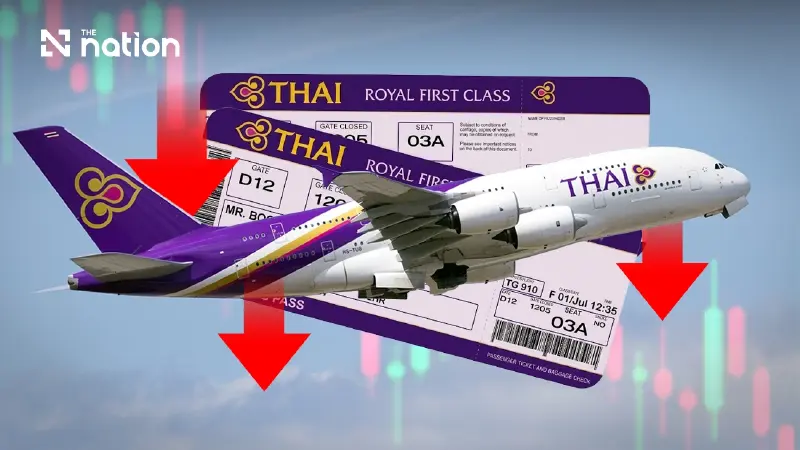


Lower Jet A-1 costs and market conditions have allowed the airline to reduce fares from Wednesday (July 1, 2026), while bookings remain on target.
- Thai Airways is reducing fares by an average of 20-30% on select routes starting from early July 2026.
- The price cut is a direct result of falling jet fuel prices, which have dropped from a peak of US$240 per barrel to approximately $110.
- This reduction applies to both the base ticket fare and fuel surcharges.
- The airline's goal is to strengthen competitiveness and attract more customers without entering a full-scale "price war."
Tensions in the Middle East have begun to ease, causing global oil prices to fall steadily.
As a result, Thai Airways International Public Company Limited has cut fares across its system by an average of about 20-30% on some routes from early July 2026 to strengthen its competitiveness.
The reduction covers both ticket fares and fuel surcharges.
Chai Eamsiri, chief executive officer of Thai Airways International Public Company Limited, said the airline had set up a “war room” team to monitor market conditions and oil prices closely every day.
It found that Jet A-1 aviation fuel prices had started to fall to about US$110 per barrel, down from a previous peak of US$240 per barrel.
Although the price remains higher than at the start of last year, or before the war in the Middle East, when aviation fuel stood at US$90 per barrel, it still allows the company to reduce ticket prices, even if fares may not yet return to pre-war levels.
From Wednesday (July 1, 2026), Thai Airways announced a 20-30% reduction in airfares across its system on some routes, aiming to keep prices competitive and attract more customers.
Although the overall global situation has not returned to normal, Thai Airways’ bookings for the second half of the year remain satisfactory and in line with target, with customer response coming in faster and in greater numbers.
Since June, the airline has recorded continued double-digit growth.
It therefore expects Thai Airways’ passenger load factor to improve, averaging about 70% towards the end of the year.
At the same time, Thai Airways continues to monitor global oil supply carefully, as the current supply remains below normal because refineries in some regions have been damaged.

Kittiphong Sansomboon, chief commercial officer of Thai Airways International Public Company Limited, said that although airfares had been reduced in line with market mechanisms, prices had not yet fallen close to levels seen before the war in the Middle East.
Thai Airways had lowered fares from the March-April period because jet fuel prices, although down, were still not the same as in the past.
Thai Airways’ business direction will therefore continue to follow the “Quality Revenue” approach, focusing on generating quality revenue rather than entering a “Price War” that could have a negative long-term impact on the company.
Its management is based on two main areas:
- Capacity Management: strictly adjusting seat capacity to match demand in each area.
- Maintaining Yield, or return per unit: prioritising fare levels that cover costs, without focusing on price-cutting competition with other airlines, while choosing to compete only in markets where necessary.
In marketing and service, Thai Airways has placed greater emphasis on Customer Centric, or customer-centred, operations, with development plans across several dimensions, including enhancing the passenger experience and continuing to accelerate improvements in food quality and in-flight service.
