
Stock rally and AI boom lift Thailand’s richest to US$187bn
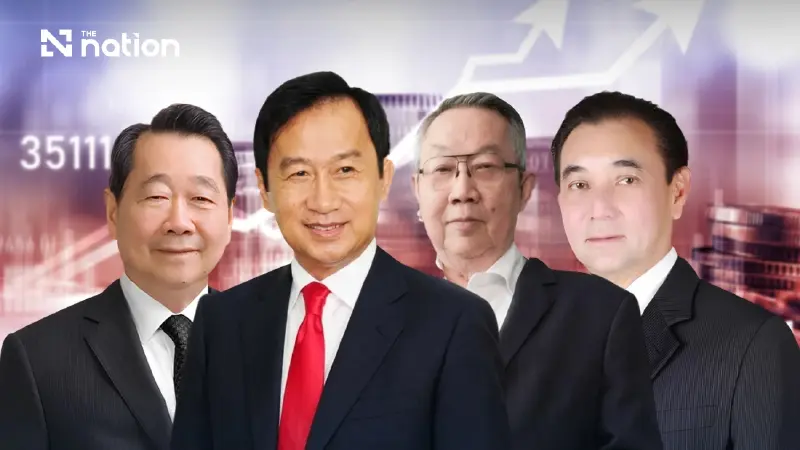


Forbes’ 2026 Thailand rich list shows the combined wealth of the country’s 50 richest rising 10% to US$187 billion, led by listed-stock gains, Red Bull, telecoms, banking and AI data-centre investment.
Thailand’s 50 richest saw their combined wealth rise 10% to US$187 billion this year, as a strong stock-market rally, recovering exports and firmer domestic consumption lifted fortunes across energy, telecoms, banking, retail and industrial estates, according to Forbes’ 2026 ranking.
While Chalerm Yoovidhya and family retained the No.1 spot for a third consecutive year with US$47 billion, the sharper economic story lies in where new wealth is being created. Sarath Ratanavadi posted the biggest gain in dollar terms, Jareeporn Jarukornsakul surged on AI data-centre demand, and the Chearavanont family remained central to Thailand’s telecom and digital infrastructure narrative through the TRUE deal.
Wealth gains reflect stronger capital-market cycle
Forbes said 33 of the 50 tycoons on this year’s list saw their fortunes increase, with the stock market’s recovery playing a major role in lifting listed-company valuations. The gains came despite Thailand still facing economic challenges, underlining how strongly capital-market performance can affect billionaire wealth.
The entry threshold for the list also rose sharply to US$555 million, up from US$420 million a year earlier, signalling a broader rise in wealth among Thailand’s richest families and business owners.

Red Bull keeps Chalerm at No.1
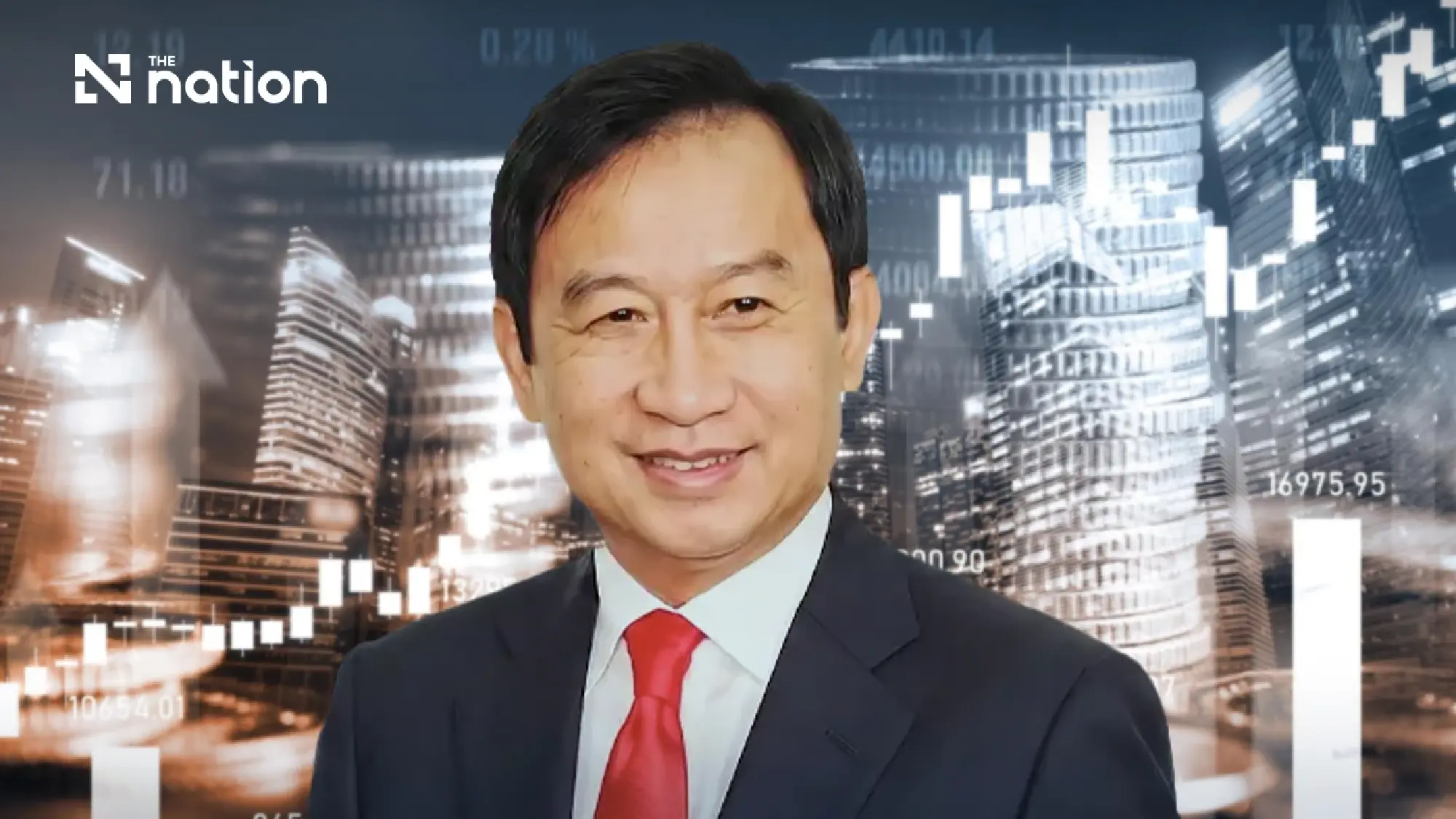
Chalerm Yoovidhya and family, owners of the Red Bull energy-drink empire, remained Thailand’s richest with assets worth US$47 billion, or around 1.54 trillion baht, based on the Bank of Thailand’s exchange rate of 32.672 baht per US dollar on June 18, 2026.
Their fortune was supported by Red Bull’s continued global growth. Forbes said the company’s 2025 revenue rose more than 8% to €12.2 billion, or about US$13.9 billion, with worldwide sales approaching 14 billion cans.
CP holds second as TRUE deal deepens digital push
The Chearavanont brothers of Charoen Pokphand Group held second place with a combined net worth of US$36.6 billion, or around 1.2 trillion baht.
A key move this year was the telecom transaction involving Arise Digital Technology, an investment company owned by Suphachai Chearavanont. Forbes said Arise agreed to buy nearly 25% of TRUE from Norway’s Telenor Group for more than 100 billion baht, with the right to acquire an additional 5.4% within two years.
Telenor said separately that it had agreed to sell 24.95% of TRUE to Arise at 11.70 baht per share, with a put/call option for the remaining 5.35% two years after the initial sale. Reuters reported the total Telenor exit from TRUE at 39 billion Norwegian crowns, or about US$3.92 billion.
Sarath’s rise shows shift from energy to finance
Sarath Ratanavadi, founder and major shareholder of Gulf Development, remained Thailand’s third-richest person with US$17.6 billion, or around 575 billion baht.
He was the biggest gainer in dollar terms, adding US$5.6 billion to his fortune. The increase reflected Gulf’s expansion beyond energy and telecoms, especially its move to raise its stake in Kasikornbank to nearly 10%, making it the bank’s second-largest shareholder.
The move highlights a wider economic shift: Thailand’s major business groups are no longer relying only on their original sectors, but are expanding across finance, digital infrastructure and platform-linked services.
Central and Frasers lift retail and property wealth
The Chirathivat family rose to fourth place after their wealth increased by more than one-third to US$11.7 billion, or around 382 billion baht.
The gain was supported by Central Retail Corporation, the flagship listed retail arm of Central Group. CRC, which operates department stores, supermarkets and speciality retail stores, plans to invest 18 billion baht this year to renovate and expand branches in Thailand and Vietnam.
In fifth place, Charoen Sirivadhanabhakdi and family saw their fortune rise about 10% to US$11.5 billion, or around 376 billion baht, helped by a restructuring of the real-estate portfolio under Singapore-listed Frasers Property.
AI data centres create new wealth winners
One of the clearest new-economy signals came from Jareeporn Jarukornsakul, co-founder and group chief executive of WHA Corporation, whose fortune jumped 69% to US$1.25 billion.
WHA, which develops industrial estates, warehouses and logistics facilities, has benefited from rising foreign demand for AI data-centre investment in Thailand. That trend is turning industrial land, logistics platforms and power access into key wealth drivers.
Two returnees to the rich list also reflected the AI infrastructure theme. Bancha Ongkosit, founder of KCE Electronics, benefited from demand for AI-related electronics and printed circuit boards, while Gunkul Dhumrongpiyawut, founder of Gunkul Engineering, gained from the company’s push into green-power supply for data centres.
Succession reshapes several fortunes
This year’s list also reflected a generational transition in several major Thai business families.
Forbes noted that three former members of the list had died: Krit Ratanarak, the media tycoon behind Bangkok Broadcasting and Television, with wealth passing to his son Chachchon Ratanarak; Dr Prasert Prasarttong-Osoth, co-founder of Bangkok Dusit Medical Services, whose wealth is now listed under the Prasarttong-Osoth family; and Chuchat Petaumpai, co-founder of Muangthai Capital, with Daonapa Patcharachai appearing on the list this year.
Thailand’s top 10 richest in 2026
- Chalerm Yoovidhya and family — US$47 billion, or 1.54 trillion baht
- Chearavanont brothers — US$36.6 billion, or 1.2 trillion baht
- Sarath Ratanavadi — US$17.6 billion, or 575 billion baht
- Chirathivat family — US$11.7 billion, or 382 billion baht
- Charoen Sirivadhanabhakdi and family — US$11.5 billion, or 376 billion baht
- Chaiyawan family — US$5.1 billion, or 167 billion baht
- Prasarttong-Osoth family — US$3.7 billion, or 121 billion baht
- Sathien Setthasit — US$2.8 billion, or 91.5 billion baht
- Aiyawatt Srivaddhanaprabha and family — US$2.4 billion, or 78.4 billion baht
- Chachchon Ratanarak — US$2.3 billion, or 75.1 billion baht
Wealth map points to Thailand’s next growth engines
The 2026 Forbes rich list shows that Thailand’s old wealth pillars — consumer brands, conglomerates, retail, beverages and property — remain powerful. But the year’s biggest changes point to a different growth engine: listed equities, telecom consolidation, banking stakes, AI data centres, green power and digital infrastructure.
That shift suggests Thailand’s next phase of billionaire wealth will be increasingly tied to how quickly the country can attract technology investment, scale data-centre capacity and connect traditional conglomerates with the digital economy.
Source: Forbes Thailand
