
SEC removes disputed TRUE stake reports after inaccuracies found



Thailand’s SEC has removed disputed Form 246-2 securities reports linked to Supaporn Phimpong, refocusing attention on TRUE, market disclosure and legal risk.
Thailand’s Securities and Exchange Commission has removed a series of disputed securities acquisition reports from its disclosure system after finding inaccuracies in Form 246-2 filings involving Supaporn Pimpong, including a widely watched report that appeared to show her building a major stake in TRUE.
The regulator warned that submitting false or materially misleading information to the SEC may constitute an offence under the Securities and Exchange Act.
The case has become a market-confidence test for Thailand’s disclosure system, as Form 246-2 filings are closely monitored by investors for signs of changes in major shareholdings, control structures and possible large block trades.

Disputed TRUE filing triggered market scrutiny
The controversy began after a Form 246-2 summary published through the Stock Exchange of Thailand showed Supaporn Pimpong as having acquired TRUE shares on June 15, 2026, equivalent to 3.2174% of total voting rights, raising her reported holding to 7.0992%. Such a stake would have made the name one of the most closely watched shareholders in the telecom operator.
TRUE later told the SET that the information on the SEC’s Form 246-2 website had been marked as preliminary, meaning it was incomplete and/or under review. The company also said some details may not be accurate because TRUE had never offered preference shares to the general public and currently had no outstanding preference shares.

SEC finds seven reports across six securities
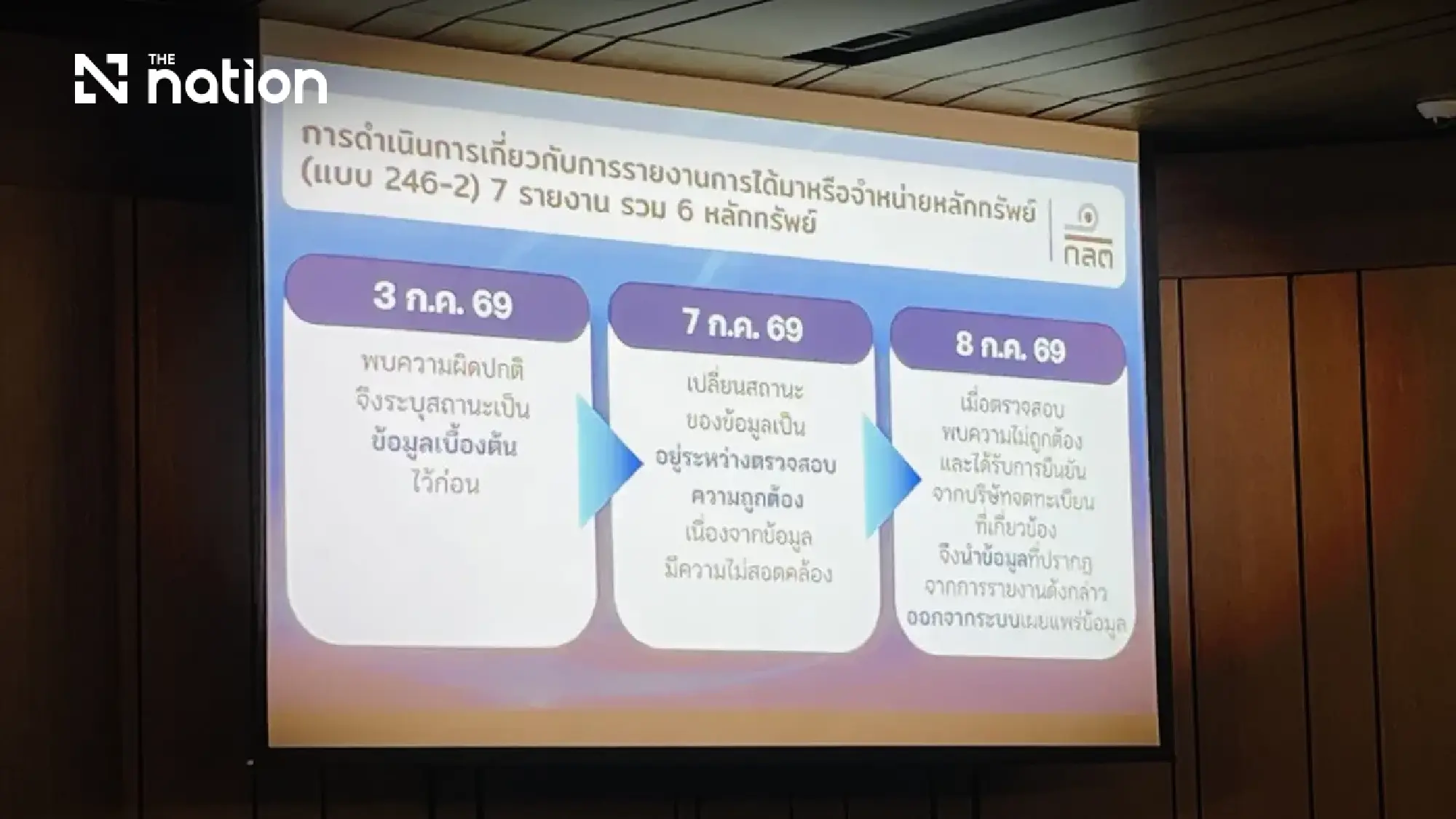
SEC Secretary-General Pornanong Budsaratragoon said the regulator examined seven reports covering six securities. The reported acquisitions were said to have taken place at different times from 2021 onwards, but were entered into the SEC system on June 30 and July 2, 2026.
After detecting irregularities, the SEC first marked the information as “preliminary information” on July 3. On July 7, the status was changed to “under verification” because the data appeared inconsistent. After further checks and confirmation from relevant listed companies on July 8, the SEC removed the information from its public disclosure system.
Three key inaccuracies identified
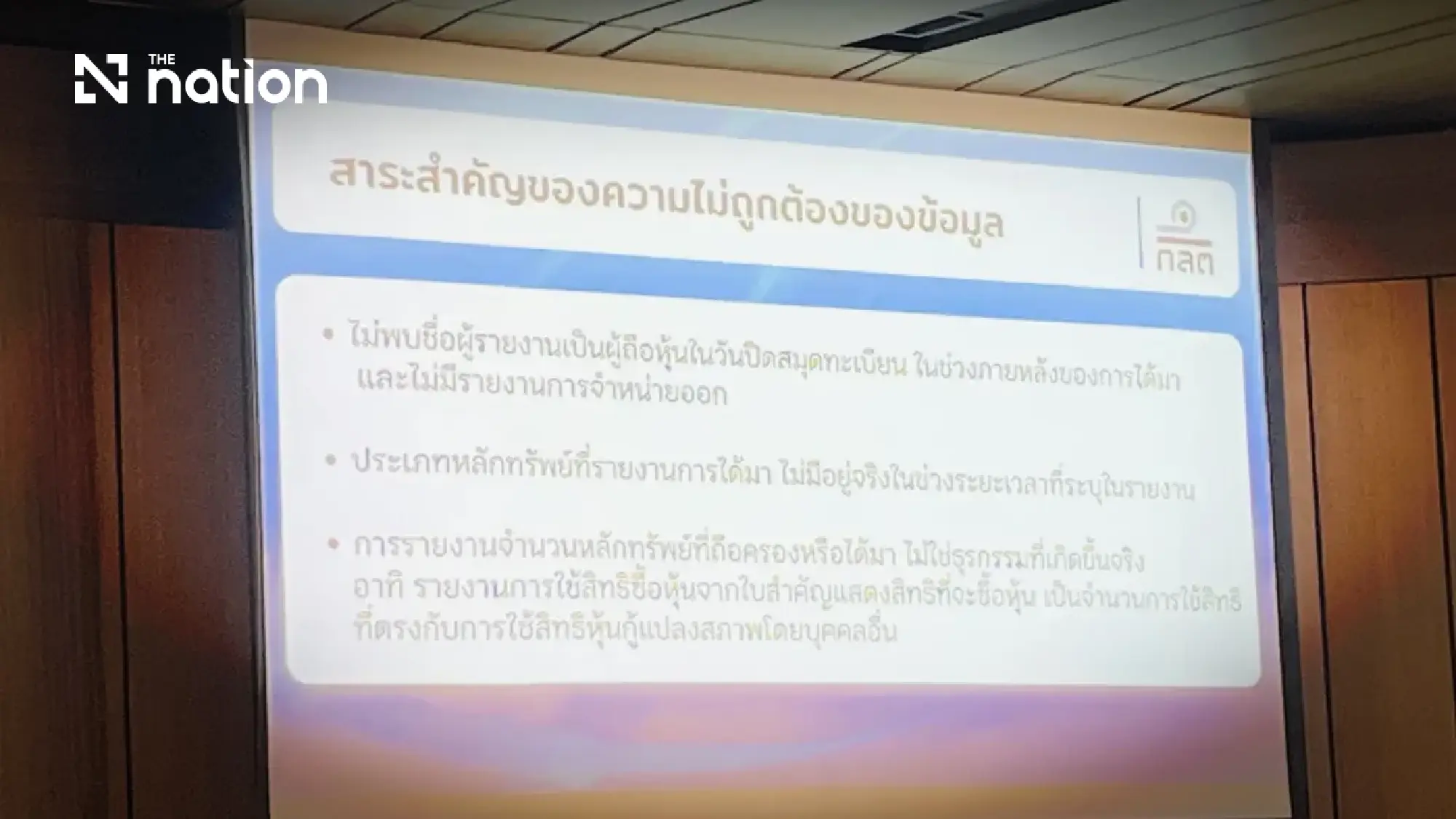
The SEC said the inaccuracies centred on three main issues. First, the filer’s name was not found on shareholder registers after the reported acquisition dates, and there were no corresponding disposal reports. Second, some types of securities reported as acquired did not exist during the stated periods. Third, some reported holdings or acquisitions did not reflect actual transactions, including cases where the reported exercise of warrant rights matched convertible-debenture exercises by another person.
The regulator also said the same filer had submitted Section 59 reports despite not being a director, executive or person required to report under that section. Those records were also removed from the system.
TRUE says business fundamentals unchanged
TRUE’s earlier clarification to the SET said the questioned Form 246-2 report remained subject to SEC review. The company added that it did not expect the matter to have any material impact on its business direction, management or operations.
The company’s position was later reinforced by TRUE chairman Suphachai Chearavanont, who dismissed the disputed shareholding report as “inaccurate news” and suggested that further clarification should come from the SEC, the agency responsible for reviewing the filing.
UBS link adds trading context
The TRUE case attracted extra market attention because of a separate share-sale transaction involving CP Group and UBS AG London Branch. TRUE disclosed on July 6 that CP Group and its group companies had completed the disposal of remaining TRUE shares equal to about 2.585% of total issued shares to UBS AG London Branch, while CP Group and its group companies would continue to hold about 19.72% of TRUE after the transaction.
That background made the disputed Form 246-2 report even more sensitive for investors, as large shareholder movements involving TRUE, foreign financial institutions and major shareholders can influence market perception.
TRUE shares trade higher as investors monitor SEC action
As of 12.00pm on July 9, 2026, TRUE shares were trading at 13.10 baht, up 0.20 baht or 1.55%, with trading volume of 32.27 million shares and turnover of about 422.06 million baht, according to SET data.
The regulatory action shifts the focus from whether Supaporn had become a major TRUE shareholder to a broader issue: how quickly questionable disclosures can be flagged, verified and removed before they distort investor decision-making.
Legal process continues
The SEC said the enforcement process is now at the stage of seeking explanations from relevant persons. The regulator stressed that submitting false information, or information that may cause a material misunderstanding, to the SEC where it is disclosed to the public may fall under Section 302/1 of the Securities and Exchange Act B.E. 2535.
For investors, the next key issue is whether the SEC’s review leads to legal action, and whether the regulator strengthens safeguards around public disclosure of major-shareholder reports.
