
MEDEZE, GPO build Thailand cell culture media production base
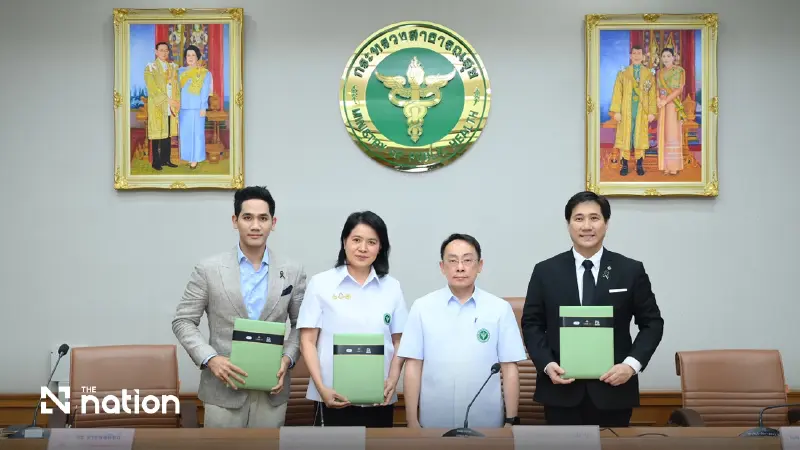


MEDEZE, GPO and Cretan Associates will form GPO MEDEZE Empower with 105 million baht in registered capital to expand Thailand’s ATMPs and biopharma production.
MEDEZE, the Government Pharmaceutical Organisation (GPO) and Cretan Associates have signed a memorandum of understanding to establish GPO MEDEZE Empower, a new joint venture with initial registered capital of 105 million baht.
The company will develop a production facility for cell culture media and advanced therapy medicinal products (ATMPs), aiming to reduce Thailand’s reliance on imported raw materials and strengthen the country’s capacity in biopharmaceutical research and manufacturing.
The partners also intend to support Thailand’s ambition to become a regional biopharma and medical innovation hub, while laying the groundwork for a stronger domestic supply chain in advanced medical technology.
GPO MEDEZE Empower is also expected to develop into a contract development and manufacturing organisation (CDMO) for biopharmaceutical products. The platform is designed to support research by universities, hospitals, scientists and biotechnology companies in Thailand and overseas.
The venture has set a target of reducing production and cell-therapy treatment costs by about 30–50%, which would help widen public access to high-quality medical innovations that meet international standards.

Thailand moves from medical services to medical innovation
Dr Somruek Chungsaman, permanent secretary for public health, described the establishment of GPO MEDEZE Empower as another important step in public-private cooperation to advance Thailand’s high-level medical industry.
He noted that Thailand was already recognised internationally as a medical hub, supported by the strength of its healthcare professionals, the quality of its hospitals and confidence among patients from Thailand and abroad.
The next goal, he explained, was to move beyond being a country known for quality medical services and become one that can build knowledge, develop technology and own its own medical innovations.
One key area in that shift is ATMPs, which cover advanced medical approaches such as cell therapy, gene therapy and biotechnology, and are reshaping treatment models worldwide.
“ATMPs are not merely medical innovations. They represent an important opportunity for Thailand to build health security, reduce dependence on foreign technology and strengthen national competitiveness,” Somruek said.
“Investment in advanced medical technology today is therefore an investment in the future. It builds the foundation for Thailand to become a true medical innovation hub.”

GPO targets health security and local production
Dr Mingkwan Suphanpong, director of the GPO, said the collaboration was aligned with the organisation’s long-standing mission to ensure security in medicines, medical supplies and the public health system.
She explained that the goal was not only to ensure public access to quality medical products, but also to develop Thailand’s long-term ability to rely on its own health technology.
As modern medicine continues to evolve, ATMPs are becoming increasingly important to the future of disease treatment.
“The cooperation between the GPO, MEDEZE and Cretan Associates is another major step in extending Thailand’s capability from pharmaceutical manufacturing to biotechnology and future medical innovation,” Mingkwan said.
She noted that the project would mark the first time Thailand had a company capable of producing cell culture media to Good Manufacturing Practice (GMP) standards. At present, Thailand imports all cell culture media from overseas at high cost, making local production a key step towards lower prices and greater self-reliance.
Mingkwan added that the partnership would combine the strengths of the public and private sectors to build Thailand’s biotechnology ecosystem, from development and manufacturing to practical use in the health system.
Every product developed under the cooperation will be assessed and certified through GPO processes to ensure quality, safety and effectiveness before being used in Thailand’s public health system.
She also pointed to regional opportunities, saying the venture was not looking only at the domestic market. Southeast Asia, she noted, still lacked a regional producer of cell culture media, creating potential for Thailand to serve both Thai patients and the wider region.
“This cooperation is not only about creating a new organisation. It lays an important foundation for the future health industry and supports Thailand’s move towards becoming a regional medical innovation hub,” she said.

MEDEZE plans 150,000-litre annual capacity
Dr Veerapol Khemarangsan, chief executive officer of MEDEZE Group, said the GPO MEDEZE Empower plant would focus on liquid cell culture media, a critical raw material for cell cultivation.
The facility will operate under GMP production standards and is planned to have an annual capacity of 150,000 litres. It will serve both domestic demand and exports to Asian markets, with operations expected to begin next year.
The project is intended to reduce production and cell-therapy treatment costs by about 30–50%, while lowering reliance on imported raw materials, strengthening the medical supply chain and supporting domestic research, development and biopharmaceutical production.
Veerapol said MEDEZE had spent more than 16 years developing knowledge, technology, personnel and international standards to help build Thailand’s foundation in cell technology and advanced medicine.
“The establishment of GPO MEDEZE Empower is not simply a business cooperation. It is an important step in bringing together the public and private sectors to create an ATMPs ecosystem that Thailand can develop and extend through the capability of Thai people,” he said.

MEDEZE believes the future of medicine lies in giving patients access to precise, safe and high-quality treatment innovations. The company also aims to help position Thailand as a regional medical innovation hub and show that world-class medical innovation can be developed in Thailand.
“Thailand must not be only a user of foreign technology. It must become a creator of its own medical innovation,” Veerapol said.
He added that if Thailand wanted to become a serious ATMPs hub within four years, in line with the Public Health Ministry’s policy, this project would provide an essential foundation because it involved high-level technology.
Veerapol expressed confidence that Thailand and Thai professionals could produce cell culture media and ATMPs domestically, helping to reduce dependence on overseas imports.
MEDEZE also highlighted its existing experience in stem-cell and immune-cell banking, citing ISO 9001:2015 and AABB accreditation, as well as technologies including the AXP AutoXpress® Platform and cryopreservation.
Its services cover the collection and storage of cells from sources including umbilical cord blood, umbilical cord tissue, fat, hair follicles and NK cells for long-term health planning.

Cretan Associates sees regional growth potential
Piyawat Ratchapolsitte, chief executive officer of Cretan Associates, said the company’s participation reflected Heracle Capital’s investment strategy. The private equity fund focuses on healthcare and longevity businesses and aims to support high-potential Thai entrepreneurs as they expand across Southeast Asia.
He said ATMPs were set to become one of the key industries of the future, creating value for healthcare, the economy and Thailand’s national competitiveness.
“The establishment of GPO MEDEZE Empower brings together the strengths of each organisation, including knowledge, technology, standards and networks, to create new opportunities for Thai medical innovation to reach international standards,” he said.
He added that Heracle Capital was ready to support the project’s growth and hoped the cooperation would become another important step in elevating Thailand into a regional centre for biotechnology and medical innovation.
The partnership underlines how public- and private-sector cooperation can create value beyond individual organisations. By building local capacity in advanced medical technology, the venture is designed to benefit patients, strengthen Thailand’s health industry and support a new future for the country’s innovation economy.
