
Logistics Hub Vision: Thailand Seeks to Transform Chiang Saen Port to Drive Sino-Thai Trade
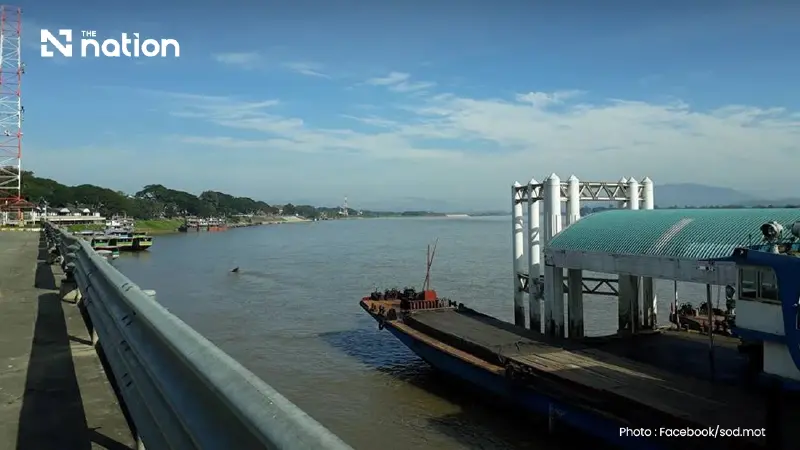


A 74% surge in container traffic, driven by Chinese demand for Thai durian, anchors plans to transform Chiang Saen Port into a major regional trade hub
- Thailand's Ministry of Transport is developing Chiang Saen Port into a major logistics hub to serve as the country's primary northern trade gateway to Southern China.
- The transformation is driven by a nearly 74% surge in container traffic, primarily caused by high Chinese demand for Thai durian shipped directly up the Mekong River.
- To accommodate the growth, the Port Authority of Thailand will accelerate dock upgrades, expand freight handling equipment, and streamline customs facilities.
- The broader strategy aims to create an international shipping corridor by linking the northern Chiang Saen Port with Ranong Port in the south, connecting China to South Asia and beyond.
A 74% surge in container traffic, driven by Chinese demand for Thai durian, anchors plans to transform Chiang Saen Port into a major regional trade hub.
The Ministry of Transport has unveiled a comprehensive strategy to establish Chiang Saen Commercial Port as a premier logistics hub, positioning it as Thailand's primary northern trade gateway to Southern China and the wider Greater Mekong Subregion (GMS).
Visiting the site in Chiang Rai province on Monday, Deputy Minister of Transport Sanphet Bunyamanee met with local customs officials and a delegation from the Port Authority of Thailand (PAT) to evaluate water transport infrastructure and coordinate cross-border expansions.
Situated on the banks of the Mekong River, Chiang Saen Port serves as a critical geostrategic asset. Historically, total trade handled through the Chiang Saen Customs House has consistently shown a stark trade surplus for Thailand, with full-year export values typically hovering between 5,300 million and 7,500 million baht, while imports have remained low at roughly 300 million to 400 million baht annually.
Recent ten-month performance figures show total border and cross-border trade at Chiang Saen Custom House hitting 5,962 million baht. Outbound shipments dominated the balance sheet at 5,650 million baht (over 94 per cent of total trade), driven by fuel, cement, livestock, and consumer items. In contrast, imports accounted for just 312 million baht.

The Durian Boom: A 74% Jump in Container Traffic
While aggregate trade value fluctuates alongside global commodity pricing, physical cargo throughput at Chiang Saen Port is undergoing an unprecedented logistical expansion.
During the 2026 fiscal year, the port logged 2,737 vessel calls and processed 195,574 tonnes of general cargo. Crucially, container volumes witnessed an explosive 73.95 per cent year-on-year surge, climbing from 4,030 TEU in 2025 to 7,010 TEU in 2026.
This rapid growth is the direct result of targeted marketing campaigns conducted jointly with China's Guanlei Port in Yunnan Province. A major catalyst occurred when Chinese customs authorities formally approved Guanlei Port as a designated entry checkpoint for imported fruit.
This regulatory shift allowed Thai agricultural exporters to bypass traditional bottlenecks and ship fresh produce—most notably premium Thai durian—directly up the Mekong River in climate-controlled containers.
"A container volume growth rate of over 73 per cent clearly demonstrates that Chiang Saen Port still holds immense growth potential," Sanphet noted. "The Ministry of Transport will forge ahead with infrastructure and logistics developments while strengthening bilateral cooperation with neighbouring nations to open new trade routes and enhance the global competitiveness of Thai products."
To handle this momentum, the PAT has been ordered to accelerate dock upgrades, expand freight handling equipment, and streamline customs facilities to accommodate larger cargo volumes over the long term.

A tale of Two Ports: Divergent Cross-Border Realities
The infrastructure push at Chiang Saen stands in sharp contrast to the neighbouring Chiang Khong Port, which has seen its river-borne trade fall in the post-pandemic era.
A ministry assessment revealed that cargo transport at Chiang Khong has heavily shifted to cross-border roads. This decline was further accelerated after Bokeo Province in neighbouring Laos introduced an import tax on goods valued above 5,000 baht, rendering smaller river shipping routes economically unviable. As a result, the PAT is finalising plans to return the Chiang Khong site to the Treasury Department to be repurposed for local community use.

The Broader Blueprint
The master plan for Chiang Saen stretches beyond the immediate northern border. The ministry intends to link the northern river port directly into Thailand's broader macroeconomic strategy, leveraging its partnership with the Bay of Bengal Initiative for Multi-Sectoral Technical and Economic Cooperation (BIMSTEC).
The ultimate goal is to create a seamless, low-cost domestic trade loop. By receiving high-value imports from Southern China at Chiang Saen, freight can be routed south through Thailand's domestic transport network down to Ranong Port on the Andaman Sea.
This effectively establishes an international shipping corridor connecting China to South Asia, Africa, and Europe, transforming Thailand from a simple transit point into an indispensable regional distribution hub.
