
ERC to study renewable power cost review to help lower electricity bills
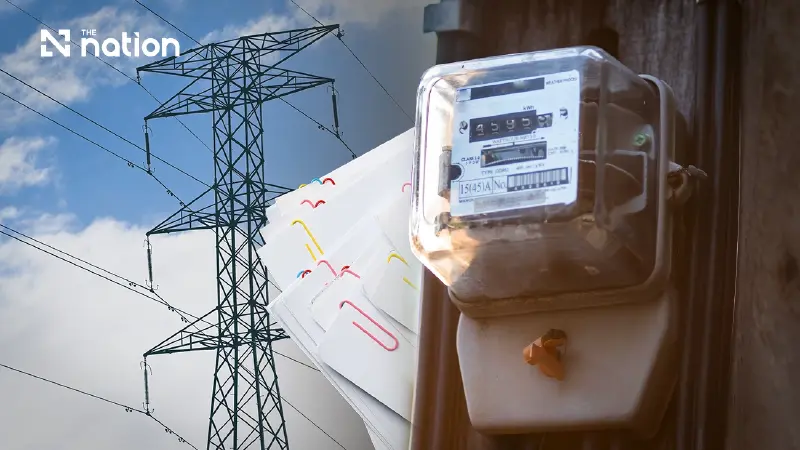


The Energy Regulatory Commission is preparing to study the cost structure of 593 renewable-energy power purchase contracts, aiming to align tariffs with falling production costs and reduce long-term electricity burdens.
Poonpat Leesombatpiboon, secretary-general of the Office of the Energy Regulatory Commission (ERC) and spokesperson for the ERC, said the commission is preparing to study a review of electricity purchase costs from renewable-energy power plants to bring them in line with today’s lower production costs.
He stressed that this is not a move to dismantle or cancel power purchase agreements, but rather a review of costs to better reflect reality and allow the public to benefit from lower electricity prices in the long term.
Poonpat said that when the government first began promoting renewable-energy power generation, operators participating under the adder scheme received additional subsidies on top of the base tariff and the fuel tariff, or Ft. This allowed some operators to earn around 8-11 baht per unit from electricity sales during the incentive period.
After the adder period ended, they could still sell electricity at an average rate of around 3.10 baht per unit. By comparison, the current purchase price for solar power is around 2.16 baht per unit, reflecting a significant decline in production costs.
He said this should be taken into account when considering adjustments to the cost structure of electricity purchases, in order to ensure fairness for power users.
The review will be carried out separately according to each type of technology, the conditions of each project and contract duration.
At present, 593 renewable-energy power purchase contracts have already reached commercial operation date, or COD, with a combined capacity of 4,336 megawatts. A further four projects, with combined capacity of 67MW, have not yet begun supplying electricity to the system. For those projects that have not yet reached COD, authorities may have to consider whether the contracts should be terminated.
Poonpat said the review of electricity purchase costs from renewable-energy plants would have to await direction from the committee considering problems arising from power purchases from private power producers, chaired by Deputy Prime Minister Pakorn Nilprapunt.
The ERC is part of the working group and is also providing information to the committee. It is ready to proceed in line with the policy of the National Energy Policy Council, or NEPC.
At the NEPC meeting on July 15, preliminary discussions are expected on the new base electricity tariff.
As for the policy to review private-sector power purchases under Pakorn’s committee, Poonpat said he was not yet certain how the matter would be raised at the meeting. However, he believed all parties were working urgently because this is a priority policy of the government.
He added that all actions must be carried out carefully to ensure fairness to all sides, while helping reduce the burden of electricity costs and improving the efficiency of Thailand’s energy structure in the long term.
Initially, the adjustment of the base electricity tariff is expected to be completed before the review of power purchase contracts.
