
Fire warning signs behind backdraft, flashover and jet fire
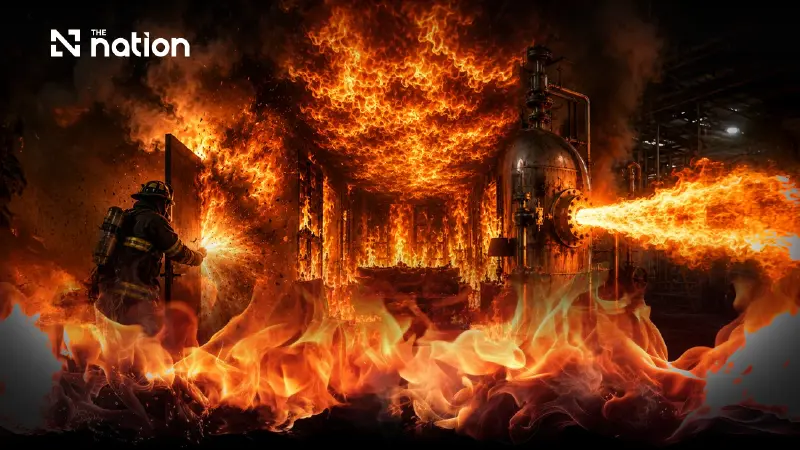


How backdraft, flashover and jet fire develop, the warning signs they may produce, and why only trained firefighters should assess the danger.
- Warning signs for a backdraft include thick, dark smoke pulsing from openings, soot-blackened glass, little visible flame, and air being drawn into an oxygen-depleted room.
- A flashover is indicated by a rapid rise in room temperature, a descending layer of hot smoke, and flames rolling through the smoke near the ceiling (known as rollover).
- A jet fire is identified by a concentrated, directional flame caused by the ignition of leaking fuel from a pressurized pipe or tank.
No two fires behave in exactly the same way. The appearance of smoke and flames, heat levels, and the condition of doors, windows, tanks or pressurised pipes can indicate the stage a fire has reached and how the danger may develop.
However, visible signs are only part of an overall assessment. They cannot, by themselves, confirm a particular fire phenomenon or establish the cause of a blaze. People without specialist training should never approach a fire or open an enclosed space to test what is happening.
Backdraft: when oxygen returns to an enclosed space
Backdraft is often associated with a fire burning inside a room or building with limited ventilation. As the fire consumes the available oxygen, combustion becomes incomplete. However, heat and flammable gases released as materials break down under high temperatures can continue to accumulate.
A typical sequence begins with a fire inside an enclosed room, followed by falling oxygen levels. The flames may weaken or become almost invisible, while flammable gases and smoke remain trapped inside.
If a door or window is opened, or a new opening is created, outside air can rush in and mix with the accumulated gases, potentially causing rapid and violent ignition.
Possible warning signs include thick, dark smoke pulsing from openings, smoke being forced through gaps around doors or windows, soot-blackened glass, little or no visible flame, and air being drawn into certain openings.
The danger is not limited to the intense heat inside the room. It also arises when the fuel-and-oxygen mixture enters a range in which it can ignite rapidly. Any change in ventilation can therefore cause conditions to worsen almost immediately.
Flashover: from a localised fire to full-room involvement
Flashover is the transition from a fire burning in one part of a room to a condition in which most combustible materials and surfaces ignite almost simultaneously.
The process begins when the original fire releases heat and hot smoke towards the ceiling, creating a layer of hot gases above. This layer radiates heat downwards onto furniture, walls, floors and other materials, causing them to release increasing amounts of flammable vapour.
Once the heat reaches a critical level, vapours and surfaces throughout the room can ignite in rapid succession, allowing the fire to spread across the entire space.
Possible warning signs include a rapid rise in room temperature, the hot smoke layer descending, intense heat reaching lower levels, and flames moving or rolling through the smoke near the ceiling. This final warning sign is known as rollover or flameover.
The defining feature of flashover is the rapid transition from a localised fire to a fully developed fire. Unlike backdraft, it is not caused by a sudden influx of oxygen into an enclosed room.
Jet fire: flames driven by pressurised fuel
A jet fire differs from backdraft and flashover because it usually involves flammable fuel under pressure, such as fuel stored in tanks or carried through pipes, valves or industrial processing systems.
When a tank or pipe develops a leak, fuel can escape under pressure and mix with the surrounding air. If it encounters an ignition source, it can produce a concentrated flame that projects in the direction of the leak.
Fuels that may be involved include liquefied petroleum gas, or LPG, hydrogen, and hydrocarbon gases or vapours used in industrial plants.
The severity of a jet fire depends on several factors, including the pressure inside the system, the size and shape of the opening, the type and physical state of the fuel, and the direction of the escaping stream.
The main risks include intense thermal radiation and flames striking nearby tanks, pipes, steel structures or equipment directly. Prolonged exposure to heat can weaken equipment, cause further leaks and trigger a chain of escalating incidents.
Read the signs to understand the risk, not to test it
Backdraft involves a fire in an oxygen-depleted space that suddenly receives more air. Flashover results from heat building until most combustible materials inside a room ignite. A jet fire occurs when pressurised fuel leaks and burns as a concentrated flame.
Understanding these distinctions helps explain how the appearance of a fire can indicate its development and potential danger. Assessing a real incident, however, requires trained personnel, monitoring equipment and information about the building’s structure or fuel system.
Anyone who encounters a fire should leave the area immediately, close doors behind them when it is safe to do so, use stairs rather than lifts, and contact the fire service from outside the building.
People should not re-enter the premises or open a door that feels unusually hot, as changing the ventilation path can alter fire behaviour within seconds.
Source: Thansettakij
