
Industrial and Tech Leaders Urge Speed in Smart Grid Adoption to Secure Thailand's Green Competitiveness
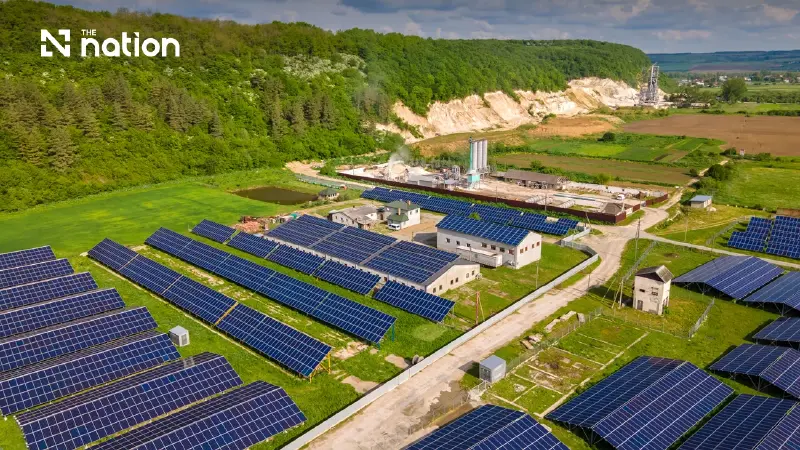


Business leaders warn administrative delays and grid bottlenecks threaten multi-billion-baht clean energy and high-tech investments.
- Industrial and tech leaders warn that Thailand risks losing its green competitiveness and foreign investment, as access to reliable, certified green power has become the primary factor for multinational corporations, surpassing low labor costs.
- The slow pace of smart grid adoption, caused by administrative delays and infrastructure bottlenecks, threatens to derail the country's clean energy goals and drive investors to more prepared nations.
- Urgency is driven by international pressures like the EU's Carbon Border Adjustment Mechanism (CBAM), which makes access to green energy essential for Thai manufacturers to maintain export competitiveness.
- Key hurdles include a severe lack of smart meters—with less than 1% of 30 million meters currently installed—and slow implementation of policies like Direct Power Purchase Agreements (PPAs) that would allow industries to buy renewable power directly.
Business leaders warn administrative delays and grid bottlenecks threaten multi-billion-baht clean energy and high-tech investments.
Thailand's private sector has called on the government to match policy intentions with swift execution, warning that the pace of regulatory unlocking will dictate the kingdom's share of global high-tech and industrial investment.
Speaking at the "KT Dialogue" roundtable forum on Friday, senior executives across the real estate, industrial estate, technology and clean energy sectors emphasised that access to abundant, affordable and certified green power has eclipsed low labour costs to become the primary factor for multinational corporations choosing regional hubs.
The urgency behind their message is sharpened by mounting pressure from abroad. Global carbon border levies — most notably the European Union's Carbon Border Adjustment Mechanism (CBAM), which taxes carbon-intensive imports — are pushing Thai manufacturers to decarbonise their supply chains faster than ever, making reliable access to green power a matter of export competitiveness rather than just cost.
This push coincides with Thailand's move towards its new Power Development Plan (PDP 2026), which sets a target of a 65 per cent clean energy share of generation capacity by 2050, underpinned by utility-scale Battery Energy Storage Systems (BESS) and Virtual Power Plants (VPPs) capable of aggregating up to 14,000 MW in localised capacity.

The plan is paired with the rollout of Direct Power Purchase Agreements (Direct PPAs), which Thailand's Energy Policy and Planning Office (EPPO) has already begun expanding beyond its initial 2,000 MW data-centre pilot, now allowing general industrial manufacturers to buy renewable power directly from independent generators via Third-Party Access (TPA) wheeling tariffs.
Yet business leaders caution that legacy red tape and missing grid infrastructure threaten to derail these national ambitions.

Industrial developers: the investment game has changed
Akarin Prathuangsit, Chief Executive Officer of WHA Utilities and Power (WHAUP), said the rules of attracting investment have shifted entirely.
In the past, Thailand competed largely on labour costs and investment incentives; today, the decisive factor for investors choosing where to base operations is how readily they can access clean energy and how stable the electricity grid is.
He warned that the global "Net Zero" trend has become a critical condition of international trade: if Thai operators cannot access clean power to cut their own emissions, the impact flows through to their foreign trading partners' Scope 3 emissions — potentially leading those partners to withhold future orders altogether.
This, Akarin said, is why Thailand risks losing its competitive edge by default if the rollout of smart grids and clean energy continues to lag.
While the government has begun to grasp the issue and has plans in place, Akarin said the greatest concern now is speed of implementation. Once investors decide to look past Thailand for a more prepared destination, he warned, they rarely return.

Beyond grid reliability, Akarin added that investors demand competitively priced clean power and transparent pricing. He highlighted the newly announced Type 9 tariff, urging regulators to provide a clear costing formula so buyers do not subsidise unrelated network expenses.
To prevent national grid upgrades from stalling reform, Akarin proposed an "industrial estate sandbox" model. This approach would trial regulatory reforms site by site, allowing industrial parks to act as aggregators for peer-to-peer (P2P) trading before scaling nationwide.
He also called for replacing legacy frameworks like the Enhanced Single Buyer model with a flexible "Policy Fast Track" to support emerging technologies like energy-generating films.

B.Grimm Power: Three Decades of Grid Expertise
Nopadej Karnasuta, Chief Executive Officer for Thailand, Malaysia, and Industrial Business Solutions at B.Grimm Power Public Company Limited (BGRIM), emphasised that grid reliability is paramount.
Precision manufacturing cannot tolerate even split-second power dips without damaging production lines, making smart grid upgrades an urgent priority.
B.Grim outlined five key measures to advance the energy system:
Data Transparency: Establish a single dataset shared between private developers and state agencies.
Third-Party Access (TPA): Open the grid to third-party wheeling to connect industrial demand directly with renewable generators.
Integrated Power Supply: Support localised solar installations to enable area-based P2P power trading.
Regulatory Easing: Relax rules to allow private power lines to cross public roads within industrial parks, matching Japan's model.
Unlocking Floating Solar: Permit floating solar installations to sell power directly to multiple industrial off-takers.
Nopadej also highlighted a sharp timeline mismatch: securing energy permits takes up to six years, while constructing a factory takes just three to six months.
Accelerating smart grid adoption could save an estimated 28 billion baht annually in line losses and maintenance, while new energy ecosystems like battery storage and open trading could generate over 10 billion baht in new economic value.
"Smart grid development represents a combined economic value of over 30 billion baht a year," Nopadej said, noting it could also cut electricity costs by 20 to 30 satangs per unit through improved system efficiency.

Tech architecture: AI and open standards
Addressing grid stability, William Zhang, President of Enterprise Business at Huawei Technologies Thailand, outlined the architectural requirements for a resilient, future-proof national energy infrastructure.
He stressed that a modern smart grid must run on open standards and be fully AI-enabled to digest complex, two-way power flows from millions of residential and commercial prosumers.
Huawei proposed three technological pillars for grid modernisation:
• High-speed Power Line Communication (HPLC): facilitates real-time, high-speed data extraction across millions of endpoint devices.
• Edge Computing Units (ECUs): installed at local transformer level to deliver localised system monitoring and real-time AI demand forecasting.
• Intelligent Operation Centres (IOCs): function as the grid's central "AI brain", orchestrating power flows, managing surge loads and mitigating large-scale blackout risks.
Zhang noted that these digital upgrades are vital to support Thailand's rapid expansion into data centres and artificial intelligence without destabilising the wider transmission network.

Overcoming the metering bottleneck
The physical foundation of a smart grid — Advanced Metering Infrastructure (AMI) — remains a significant operational hurdle. Pattanan Amatanon, Deputy Executive Vice President of Business Development at Forth Corporation, revealed that of the 30 million electricity meters installed across Thailand, fewer than 300,000 — less than 1 per cent — are currently smart meters.
Although state utilities have completed local trials, including the Provincial Electricity Authority's (PEA) 100,000-metre pilot in Pattaya, widespread deployment has stalled amid fiscal constraints.
Forth Corporation, a major domestic developer of AMI technologies, has proposed 10-year Public-Private Partnership (PPP) instalment contracts to accelerate the national rollout.
Pattanan added that local Thai firms have already adapted software and AI integration to work natively, removing reliance on costly foreign technical consultants.

Consumer-first real estate innovation
Speaking for property developers and domestic consumers, Assistant Professor Dr Kessara Thanyalakpark, Managing Director of Sena Development, urged energy regulators to keep clean energy participation simple and transparent.
Sena, which has integrated solar systems across nearly 2,000 homes, now bundles standardised solar-and-battery hardware directly into standard home mortgages for its premium residential developments.
Dr Kessara reminded policymakers that everyday homeowners are not power traders.
"To a consumer, fairness must mean simplicity. If a green energy programme is overly complex, people will simply ignore it," she warned.
Sena's residential trials demonstrate that adoption hinges entirely on clear, automated returns: residents store solar energy generated during peak daylight hours, consume it at night, and sell surplus generation back to the national grid without administrative friction.

Managing the electric mobility surge
Chatrapon Sripratum, Chief Executive Officer of Energy Absolute (EA), highlighted commercial electric transport — including urban buses, heavy logistics trucks and passenger ferry fleets operating along the Chao Phraya River — as the newest high-volume load on the grid.
Fast-charging a commercial electric ferry equipped with an 800 kW battery within a 15-minute window creates sharp, localised demand spikes.
Chatrapon noted that managing these sudden loads requires dynamic smart grids, robust charging infrastructure and competitive green tariff structures.
"If we can align our regulatory frameworks, pricing mechanisms and grid hardware to support clean mobility, Thailand will stand as a long-term winner in regional green competitiveness," Chatrapon concluded.
