
Thai executives emphasise workforce skills in AI transformation
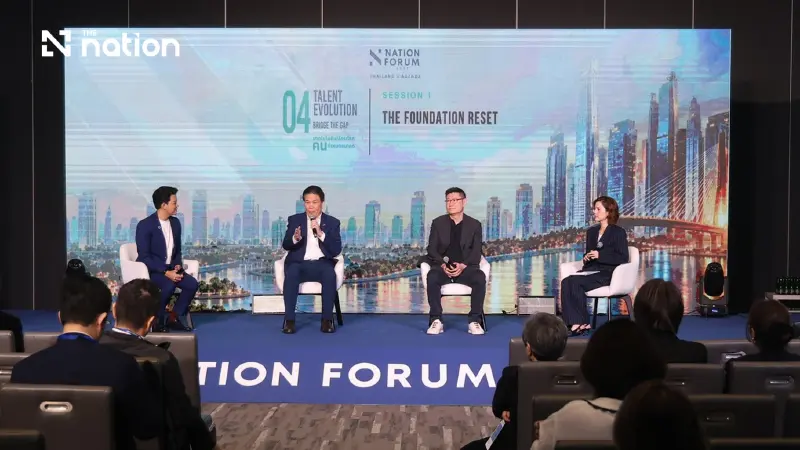


Sahapat reaffirms its no-layoff policy as executives at Nation Forum 2027 highlight entrepreneurship and curiosity in adapting businesses to AI.
- Thai executives stress that AI cannot replace essential human qualities like loyalty, commitment, and an entrepreneurial spirit, which remain foundational for business success.
- Employees must develop foundational knowledge and sound judgment to verify the accuracy of AI systems, especially as they evolve from predictive to prescriptive.
- Curiosity is identified as a critical skill, as organisations now value employees who can think and solve problems through AI rather than simply possessing knowledge.
- Clear communication is vital to bridge the generation gap, connecting the business acumen of senior leaders with the technological expertise of younger employees for successful AI implementation.
Vathit Chokwatana, chairman of the executive board and president of Saha Pathanapibul Public Company Limited, and Siriwat Vongjarukorn, chief executive of MFEC Public Company Limited, discussed how organisations adapt and operate as artificial intelligence (AI) plays an increasing role.
They were speaking in “The Foundation Reset” session on the “Talent Evolution: Bridge the Gap” stage at Nation Forum 2027: Thailand’s Agenda, organised by Nation Group.

Generation gap and AI
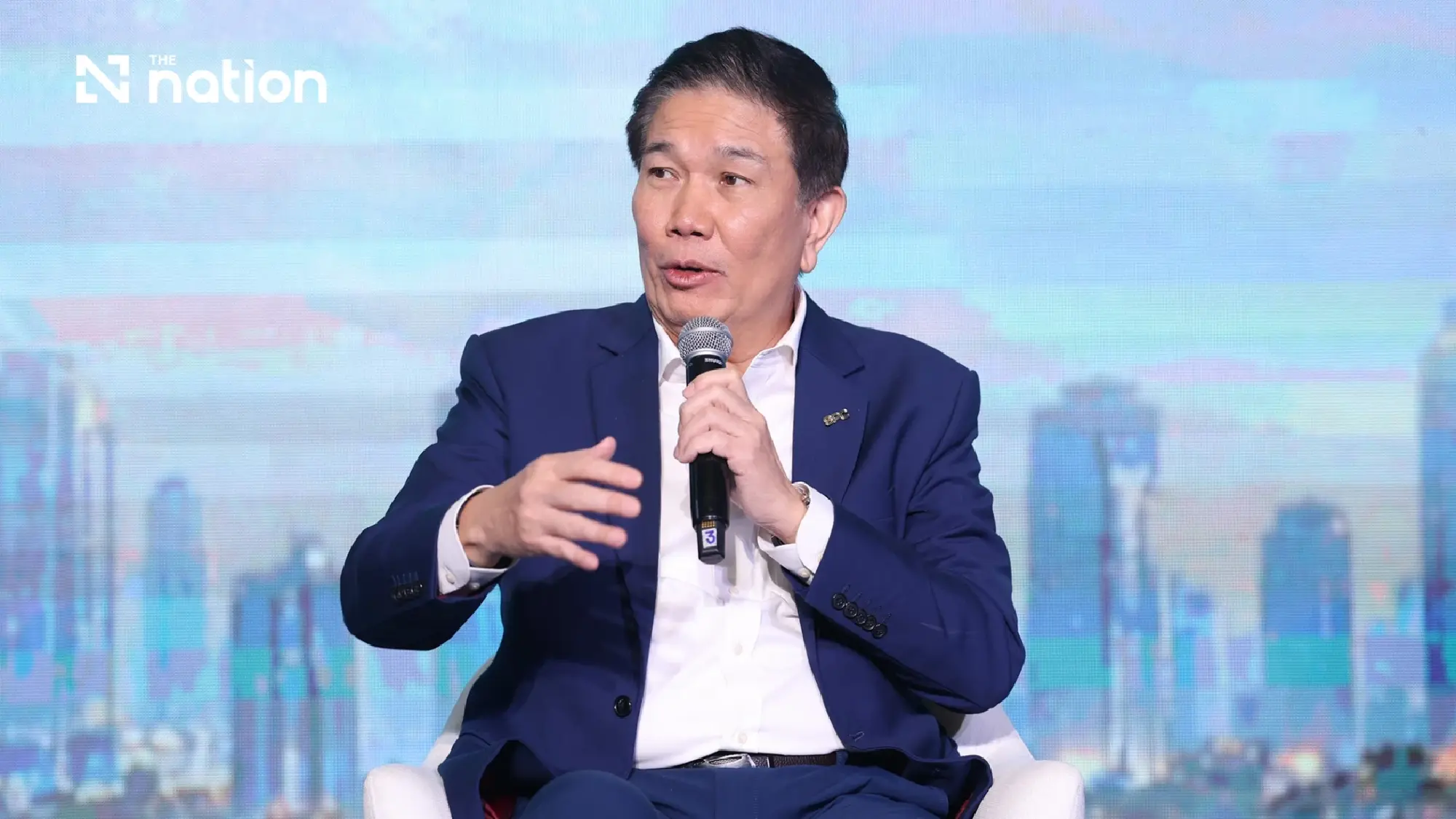
Vathit identified the generation gap as a challenge for organisations and highlighted AI’s potential to play an important complementary role.
AI enables organisations to do more with fewer people and greater efficiency as the number of younger workers declines.
The challenge is to adapt and move quickly with AI transformation to maintain a leading position.
At Sahapat, communication is central to adaptation.
Older executives have business plans and business problems, while young employees aged 20 have technological knowledge they can apply immediately to solve those problems.
Connecting the two groups requires communication in plain language, without complicated technical terms.
Turning to employees, Vathit recalled the teaching of Sahapat founder Thiam Chokwatana: “More people, greater good fortune.” He explained that knowledge and AI are now readily available and free, but AI cannot possess what he called “good fortune”.
This comes from employees’ belief, trust, commitment, loyalty and sense of ownership in the organisation.
Encouraging AI use to develop human capital
Sahapat therefore reaffirms its policy of not laying off employees, building on their commitment and loyalty by providing the knowledge they need to use AI tools with peace of mind.
The company also invests in developing people from primary and secondary school onwards to build Thailand’s human capital and a workforce of international calibre.
Vathit warned that AI is developing from predictive systems that forecast to prescriptive systems that direct or recommend actions.
Employees who lack foundational knowledge and do not develop their judgement will be unable to check AI’s accuracy, so people must continue to work alongside it.
“The key skill for driving organisations in the AI era is ‘entrepreneurship’, or an entrepreneurial spirit. AI will become a given in the future, but business sense, a sense of ownership and a focus on generating revenue and profit will remain the enduring foundations of every organisation.”

AI as a driver of business impact
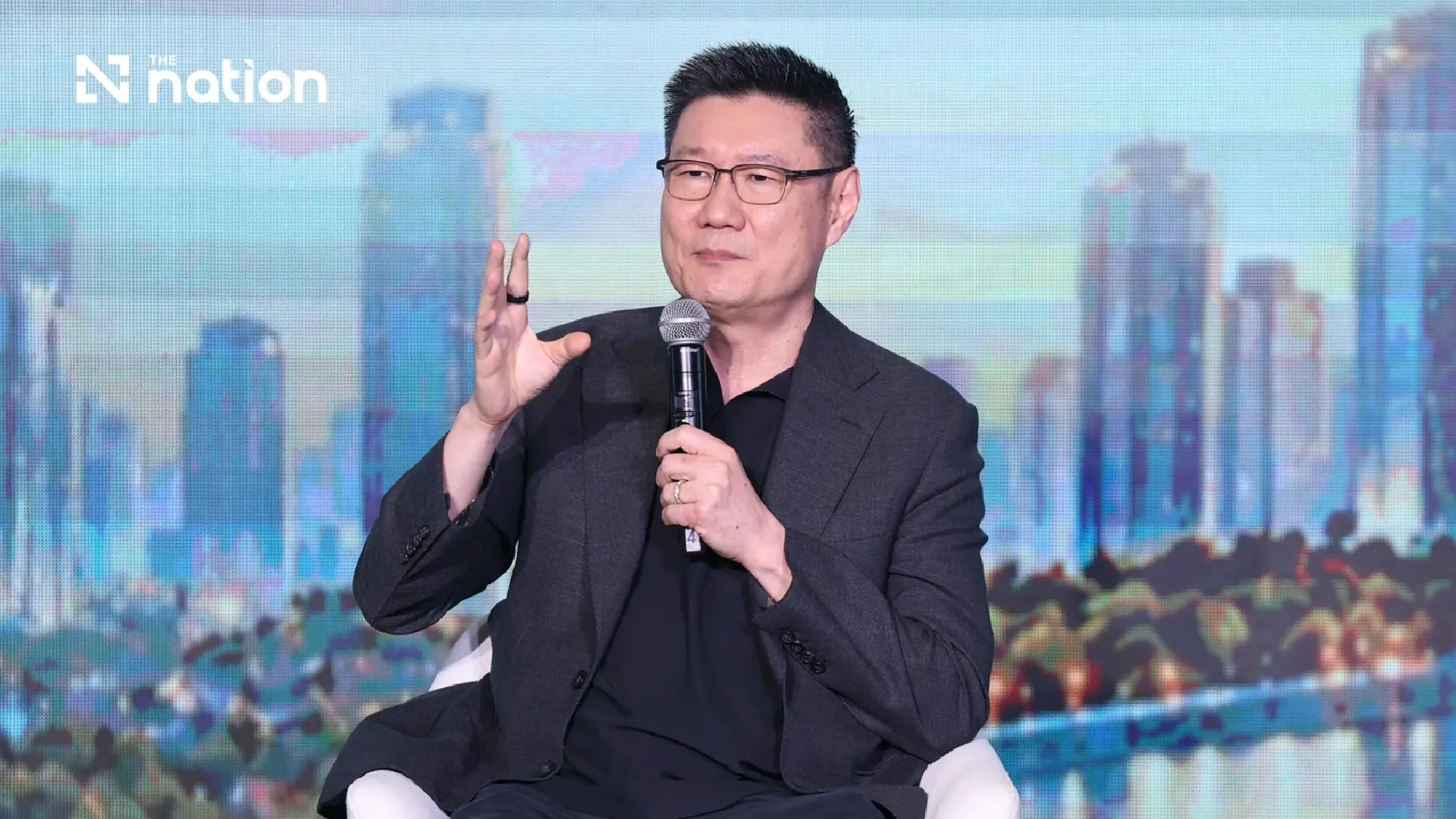
Siriwat argued that every organisation now needs to incorporate AI into its work.
AI transformation provides a “driving force” that must exceed “inertia plus resistance”.
He divided employees into three groups: those immersed in AI who have strong drive; those who keep pace with AI and learn as new versions emerge; and those whom AI has overtaken, who cannot adapt quickly enough and form a source of resistance.
If the third group outnumbers the first two combined, an organisation will be unable to drive AI transformation.
“If AI is used merely as an add-on to existing processes, it will not create a business impact.”
He emphasised that AI is about creating value for an organisation, rather than cutting costs or laying off employees.
Traditional management often involves a “deadly triangle” of quality, price and time, in which only two of the three can be chosen.
Work that is good and cheap takes longer, while good work delivered quickly comes at a higher price.
Driving organisations through curiosity
Using AI to restructure organisations would help them choose all three together: good quality, speed and a low price, he explained.
This means changing the organisation’s operating system and workflows.
“Knowledge and intelligence have become free. Modern organisations therefore do not want to hire people who know a lot, but people who can think and work through AI.”
Siriwat identified “curiosity” as a key skill for driving organisations in the AI era because it prompts employees to keep asking questions and finding answers with AI in an environment where technology is changing rapidly.

