
Thailand targets investment after IMF-World Bank meetings and looks to Davos
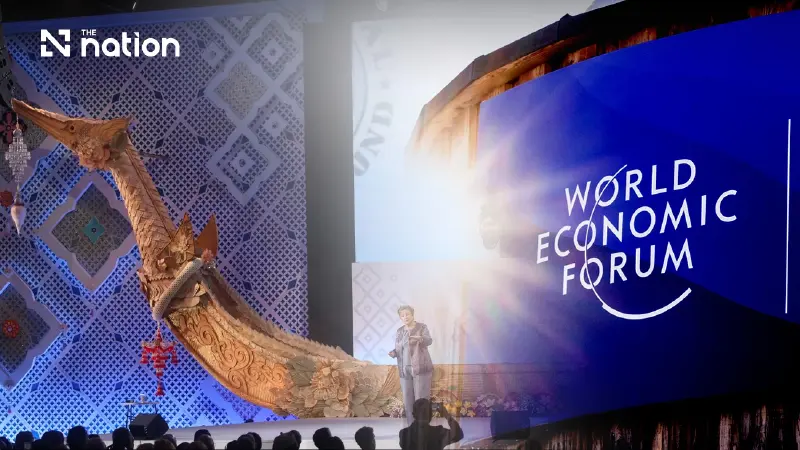


Thailand plans to turn momentum from the 2026 IMF-World Bank meetings into investment, regulatory reform and stronger business ties ahead of Davos.
Thailand will try to convert international interest generated by the 2026 International Monetary Fund-World Bank Group Annual Meetings into new investment and economic reforms, while using next year’s World Economic Forum in Davos to deepen ties with global business leaders.

Santitarn Sathirathai, Assistant Minister attached to the Ministry of Finance, said on Tuesday (October 20) that Thailand had successfully completed its role as host of the annual meetings, held at the Queen Sirikit National Convention Center in Bangkok from October 12-18. The event brought together policymakers, financial leaders and international institutions from around the world.
He said the next task was to turn the partnerships and international attention generated during the week into tangible investment that would ultimately benefit the public.

The government would pursue two main areas of work. The first is to convert interest from overseas partners into actual investment, while the second is to strengthen Thailand domestically by acting on feedback from businesses and international organisations.
The issues raised include regulatory obstacles, the need to speed up government procedures and measures to improve the skills of Thai workers. Santitarn said these would be taken forward through the Joint Public and Private Sector Consultative Committee, the government-private sector mechanism for addressing economic issues.
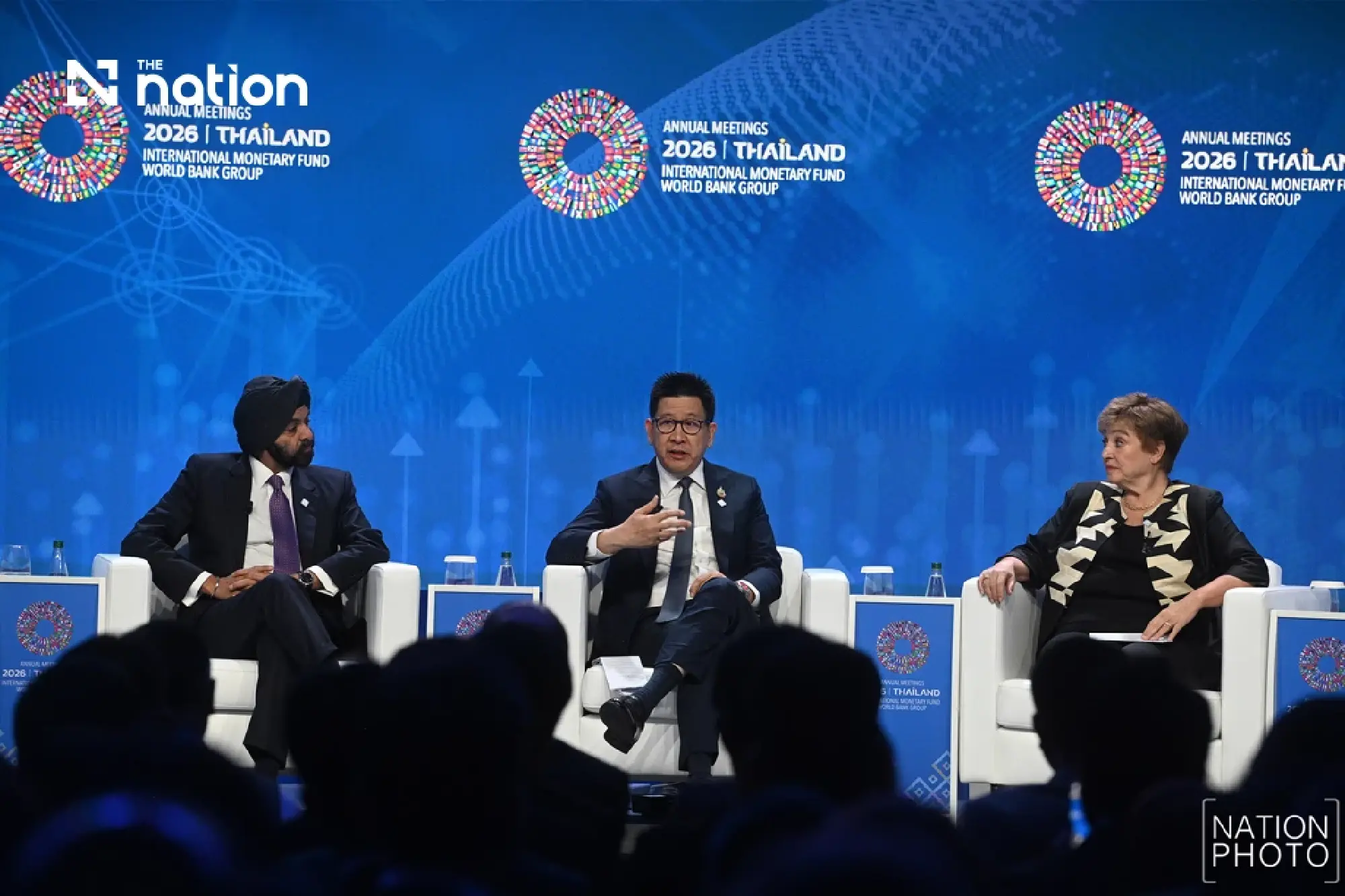

Thailand highlights gains from hosting global meetings
Santitarn said IMF Managing Director Kristalina Georgieva had compared the gathering to an “Olympics” of global finance and politics, with Thailand earning recognition in three areas — hosting, thought leadership and its role as a trusted economic partner.
Georgieva publicly praised Thailand’s hospitality after the meetings and described herself as an “Ambassador of Thai silk”.
According to Santitarn, more than 20,000 people registered for the meetings, about 27% above the initial target and a record level. Around 60% were senior delegates or high-spending visitors, while participants stayed in Thailand for an average of nine days.
He said the influx generated spending for hotels, restaurants and other service businesses, while Thai food, fruit and traditional pha khao ma cloth attracted considerable attention from international visitors.

The government had initially estimated that the meetings would generate about 2 billion baht in economic activity, but Santitarn said the eventual figure was expected to be higher because attendance exceeded forecasts and visitors stayed for relatively long periods. The Finance Ministry will prepare a further estimate.
Santitarn also pointed to the international exposure received by Thai products and culture.
“If we were running a business, how much would we have to spend on advertising to make Thai products, Thai textiles, local communities, Thai food and Thai people go viral?” he said, adding that such exposure could bring benefits to communities beyond the meetings themselves.
Thailand promotes policy ideas on global stage
Thailand also used the meetings to present an exhibition on the royal development work, Sufficiency Economy Philosophy and working principles of King Bhumibol Adulyadej the Great, or Rama IX, as well as their continuation and further development during the present reign.
Santitarn said Georgieva quoted remarks by King Bhumibol towards the end of the main meetings before representatives from more than 190 countries.
Thailand also presented four approaches to global economic challenges.
They included the use of lower-cost, small-scale artificial intelligence to help small businesses, including the Nok Krasip AI initiative, which is designed to help small traders analyse costs, manage stock and improve basic business management. The initiative has also been promoted as part of Thailand’s wider effort to spread practical AI use among small businesses.

Other proposals included a blueprint developed with the World Bank to address cross-border financial crime, a low-carbon city initiative involving the World Bank and Krungthai Bank with Bangkok and industrial estates as pilot areas, and Thailand’s proposed role as a “connector” in an increasingly divided world.
Santitarn said the government had also held discussions with businesses and credit-rating agencies to explain its approach to high oil prices, elevated interest rates and fiscal discipline.
Talks were also held with international Islamic financial institutions to expand access to Islamic finance and encourage further investment in Thailand.
“The bilateral meetings this time were deliberately arranged with people who are genuinely important partners,” Santitarn said. “If we had not been the host, many of them would have been difficult to meet.”

Government targets top-20 competitiveness ranking
The government’s longer-term targets include restoring economic growth to more than 3% within four years and lifting Thailand into the world’s top 20 for competitiveness from 26th place.
The 26th-place figure has previously been cited by the government in connection with international competitiveness assessments, alongside its four-year top-20 target.
Santitarn said improving government rules, transparency and efficiency would form part of the same reform agenda and support Thailand’s path towards membership of the Organisation for Economic Co-operation and Development.
“The meetings may be over, but there is still a great deal of work to do,” he said. “Thailand has won the gold medal, but the next step is to turn that gold medal into benefits for every Thai.”

Davos to provide next opportunity
The Finance Ministry plans to build on the Bangkok meetings at the World Economic Forum in Davos, Switzerland, in January 2027.
Santitarn said the government was preparing a “Pre-Bangkok” event that would invite global business leaders from several continents to meet Thai companies in Bangkok before further discussions in Davos.
He said this would differ from the IMF-World Bank meetings, which were more heavily focused on government policymakers, because the Davos gathering brings together a large number of private-sector leaders.
Santitarn described Thailand’s previous visit to Davos as laying the foundations for communicating the country’s direction internationally, while hosting the IMF-World Bank meetings had provided a much larger platform.
He said Thailand would therefore return to Davos with stronger international recognition and would be able to focus more intensively on building private-sector partnerships.

