
Black garlic named flavour of the year for 2027 in food trends report
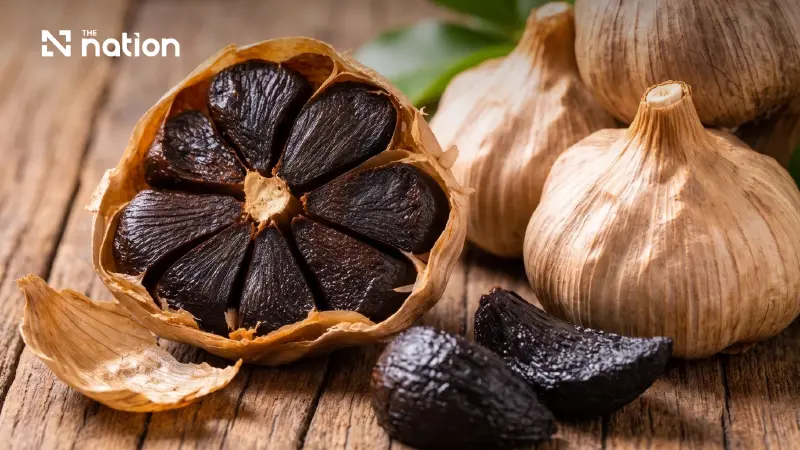


Thailand’s trade office in Chicago highlights opportunities for food businesses as consumers look for new tastes, nutrition and everyday convenience.
- Black garlic has been named the "flavour of the year for 2027" in a food trends report by marketing consultancy MorganMyers.
- It is created by aging fresh garlic until it turns black and soft, developing a sweet, umami flavor with notes of molasses and balsamic.
- Its popularity is driven by its perception as a premium, chef-like ingredient that is becoming more accessible in mainstream supermarkets.
- The ingredient's versatility allows it to be used in a wide range of applications, from savory sauces and burgers to desserts, coffee, and cocktails.
On the website of Thailand’s Department of International Trade Promotion, under the Ministry of Commerce, the Thai Trade Center in Chicago, United States, has outlined food flavour trends for 2027.
These trends reflect a shift in consumer behaviour towards new tastes, ingredients from food cultures around the world and nutritional value, with consumers looking for products that offer distinctive eating experiences and can be used conveniently in everyday life.
Food and agriculture marketing consultancy MorganMyers has released its 2027 Food & Flavor Trends Report, forecasting 10 flavour trends to watch in 2027.
The report names “black garlic” as its flavour of the year for 2027, while forecasting growing popularity for Asian condiments such as chilli crisp, Middle Eastern ingredients including labneh and sumac, and dates.
Five flavour trends to watch
1. Black garlic
With interest continuing to grow, black garlic has been chosen as the flavour of the year for 2027.
Fresh garlic is aged under controlled temperature and humidity until it turns black and soft, developing a mellow sweetness, rich umami and notes of molasses and balsamic.
US consumers are beginning to view black garlic as a premium ingredient that offers an experience akin to food prepared by professional chefs.
The ingredient is also becoming easier to find in mainstream supermarkets.
Uses range from sauces, seasonings, burgers, pasta and salad dressings to desserts such as brownies and gelato, as well as coffee and cocktails, pointing to opportunities to expand its market beyond premium restaurants to everyday consumers.
2. Chilli crisp
This Chinese-style condiment combines fried chillies, onion, garlic and spices in oil, providing both heat and crunch.
The condiment is gaining popularity in retail and the restaurant sector, adding flavour to familiar foods such as noodles, eggs, pizza, salad dressings and sauces.
Chilli crisp helps make dishes more interesting and is a product consumers are likely to talk about on social media.
According to MenuData.ai, chilli crisp is used most often in main courses, followed by starters and side dishes.

3. Labneh
This Middle Eastern dairy product is made by straining yoghurt until it develops a thick, cream-cheese-like consistency, with a tangy flavour and a smooth, soft texture.
As well as serving as a dip, a spread on bread or an ingredient in dishes, labneh can replace cream cheese in some recipes.
The protein content appeals to consumers looking for nutritious foods that help them feel full for longer, creating opportunities in premium dairy products, breakfast foods and health-focused products.

4. Sumac
A reddish-purple Middle Eastern spice with a refreshing, lemon-like tartness, sumac is commonly used to season meat, vegetables, hummus and salad dressings.
Drinks and cocktails are also emerging uses for the spice.
As an ingredient that is not yet widespread in the mass market, sumac offers a way to add acidity to food, creating opportunities for new seasonings, sauces and beverages.

5. Dates
Dates are attracting renewed interest as a result of the “Fibermaxxing” trend of increasing daily fibre intake.
A serving of Medjool dates provides about 6–9 grams of fibre, depending on portion size and variety.
Dates are now used in products ranging from syrups, snacks and baked goods to smoothies and desserts.
MorganMyers reports that US retail sales of dates rose by about 30% in 2025.
As an ingredient consumers already know, dates can readily be developed into health-focused products and ready-to-eat snacks.
Five other flavours also show promise: manuka honey, a premium honey from New Zealand and Australia with a distinctive flavour and an image associated with health; espresso, whose intense coffee flavour can be used in drinks, baked goods, ice cream and desserts; masa corn, an ingredient produced through traditional Mexican corn processing and used to make tortillas and local dishes; koji, an ingredient made through mould-based fermentation used in Japanese food, which underpins the production of miso, shoyu and sake and helps develop umami; and dragon fruit, a brightly coloured tropical fruit suited to drinks, smoothies and desserts.
The Thai Trade Center in Chicago sees these trends as opportunities for food manufacturers, retailers and restaurants to develop new products that meet the needs of modern consumers looking for novelty, good flavour and health benefits that fit their lifestyles.
Thailand has the potential to build on its agricultural ingredients and the distinctive character of Thai cuisine to respond to global food trends.
Businesses should focus on developing high-quality, distinctive, health-focused products that are convenient to consume, adding value to agricultural goods and opening up new market opportunities.
Possible approaches include using Thai ingredients such as jackfruit, tamarind and grains to develop health-focused foods and snacks high in protein and fibre, while adjusting recipes to provide appropriate sugar and sodium levels.
Packaging should also be developed to make products such as ready-to-use sauces, seasonings and ready-to-eat foods convenient to use and consume.
Businesses should also adapt their product formats to consumer behaviour and different sales channels, using global food trends to guide business development.
They should combine innovation with local ingredients, maintain quality and food safety standards, and continually study demand in target markets to differentiate their products, add value and strengthen the Thai food industry’s competitiveness overseas.
