
Bangkok’s Older Office Blocks Face Battle for Survival as 600,000 Sqm Loom
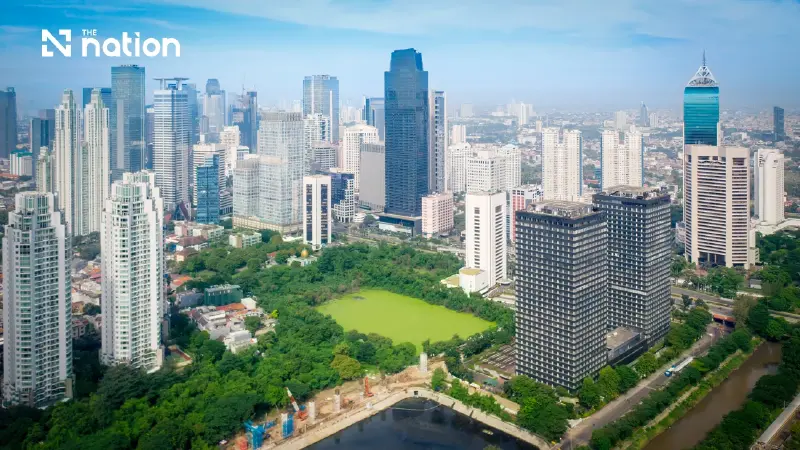


A five-year supply surge is forcing landlords of ageing buildings to undergo major revamps as occupiers migrate to high-spec, modern commercial hubs
- Over 600,000 square meters of new, modern office space is projected to enter the Bangkok market between 2026 and 2031, creating intense competition.
- Corporate tenants are increasingly migrating from older buildings to these new, high-specification developments that cater to modern workplace and wellness standards.
- To remain viable and retain tenants, landlords of aging office blocks are being forced to invest in major renovations and offer sophisticated incentive packages.
A five-year supply surge is forcing landlords of ageing buildings to undergo major revamps as occupiers migrate to high-spec, modern commercial hubs.
The landscape of Bangkok’s commercial property market is bracing for a dramatic shift. Over the next five years, between 2026 and 2031, more than 616,000 square metres of new office space is projected to flood the capital, turning up the heat on ageing developments.
This looming wave of prime supply will place intense pressure on the city's older office stock. According to a report by Krungthep Turakij journalist Bussakorn Phusae, landlords of older premises are being forced to fast-track modernisations and structural refurbishments simply to hold onto their existing occupiers.
With corporate tenants increasingly favouring high-specification buildings that cater to modern workplace strategies and wellness standards, older developments are being left with little choice but to reinvent themselves to remain viable.
A Market Rebalancing
The current climate marks a sharp turn from the recent past. Ukrit Pornpattanapairoj, head of Office Agency at Cushman & Wakefield (Thailand) Co., Ltd., noted that just two to three years ago, the dominant narrative surrounding Bangkok’s office market was one of severe oversupply.
The relentless debut of premium Grade A spaces—particularly within sprawling mixed-use schemes in the Central Business District (CBD)—forced landlords into aggressive rent-slashing and heavy discounting to lure occupiers.

Today, the market dynamics are shifting. Spaces launched over the last 24 months are nearing full occupancy, and the aggressive price wars have largely simmered down. However, the spoils of this recovery are not being shared equally, with older properties bearing the brunt of the market's evolution.
Encouragingly for landlords, a temporary pause in new completions during the second quarter of 2026 kept Bangkok’s total office stock steady at 9.15 million square metres. This brief respite has helped pull vacancy rates down, steering the market toward a healthier equilibrium after years of volatility.
The CBD remains the undisputed epicentre of the market, accounting for over 5 million square metres—more than half of the city's total stock. The mid-city and suburban submarkets follow with 2.41 million and 1.71 million square metres, respectively.
"Even though CBD land values continue to climb, developers are pressing ahead with new schemes, heavily favouring mixed-use models and long-term land leases," Ukrit observed. "This demonstrates sustained confidence in the long-term potential of Bangkok’s core commercial zones."
Vacancies Hit Three-Year Low
In a clear sign of stabilising demand, the Grade A vacancy rate within the CBD dropped to 21.9% this quarter, down from 23.3% in the previous three months—marking its lowest level since 2023.
The figures represent a significant recovery from late 2024, when vacancies spiked towards 28%—amounting to up to 800,000 square metres of empty space—the highest level seen since the 1997 Asian Financial Crisis. The current retreat in vacancies indicates that corporate demand has returned in earnest, with premier projects smoothly absorbing the take-up.

From Price Wars to Value Wars
While average asking rents for Grade A spaces have plateaued at roughly 943 Baht per square metre per month, landlords have largely abandoned outright rent-cutting. Instead, the battlefield has shifted toward service delivery, operational efficiency, and lowering the total cost of occupation.
To entice tenants, asset managers are offering sophisticated incentive packages, including:
Tenant fit-out capital contributions
Generous rent-free periods
Fully-fitted, turnkey office solutions
Highly bespoke, flexible lease structures
More novel approaches, such as corporate "barter deals"—where landlords and tenants exchange business services to create mutual value without depressing headline rents—are also gaining traction. It is clear evidence that the modern office market is no longer judged solely on the price per square metre.
The Grade B Dilemma
The segment under the most acute stress comprises older Grade A and Grade B assets. Grade B properties still command the lion's share of Bangkok's office landscape, accounting for 58% of total stock—and more than half of these buildings are now over a decade old.
Conversely, newer Grade A structures built within the last ten years boast advanced building management technologies, superior sustainability credentials, and premium amenities that align with global corporate mandates.
As a result, occupiers are willingly migrating to these newer spaces, even when the rent is comparable to older options. To stem the tide of tenant departures, older assets require immediate, capital-intensive asset enhancement initiatives.
The Next Wave
Looking ahead, the market cannot afford to be complacent. The projected 616,000 square metres slated for completion between 2026 and 2031 includes landmark schemes such as One Bangkok Tower 2, Signature Tower, Central Embassy Phase 2, The Central, and GR9.
Furthermore, supply pipelines are increasingly stretching into decentralised areas such as Bangna, Phahonyothin, and outer Sukhumvit.
"Office development is visibly expanding outwards from the CBD, mirroring infrastructure extensions and the rise of new secondary business hubs," Ukrit added.
Ultimately, the rules of engagement in Bangkok’s property sector have fundamentally changed. The market has transitioned from a volume-centric game to one judged on asset quality, occupier experience, and agility. For landlords, the future is no longer just about filling desks; it is about providing a strategic tool that helps businesses attract talent, enhance corporate identity, and drive operational success.
