
What Thailand Can Learn from the K-Pop Film that Conquered the World


The director of KPop Demon Hunters tells CNN's Bangkok forum how a childhood of feeling 'inferior' became the fuel for a global animation hit
- Thai creators should focus on telling authentic, specific stories rooted in their own culture, as specificity has more global appeal than diluting content for foreign audiences.
- Cultural success requires long-term, patient investment in local storytellers and building a supportive ecosystem that trusts and backs first-time creators.
- The key to creating a global hit is to empower local voices to lead and tell personal stories that are truly theirs, based on a deep understanding of their own history and heritage.
The director of KPop Demon Hunters tells CNN's Bangkok forum how a childhood of feeling 'inferior' became the fuel for a global animation hit.
Growing up in Toronto, Maggie Kang often felt that being Korean was nothing to be proud of. Years later, the film she wrote and directed, KPop Demon Hunters, has become a worldwide phenomenon.
Her message to Bangkok on Wednesday (October 14) was simple and empowering: stop trying to explain your culture and tell the story that is truly yours.
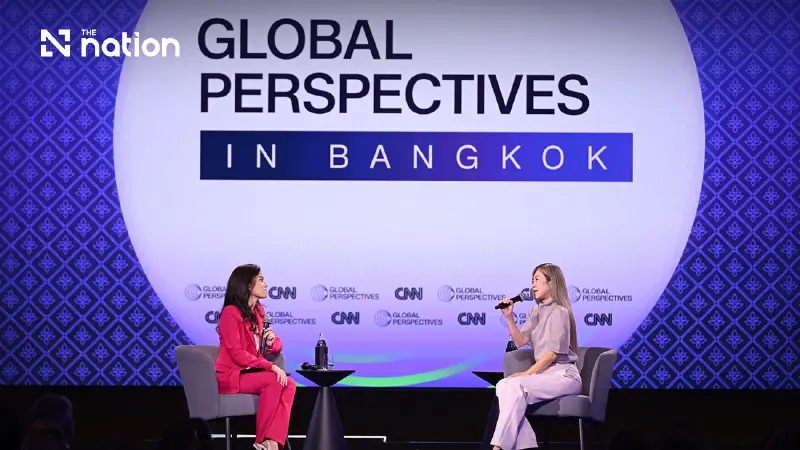
Kang, a South Korean and Canadian storyboard artist, writer and director, delivered the closing conversation at CNN's Global Perspectives forum. Held under the theme "The Stories That Shape Us", the event was moderated by CNN's Hanako Montgomery. The session followed a short film charting South Korea's rise from war and poverty to cultural superpower in a single generation.
'An inferior Asian'
Kang recalled that the experience of being Korean in Canada was not always easy, even among other Asian friends.
"When my Chinese friends were celebrating the Lunar New Year, they were doing their own thing, and I wasn't really part of that community," she said. "I did feel like an inferior Asian, which was just sad."
Toronto's multicultural identity, however, gave her what she called "the licence" to celebrate her own heritage, even when few people around her shared it. Her parents did the rest. They taught her Korean history as well as pride, including how a small nation between powerhouses such as Japan and China survived and thrived through great suffering.
"Just understanding where our people come from," she said, allowed her to build a deeper relationship with her culture.

Right place, right time
Asked whether she felt pressure to explain her "Asianness" to Western audiences, Kang said she largely refused to. She credited the path laid by others for that freedom.
Korean cinema and television, led by the Oscar-winning Parasite, and the global rise of K-pop, had already cemented Korea's place in popular culture.
"Growing up where my culture wasn't so cool, I was like, oh my gosh, we're cool now," she said. "Maybe it's time that we could do something cool in the animation space."
Koreans had produced a great deal of animation for others, she noted, but never had something they could call their own. She was candid that this did not happen overnight.
Kang spent more than a decade building relationships with producers and studio leaders, proving herself before being trusted with her first directorial role.
She expressed gratitude to Netflix Animation for letting her direct, write and contribute music as a first-time director, and for backing her insistence on a fully Korean main cast.
"If it wasn't for all of that groundwork laid ahead of me," she said, "I don't think a studio as great as Netflix Animation would have done something like this."
Pressure and a father's advice
The weight of expectation was heavy, she admitted. It came partly from herself and partly from Korea, where many hoped the film would represent the culture well.
Though she had never suffered an identity crisis, she suddenly found herself asking whether she was Korean enough to portray it however she wished.
"This is what people feel like when they don't know," she said.

The answer came from her father, who first inspired her love of film by watching movies with her as a child.
"He said, you can only make a movie that is you," she recalled. "Take the cultural stuff out of there. It's all about you and what you want to do."
Even her sister, raised in the same house, relates to Korean culture differently, she realised. That insight, she said, "freed me to just make something that I wanted to see".
The approach carried personal risk. "I actually told my husband, if people don't like this, I probably shouldn't make more movies, because this is all I got," she said.
The best compliment, she added, comes from friends who tell her: "This is you, on screen."
Women she wanted to see
Kang, who has a daughter, said she was not consciously creating role models. Filmmaking, she suggested, is a "selfish process". She made the film for her younger self, a child and later a teenage K-pop fan who rarely saw women like these on screen.
"These are women that I wanted to see," she said.
She had once told many in the industry that she would help with any film about Korean culture and women like these.
"It never happened. So I was like, well, I guess I should try to do it."
She has announced a sequel, though she gave no details. Asked which artist she would like to work with, she said she wanted to learn about music scenes worldwide and cited conversations about Thai music earlier in the day.
"I'd like to work with some more global artists in the future," she said.
Kang's story carries a message for Thailand as it works to strengthen its creative economy and promote its soft power, from food and film to music, festivals and folklore.
Korea's success did not come from tailoring itself to outside tastes. It grew from a deep understanding of its own history, patient investment in storytellers and a willingness to let local voices lead.
Thai creators may find encouragement in her view that specificity, rather than dilution, travels furthest. Thailand's own stories, rooted in its traditions and everyday life, can find global audiences without being translated into someone else's idea of "universal".
As Kang's career shows, such breakthroughs can take more than a decade of groundwork, with the trust of partners, platforms and institutions. For policymakers, studios and young artists alike, the lesson is to build the ecosystem, back first-time creators and give them room to be themselves.
