
Earn Attention, Don't Fight for It: Netflix and Music Chiefs on Asia's Creative Boom
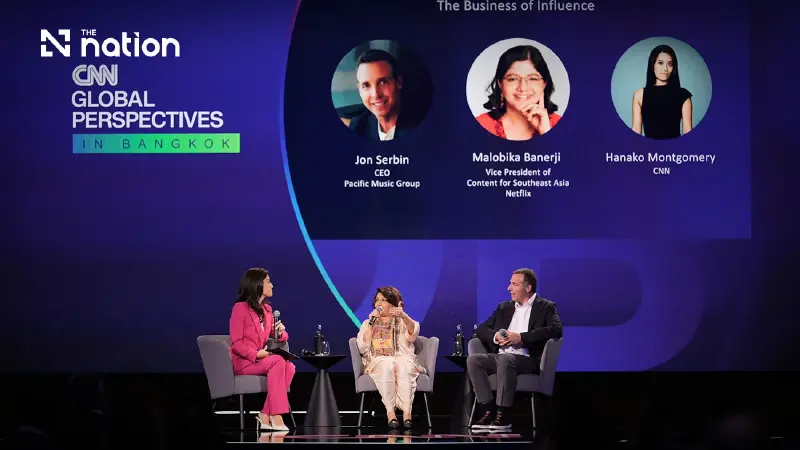


At CNN's Bangkok forum, Netflix and Pacific Music Group leaders say local authenticity, not global chasing, is turning Asian talent into worldwide influence
- Entertainment leaders from Netflix and Pacific Music Group assert that Asia's creative success comes from earning attention with authentic, locally relevant stories, not fighting for it by chasing global trends.
- The region has shifted from primarily importing culture to exporting it, with 90% of Netflix members in key Southeast Asian markets now watching local content, a dramatic change from eight years ago.
- This focus on local authenticity has paradoxically driven global influence, as nearly half of Netflix's non-English global top 10 hits now originate from the Asia-Pacific region.
- In the music industry, artists are increasingly using social media to build their own authentic audience first, with record labels now amplifying their existing success rather than building it from scratch.
At CNN's Bangkok forum, Netflix and Pacific Music Group leaders say local authenticity, not global chasing, is turning Asian talent into worldwide influence.
In an age of endless scrolling, the winners in entertainment will not be those who shout loudest but those who tell the most authentic stories. That was the message from two of the industry's leading figures at CNN's Global Perspectives forum in Bangkok on Wednesday (October 14), who said Asia is only at the start of a long period of creative growth.
Speaking under the theme "The Business of Influence", Malobika Banerji, Netflix's vice president of content for Southeast Asia, and Jonathan Serbin, chief executive of Pacific Music Group, described a region that has moved from importing culture to exporting it.
The session was moderated by CNN's Hanako Montgomery, who noted that every click, view and follow now carries real monetary value for media outlets and creators alike.
A region with "long headroom"
Banerji said Netflix is "incredibly excited" about Asia because "there is a very, very long headroom for growth". Over the past decade, she said, almost 50 per cent of films, series and unscripted shows in Netflix's global non-English top 10 lists have come from the Asia-Pacific region.
More than 140 titles from Southeast Asia alone have reached those rankings.
She pointed to the Thai film Hunger, which reached the top 10 in more than 90 countries, and this year's Thai series Devil Lawyer. Other examples included the Indonesian zombie film Abadi Nan Jaya and the period romance drama Gadis Kretek.

Serbin said the music industry offers a similar opportunity. Three of the world's ten biggest music markets, China, Japan and South Korea, are in Asia, while Southeast Asian markets are "pushing against that right now".
Beginning with K-pop, artists from across the region are expanding internationally and finding audiences from the United States to Latin America.
From import market to home advantage
Both executives described a major shift in how Asian audiences see their own culture. Banerji, who has been at Netflix for eight years, recalled that Southeast Asia was once regarded as an import market, with viewers expected to prefer Hollywood, Korean drama and Japanese anime.
Netflix believed local content would prove equally compelling and invested in local teams and content pipelines. The results are striking.
"Today 90 per cent of our members across Indonesia, Thailand and the Philippines watch local content, which did not exist eight years back," she said.
Serbin said music followed a similar path. Western music was once seen as aspirational, he said, but the Covid-19 pandemic accelerated change. With borders shut and foreign artists unable to tour, fans turned to local talent.
"They said, 'Wow, these guys are just as talented as anything I've seen from abroad,'" he said.
Fans in Thailand, Indonesia and Vietnam are now discovering a wider range of genres, emerging artists and superstars than before.

Authenticity as strategy Asked how to compete for attention when audiences watch films while scrolling their phones, Banerji said Netflix does not try to fight for it.
"We try not to fight for the attention; we try to earn it, one story at a time," she said.
If a story resonates, she explained, audiences return for the next one. That approach rests on a clear business principle: Netflix does not chase global attention but local authenticity.
Programming for audiences across about 50 languages is hard, she acknowledged, so the company finds people who understand the culture and builds from the ground up.
"As long as we are able to make a story which is locally relevant and authentic, and we do it well, people across the globe will watch," she said.
She cited Hunger, a very Thai story about an aspiring chef and the price of ambition in the world of fine dining, and Abadi Nan Jaya, in which a zombie outbreak is caused by jamu, a traditional Indonesian herbal drink.
Few viewers outside Indonesia know jamu, she said, yet audiences "fell in love with the specificity and the authenticity" of the storytelling. Netflix is also investing in skills and talent programmes to strengthen the wider industry.

Building a fan base before the label
Serbin said the challenge in music is just as stark, with about 100,000 songs uploaded to Spotify every day. Social media, often criticised, can also be a powerful tool for artists.
Traditionally, he said, record labels have been good at taking an artist "from one to 100", accelerating growth, but less effective at the "zero to one" stage, when artists build an audience and identity. Where that stage once meant playing in bars, artists now do it online.
Some of the acts his company signs arrive with a million TikTok followers or 500,000 on Instagram, having done "the heavy lifting" themselves.
Labels can then amplify what artists have built. Serbin said it remains hard, but "for artists who know how to harness the power, it can be an amazing tool to rise above the noise and be seen".

What it means for Thailand
For Thailand, which is working to strengthen its creative economy and soft power, the discussion offers encouragement and a practical roadmap.
Hunger and Devil Lawyer show that Thai stories can win global audiences without being diluted or reshaped to suit overseas tastes.
The same specificity that makes a story feel unmistakably Thai, from food and festivals to folklore and family life, may be what makes it travel. The panel also pointed to the foundations that make such breakthroughs possible.
Local teams who understand their audiences, investment in training and talent, and a home market that values its own artists all matter. With Thai viewers and listeners increasingly embracing homegrown content, there is an opening for creators, studios, labels and policymakers to work together.
That means supporting artists from their earliest "zero to one" stage, helping them build digital audiences and giving them the means to reach beyond the domestic market.
As both executives made clear, the world is ready to listen, provided the story is authentically one's own.
