
How Piyasombatkul is Pivoting from Plywood to Prime Bangkok Property
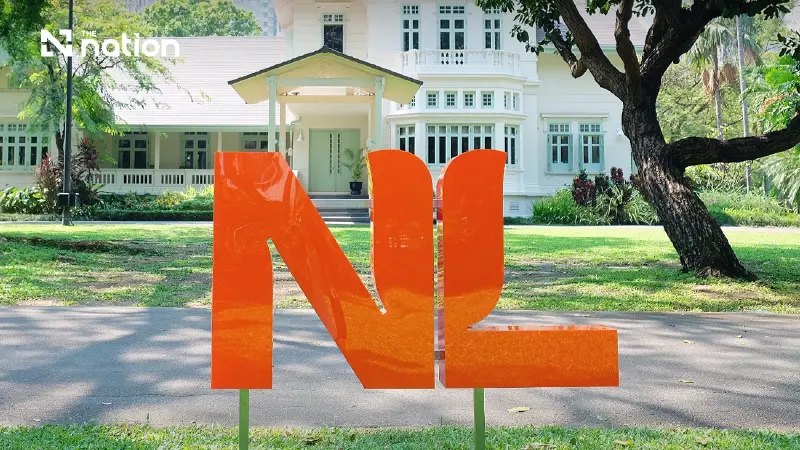


The Piyasombatkul family’s potential acquisition of nearly 20 rai of prime Wireless Road freehold land signals a major shift into commercial property development
- The Piyasombatkul family, founders of the Metro Ply Group, is pivoting from their core timber and plywood business into large-scale commercial property development.
- This strategic shift is highlighted by their potential acquisition of a prime, multi-billion baht freehold plot of land on Bangkok's Wireless Road, the site of the former Netherlands Embassy.
- To scale their operations, the family has invested heavily in the listed developer Nirvana Development PCL (NVD), blending their capital with an established development platform.
- The family has been methodically using cash flow from their industrial business to build a property portfolio through various entities, focusing on high-yielding assets like office spaces and hotels.
The Piyasombatkul family’s potential acquisition of nearly 20 rai of prime Wireless Road freehold land signals a major shift into commercial property development.
The Piyasombatkul family has emerged as a central figure in the potential acquisition of the former Netherlands Embassy plot on Witthayu (Wireless) Road.
Spanning nearly 20 rai (around 7.91 acres), the land carries an estimated market valuation stretching into tens of billions of baht, marking one of the most high-profile real estate opportunities in central Bangkok.
The family, which established its fortune in the processed timber and plywood sector through the Metro Ply Group, has been steadily building a substantial property portfolio. Its strategic investment in listed developer Nirvana Development PCL (NVD) underlines a clear ambition to evolve into a full-scale property developer.
According to reporting by Krungthep Turakij journalist Budsakorn Poosae, Witthayu Road remains Bangkok’s most fiercely contested real estate zone.
The potential transfer of the embassy compound—positioned between Witthayu Road and Soi Tonson—represents far more than a routine land transaction.
Instead, it signals a major reordering of the capital’s high-end commercial property sector. The plot’s primary asset is its rare freehold status within Bangkok’s inner Central Business District (CBD).
The site also features mature green space and historically significant structures, adding distinct heritage value to the acreage. Market analysts estimate current land values along this corridor at 2.8 million to 3.5 million baht per square wah (around 700,000 to 875,000 baht per square metre).
At nearly 20 rai, the total land value easily touches tens of billions of baht, attracting keen interest from both domestic institutional investors and foreign consortiums.
The critical industry question is no longer simply who secures the site, but which developer possesses the financial engineering and operational capacity to execute a mega-project on this scale.
High-Density Zoning Opens Path for Mixed-Use Landmark
Surachet Kongcheep, head of Research and Advisory at Cushman & Wakefield Thailand, noted that a plot's true market potential is dictated by its planning parameters rather than location alone.
The site is designated as a Commercial (Red) Zone with a Floor Area Ratio (FAR) of 10:1. Under local building regulations, this allows a developer to construct a gross floor area up to ten times the total plot size, subject to Open Space Ratio (OSR) rules and building controls.
Given that Witthayu Road measures more than 16 metres in width, the site offers maximum flexibility for Grade-A office towers, luxury hotels, super-prime residential condominiums, or a large-scale mixed-use development.
Industry observers view the land not merely as a conventional land bank but as a flagship site capable of housing a landmark scheme in the capital's core.
While speculative development values for such a project could reach 100 billion baht, experts emphasise that this reflects theoretical capacity rather than confirmed transaction pricing.
Final realisable value will depend heavily on city planning permissions, design execution, financing costs, and broader market conditions.

From Industrial Timber to Prime Urban Assets
The Piyasombatkul name has built its property holdings methodically. From its core operations in timber manufacturing under Metro Ply Group, the family expanded into commercial office spaces, hospitality, and serviced apartments across key Bangkok districts via entities including Piyasombat Property, Piyasombat Land, and Piyasombat Asset.
This expansion mirrors a calculated strategic pivot from industrial manufacturing toward high-yielding land and property assets. A major milestone in this transition was the family's equity investment in Nirvana Development PCL (NVD).
The group acquired 207.09 million common shares (a 15% stake) from the Somwattana group at 2.52 baht per share via the Stock Exchange of Thailand.
Following the transaction, Chatchai Piyasombatkul held a 25% personal stake and announced plans for a mandatory tender offer under regulatory rules, while the Somwattana group retained 51.26%.
Beyond equity ownership, the acquisition blends Piyasombatkul’s capital and asset-management experience with an established residential development platform.
Chatchai has framed the NVD investment as an essential component of an "Integrated Living Solution" strategy—a model designed to combine residential, workplace, and leisure environments. The approach aligns directly with post-pandemic occupier trends, where the boundaries between home and office continue to blur.
Low Profile, High Yield
Chatchai Piyasombatkul’s corporate background offers clear insight into the family’s disciplined investment approach. A chemical engineering graduate from Columbia University, he has completed the National Defence College (Class 49) programme and the Thai Institute of Directors’ Director Accreditation Program.
He maintains board seats across dozens of companies spanning timber, chemicals, and commercial real estate. Corporate disclosures show property assets spread across targeted corporate vehicles, including Piyasombat Mansion, Piyasombat Thonglor, Piyasombat Silom, Piyasombat Residence, and Piyasombat Tonson.
This corporate setup confirms that property is no longer a secondary investment for the group but a primary operational pillar.
The Value-Creation Test The group's trajectory reveals a deliberate strategy: leverage industrial manufacturing cash flows to acquire prime real estate, expand into recurring-income assets such as hotels and serviced apartments, and partner with listed developers to scale operations.
For the Witthayu Road site, acquiring the asset is merely the initial step. The true test for the Piyasombatkul Group will lie in its ability to convert prime urban acreage into sustainable cash flow and long-term asset appreciation.
As central Bangkok freehold land becomes increasingly scarce, successful execution on Witthayu Road could establish the former plywood manufacturers as central players in Thailand’s prime property market.
