
Cabinet approves Dutch embassy land purchase in Bangkok
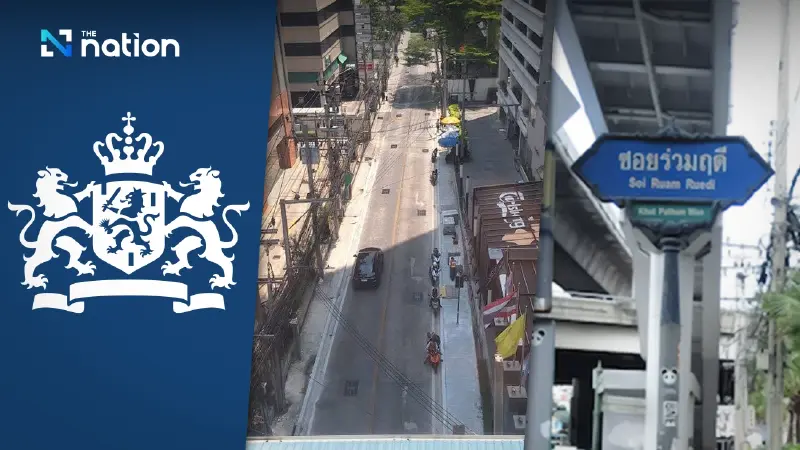


Thailand’s Cabinet approves the Netherlands’ purchase of land on Soi Ruam Rudi for a new ambassador’s residence
Thailand’s Cabinet has approved a draft exchange of letters between the Thai and Dutch governments allowing the Netherlands to purchase land and buildings on Soi Ruam Rudi in Bangkok for use as the new residence of the Dutch ambassador to Thailand.
Deputy government spokeswoman Lalida Periswiwatana said after the Cabinet meeting at Government House at 2pm on May 12 that ministers had agreed in principle to the proposed exchange of letters between the government of the Kingdom of Thailand and the government of the Kingdom of the Netherlands.

The request concerns the purchase of land and buildings to serve as the new residence of the ambassador of the Kingdom of the Netherlands to Thailand.
Lalida said the Embassy of the Netherlands had informed Thai authorities of its intention to buy two plots of land, including buildings, covering a combined area of 3 ngan and 75.2 square wah (about 0.15 hectares) on Soi Ruam Rudi in Lumphini subdistrict, Pathum Wan district, Bangkok.
The property would be used as the new ambassador’s residence to better support current diplomatic duties.
She said the Dutch government already owns more than 15 rai of land in Thailand. As a result, any additional land purchase must be submitted to the Cabinet for case-by-case approval under criteria previously set by the Cabinet.
The draft exchange of letters sets out the right of each side to acquire ownership of land, buildings and condominium units for use as residences or offices of embassies and/or consulates. It also covers exemptions from relevant taxes, duties, fees and service charges on the basis of reciprocity.
Relevant agencies, including the Treasury Department, the Department of Public Works and Town & Country Planning, the Department of Lands, the Department of Provincial Administration, the Bangkok Metropolitan Administration and the Royal Thai Police, reviewed the request and raised no objections.
They considered the location suitable for use as an ambassador’s residence, with appropriate security measures in place, and found no major obstacles concerning land ownership or encumbrances.
Lalida said the approval would allow the Netherlands embassy to adjust its property use in line with its diplomatic mission. Thailand, meanwhile, would benefit under the principle of reciprocity if it wished to acquire additional property in the Netherlands in the future.
“This is a diplomatic process based on law, suitability and the mutual interests of both countries. It reflects Thai–Dutch relations moving forward steadily on the basis of trust and reciprocity,” Lalida said.
Sale of Wireless Road compound looms in background

The approval comes as the Netherlands prepares to reshape its diplomatic presence in Bangkok, with plans to sell its long-standing embassy compound on Wireless Road and relocate embassy operations to Dusit Central Park.
The current Wireless Road site, covering more than 20 rai, is regarded as one of Bangkok’s most valuable embassy plots and has drawn attention from both property analysts and conservation groups.
The newly approved Soi Ruam Rudi purchase would therefore form part of a broader shift in Dutch diplomatic property use in Thailand, while also preserving reciprocal rights for Thailand should it seek to acquire additional property in the Netherlands in the future.
