
Easier travel lifts Hua Hin property prospects as beachfront land hits 160m baht a rai
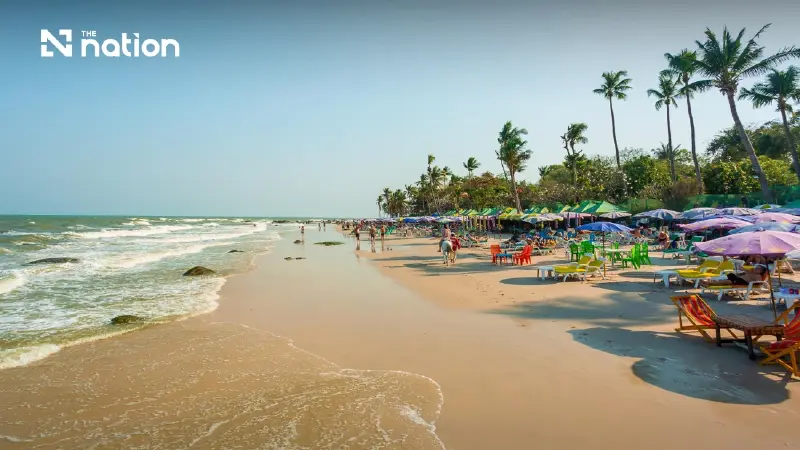


Sansiri sees easier travel supporting Hua Hin’s housing market recovery, but rising land costs and tighter lending could limit gains.
- Beachfront land prices in Hua Hin have reached 160 million baht per rai, with an average annual growth of 10%, driven by the scarcity of large, available plots.
- Improved travel from Bangkok and infrastructure development, including planned airport upgrades, are restoring confidence and supporting the recovery of Hua Hin's property market.
- Despite high land costs, there is strong demand in the premium property segment, with some luxury pool villas and sea-view units selling out during presales.
- The city's evolution from a holiday destination to a place for full-time residents, due to better amenities like schools and hospitals, is also boosting property prospects.
Uthai Uthaisangsuk, president of Sansiri Public Company Limited, sees improving travel from Bangkok supporting a recovery in Hua Hin’s property market, where he puts beachfront land prices at 160 million baht per rai. Uthai’s assessment follows a prolonged slowdown after the Covid-19 pandemic. Better transport connections and infrastructure development are beginning to restore confidence, although the recovery remains uneven.
“This opportunity does not mean the market will regain momentum in every price bracket at the same time,” Uthai said, highlighting differences between buyer groups, rising land costs and lending constraints.
Beachfront land scarcity raises Hua Hin development costs
Large beachfront plots of five to nine rai are increasingly difficult to find in Hua Hin, according to Uthai. Many remain in the hands of families that have owned them for generations and face no pressure to sell.
“Beachfront land in Hua Hin now costs 160 million baht per rai, or about 400,000 baht per square wah, with average annual growth of 10%,” Uthai said. One rai is equivalent to 1,600 square metres.
Hua Hin’s available homes are concentrated in existing developments, particularly along the beachfront. Uthai noted that high-end projects such as InterContinental Residences Hua Hin had sold out several years ago.
Limited land availability means developers face both higher acquisition costs and fewer suitable sites. Bangkok Biznews’s analysis suggested that renewed demand could support high-end housing prices while new supply remains restricted.
Scarcity alone would not guarantee successful sales in Hua Hin, however. Pricing, location, design quality and the ability to meet buyers’ needs would remain decisive.

Sansiri reports sales across three Hua Hin price segments
Sansiri is offering homes from the entry-level market through to luxury developments in Hua Hin, reducing its dependence on any single buyer group while the wider market recovers.
Hub Hua Hin, aimed at buyers in the 1-million-baht price range, reached 60% sales within a month of opening for sale, Bangkok Biznews reported. Cabanas Hua Hin, with prices of 2–3 million baht, was more than 80% sold.
At The Standard Residences Hua Hin, average selling prices stood at 270,000 baht per square metre. Thai buyers accounted for 90% of customers, including business owners seeking holiday homes and affluent buyers from Phetchaburi and Prachuap Khiri Khan. Foreigners made up the remaining 10%.
Larger homes at The Standard Residences Hua Hin attracted particularly strong interest. Pool villas priced above 100 million baht each and three-bedroom sea-view units sold out during presales, indicating that some buyers remained willing to pay for distinctive properties suited to premium holidays.
The Standard Residences Hua Hin was 40% sold, with a target of 700 million baht in ownership transfers in 2026. Converting bookings into completed transfers remains a challenge amid stricter lending and longer purchasing decisions, even though affluent customers generally have greater buying capacity than the wider market.

Hua Hin expands beyond the holiday-home market
Hua Hin is attracting more full-time residents as shopping centres, restaurants, cafés, international schools and major hospitals broaden its appeal beyond short breaks. Potential residents range from families leaving larger cities to older people and business owners seeking a different quality of life from Bangkok.
Hua Hin’s traditional association with aristocratic families, civil servants and long-established households with homes near Klai Kangwon Palace has also broadened. Development now extends beyond the old centre, across the railway and towards Khao Tao, with connections to Cha-am, giving middle-income buyers a wider choice of condominiums and other homes.
Seasonal tourism provides another source of demand in Hua Hin. Foreign visitors, particularly Scandinavians, stay for one to three months during winter, while Thai holidaymakers become more prominent in summer.
Bangkok Biznews put Hua Hin’s annual tourist numbers at 17 million, describing an established potential market for accommodation. Turning tourism demand into sustained residential growth would nevertheless require public services and urban infrastructure capable of supporting year-round living.
Hua Hin also has a different appeal from competing coastal destinations. Bangkok Biznews contrasted its quieter, family-oriented seaside setting with Pattaya, which benefits from a journey of more than an hour from Bangkok and investment in the Eastern Economic Corridor.
Pattaya’s stronger nightlife offering is not central to Hua Hin’s appeal. Hua Hin can therefore compete on its atmosphere and suitability for family breaks as well as transport access, while maintaining its identity and improving project quality for buyers with different budgets.

Phuket has greater international recognition and higher beachfront property prices, with some land plots exceeding 200 million baht per rai, Bangkok Biznews reported. Legal and planning restrictions also differ by location, limiting direct comparisons.
Hua Hin retains room to grow among Thai holiday-home buyers and foreign customers looking for coastal property at prices below those in some better-known destinations. The opportunity depends on matching project quality to actual purchasing power rather than replicating Phuket or Pattaya.
Transport improvements underpin Hua Hin recovery hopes
Uthai expects easier journeys and more developed infrastructure to bring tourists and property buyers back to Hua Hin. A lasting recovery, however, would also depend on urban development, amenities and the quality of everyday living.
Roadworks on routes linking Bangkok with southern Thailand had lengthened journeys to Hua Hin, encouraging some visitors to choose more accessible destinations and prompting prospective second-home buyers to delay decisions.
Hua Hin Airport’s planned development could widen access to overseas customers by accommodating international flights, charter services and private aircraft, Uthai said. The benefits would depend on the plans being delivered.
Wealthy second-home buyers in Hua Hin are placing greater emphasis on protection from flooding, utilities and project management. Those priorities must still be weighed against natural-hazard exposure and the conditions at individual locations.
Hua Hin’s recovery remains exposed to a slowing economy, household debt, weaker purchasing power and tighter mortgage approvals. Political developments, economic stimulus policies and natural disasters could also affect consumer confidence.
Source: Bangkokbiznews
