
Bangkok city plan faces 5,000 requests for changes after 90-day review
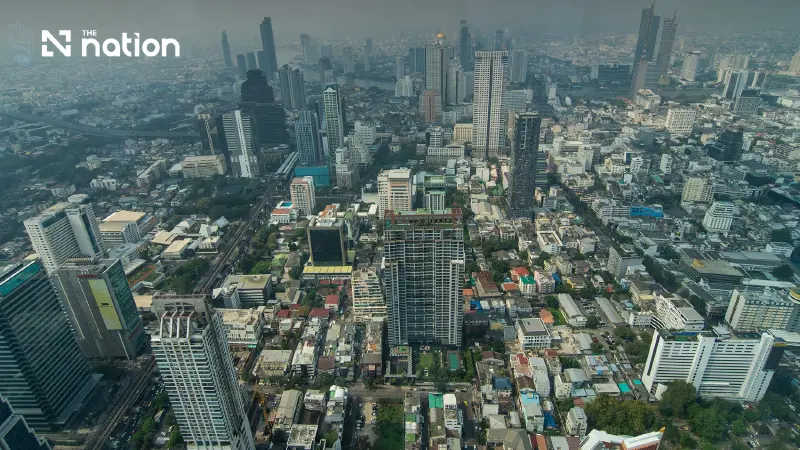


After a 90-day review of Bangkok's revised city plan, about 5,000 petitions seek stronger flood protection, road changes and tighter controls on data centres.
Bangkok's revised comprehensive city plan has attracted approximately 5,000 petitions from residents and stakeholders, with calls to preserve floodways, reinstate cancelled water retention projects, review planned roads and introduce stricter controls on data centres.
The submissions followed the 90-day public review of the fourth revision of the Bangkok Comprehensive Plan, which ran from August 10 to November 9, 2026.
According to a report by Thansettakij on Tuesday (November 10), the requests fall into four main categories, reflecting concerns about flood prevention, land development and the impact of infrastructure projects on local communities.
Residents and affected landowners were able to examine the draft and submit requests to amend, change or remove planning provisions through the PLAN4BANGKOK website, the Bangkok Metropolitan Administration's (BMA) Department of City Planning and Urban Development, City Hall, all 50 district offices, the Department of Public Works and Town & Country Planning, and land offices across Bangkok.

Residents call for eastern and western floodways to be preserved
A major concern involves proposed changes to floodways and water retention areas in eastern and western Bangkok.
Petitioners want the revised plan to retain the flood protection provisions of the existing comprehensive plan, arguing that these areas are essential to reducing the city's long-term flood risks.
They have also proposed tighter restrictions on residential development in designated green zones classified as rural and agricultural land.
Under the revised plan, residential development in green-zone category ก.2 would be permitted on plots measuring 50 square wah (200 square metres) or more.
The petitioners want the minimum plot size increased to 100 square wah (400 square metres).
They are also calling for stricter building design requirements in flood-prone areas, including elevated ground floors to reduce potential flood damage.

Petitions seek reinstatement of two water retention projects
Another significant proposal concerns the cancelled Khu Bon and Bang Chan water retention ponds, which were among six planned floodwater storage projects in eastern Bangkok.
Petitioners want both projects restored to the city's flood management plans.
The BMA previously cancelled the projects after concluding that their costs outweighed their expected benefits.
The estimated combined construction budget was approximately THB11 billion, while their total water storage capacity was projected at only 500,000-700,000 cubic metres.
Despite the cost concerns, supporters argue that the ponds could contribute to long-term flood prevention and should be reconsidered.
The proposal will be examined through the relevant town planning review process before any decision is made.
Planned roads remain a concern for affected communities
Residents have also requested the removal of several proposed roads that could affect established communities and private properties.
One disputed project involves Route ก.11 in Bangkok Noi district.
The Department of Public Works and Town & Country Planning considers the route part of an earlier road network proposal designed to accommodate a crossing of the Chao Phraya River and connections involving Thung Khru, Rat Burana and Bang Khun Thian districts, as well as Ratchaphruek Road.
Another proposed route, designated ช.2, has already been cancelled because of its potential impact on residents.
The latest draft contains 96 planned road projects, and further wholesale cancellations are considered unlikely.
Instead, adjustments may involve narrowing road reservations or shortening proposed routes to minimise disruption.
Opposition to road construction was more pronounced during an earlier 15-day public consultation period, when approximately 15,000 people reportedly submitted objections.
Data centres face proposed 20MW development threshold
The fourth major issue involves tighter land-use restrictions for data centres, particularly large facilities with substantial electricity requirements.
Residents, landowners and other stakeholders have requested clearer controls over where these facilities can operate.
Under the preliminary approach being considered, data centres with electricity demand of no more than 20 megawatts (MW) could be permitted within urban areas.
Facilities requiring more than 20MW would be classified as large developments and restricted to designated purple industrial zones.
Such projects would also have to be located within industrial estates.
The proposed restrictions are expected to be considered for inclusion in the new Bangkok Comprehensive Plan.
However, they remain subject to the planning review process and have not yet been adopted as final requirements.
Consumer groups and politicians raise objections
Several organisations and political figures have submitted proposals concerning the revised plan.
The Thailand Consumers Council has continued to question whether the public consultation process provided sufficient opportunities for residents to understand and comment on the proposed changes.
The Land Watch Foundation and former minister Khunying Sudarat Keyuraphan have called for the retention of existing floodway protections and opposed proposals to reduce designated floodwater management areas.
Atavit Suwanpakdee, a party-list MP and deputy leader of the United Thai Nation Party, has submitted a request to reinstate the Khu Bon and Bang Chan water retention projects.
Their proposals will be considered alongside other submissions received during the public review period.
Revised city plan enters next approval stage
The BMA will now compile the petitions and forward them for consideration by the relevant planning authorities.
The first stage involves the Bangkok Comprehensive Plan Advisory Committee, chaired by the Bangkok governor.
The submissions will then proceed through the provincial town planning review process, chaired by the permanent secretary of the Interior Ministry, before further consideration by the Department of Public Works and Town & Country Planning under its director-general.
The review is intended to assess public objections and determine whether amendments are required before the revised plan can advance.
The fourth revision of the Bangkok Comprehensive Plan has now reached stage 11 of an 18-stage approval process, involving the collection and consideration of petitions.
If the remaining procedures proceed without major changes or delays, the new comprehensive plan is expected to take effect towards the end of 2027.
Source: Thansettakij
