
iPhone 17 tops global smartphone sales as market narrows
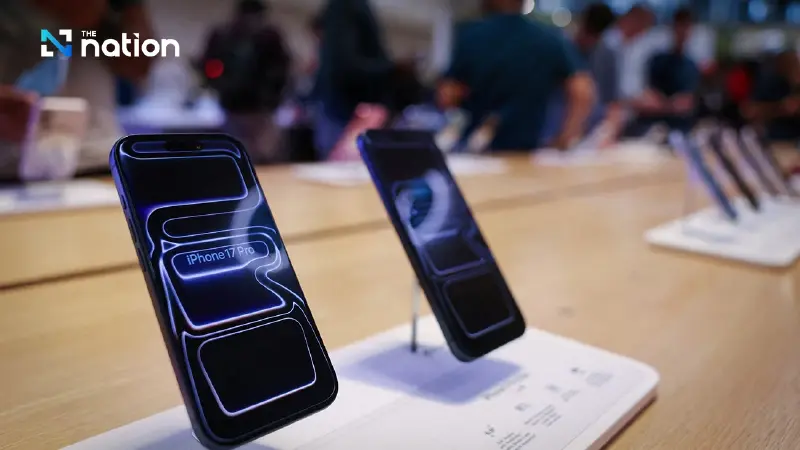


Counterpoint says the top 10 smartphones took a record 25% of global sales in Q1 2026, led by Apple’s iPhone 17.
Apple’s iPhone 17 was the world’s best-selling smartphone in the first quarter of 2026, as global demand became increasingly concentrated around a small group of high-volume models, according to Counterpoint Research’s latest Global Handset Model Sales Tracker.
The top 10 models accounted for 25% of global unit sales in the quarter, the highest concentration ever recorded for a first quarter, underscoring the growing dominance of major brands in a market facing rising component costs and weaker demand in some mass-market segments.
Apple dominates top three
The iPhone 17 led the global ranking with a 6% share of unit sales, followed by the iPhone 17 Pro Max and iPhone 17 Pro in second and third place. The previous-generation iPhone 16 also remained in the top 10, ranking sixth.

Counterpoint senior analyst Harshit Rastogi attributed the iPhone 17’s strong performance to upgrades that brought the standard model closer to the Pro variants, including 256GB base storage, improved cameras and a 120Hz display.
Samsung wins Android volume with Galaxy A series
Samsung secured five places in the top 10, all from its Galaxy A series, highlighting the strength of its mid-range and entry-level portfolio.
The Galaxy A07 4G ranked fourth overall and was the best-selling Android smartphone of the quarter. It was followed by the Galaxy A17 5G, Galaxy A56, Galaxy A36 and Galaxy A17 4G.
However, Samsung’s flagship Galaxy S26 Ultra missed the top 10, despite stronger early sales than the Galaxy S25 Ultra, with reports noting interest in its new privacy display feature.
Xiaomi takes only non-Apple, non-Samsung spot
Xiaomi’s Redmi A5 was the only model outside Apple and Samsung to make the global top 10, ranking tenth.
Its inclusion shows that ultra-affordable models still have a role in global volume sales, particularly in price-sensitive markets, even as rising costs place pressure on low-end Android manufacturers.
Memory crunch reshapes the market
The report points to a broader shift in the smartphone market, where rising component costs are making it harder for brands to compete in entry-level segments.
Counterpoint previously warned that global smartphone shipments were under pressure from shortages of DRAM and NAND memory, with the squeeze pushing up costs and hitting lower-end devices particularly hard.
That pressure may push consumers towards more established mid-range models or premium devices, benefiting companies with strong brand loyalty, wider distribution and greater pricing power.

Top 10 best-selling smartphones in Q1 2026
- Apple iPhone 17
- Apple iPhone 17 Pro Max
- Apple iPhone 17 Pro
- Samsung Galaxy A07 4G
- Samsung Galaxy A17 5G
- Apple iPhone 16
- Samsung Galaxy A56
- Samsung Galaxy A36
- Samsung Galaxy A17 4G
- Xiaomi Redmi A5
