
Thailand, UAE push to conclude CEPA talks, expand trade ties
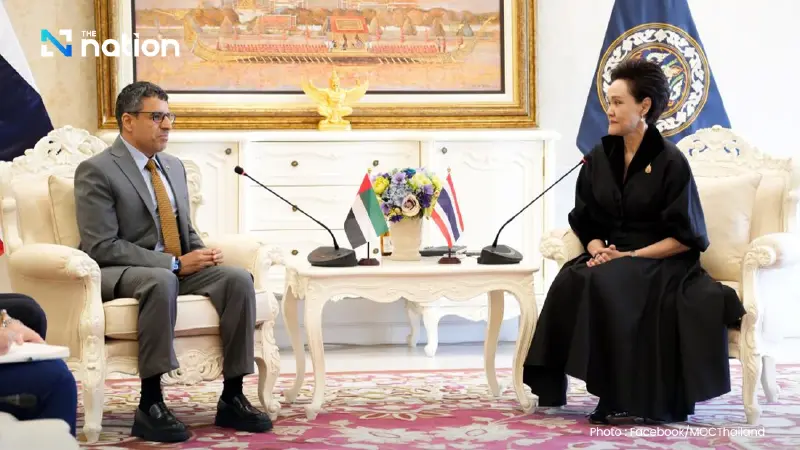


Thailand and the UAE aim to conclude CEPA talks soon, with food security cooperation and wider trade and investment opportunities on the agenda.
Food security partnership and halal hub
Commerce Minister Suphajee Suthumpun said she met H.E. Obaid Saeed Obaid Bintaresh Aldhaheri, the UAE Ambassador to Thailand, on February 25, 2026, to discuss expanding Thailand–UAE trade and investment cooperation and to reaffirm the intention to conclude free trade negotiations between the two sides.
She said global geopolitical tensions, climate change and ongoing outbreaks have added uncertainty, while the UAE relies heavily on food imports—prompting Thailand to position itself as a long-term strategic partner on food security, supported by internationally certified agricultural and food products and Thailand’s ambition to serve as Asia’s halal food hub.


Food Security Model goes beyond trade
Suphajee proposed a Food Security Model that would go beyond expanding food trade, potentially including stockpiling mechanisms, emergency and urgent procurement arrangements, and joint public–private investment by both sides.
CEPA talks over 80% complete, wider cooperation planned
She said both sides see significant benefits from the Thailand–UAE Comprehensive Economic Partnership Agreement (CEPA), with negotiations more than 80% complete, and agreed to work together to reach an early conclusion.

Beyond food cooperation, she said there is scope to expand collaboration in areas such as health and wellness tourism, services, and MSMEs, and she invited UAE businesses to join major Thai trade fairs including Bangkok Gems & Jewelry, THAIFEX–Anuga Asia, and THAIFEX–HOREC ASIA.
Trade snapshot and key products
In 2025, the UAE was Thailand’s eighth-largest trading partner globally and number one in the GCC and the Middle East, with two-way trade worth US$21,596.74 million. Thailand exported US$4,499.45 million to the UAE and imported US$17,097.29 million.

Key Thai exports include automobiles and parts, gems and jewellery, wood and wood products, air conditioners and parts, and computers and parts. Key imports include crude oil, diamonds and precious stones, gems, silver bullion and gold, refined petroleum products, other metal ores, scrap metal and related products, and natural gas.
