
Thailand-Bangladesh FTA could lift economic activity by over 40%



Thailand and Bangladesh are moving closer to a future FTA that could boost economic activity by more than 40%, strengthen investment and link South Asia with Southeast Asia.
Thailand and Bangladesh are moving closer to a future free trade agreement that could lift economic activity between the two countries by more than 40%, as both sides seek to strengthen trade, investment and logistics links between South Asia and Southeast Asia.
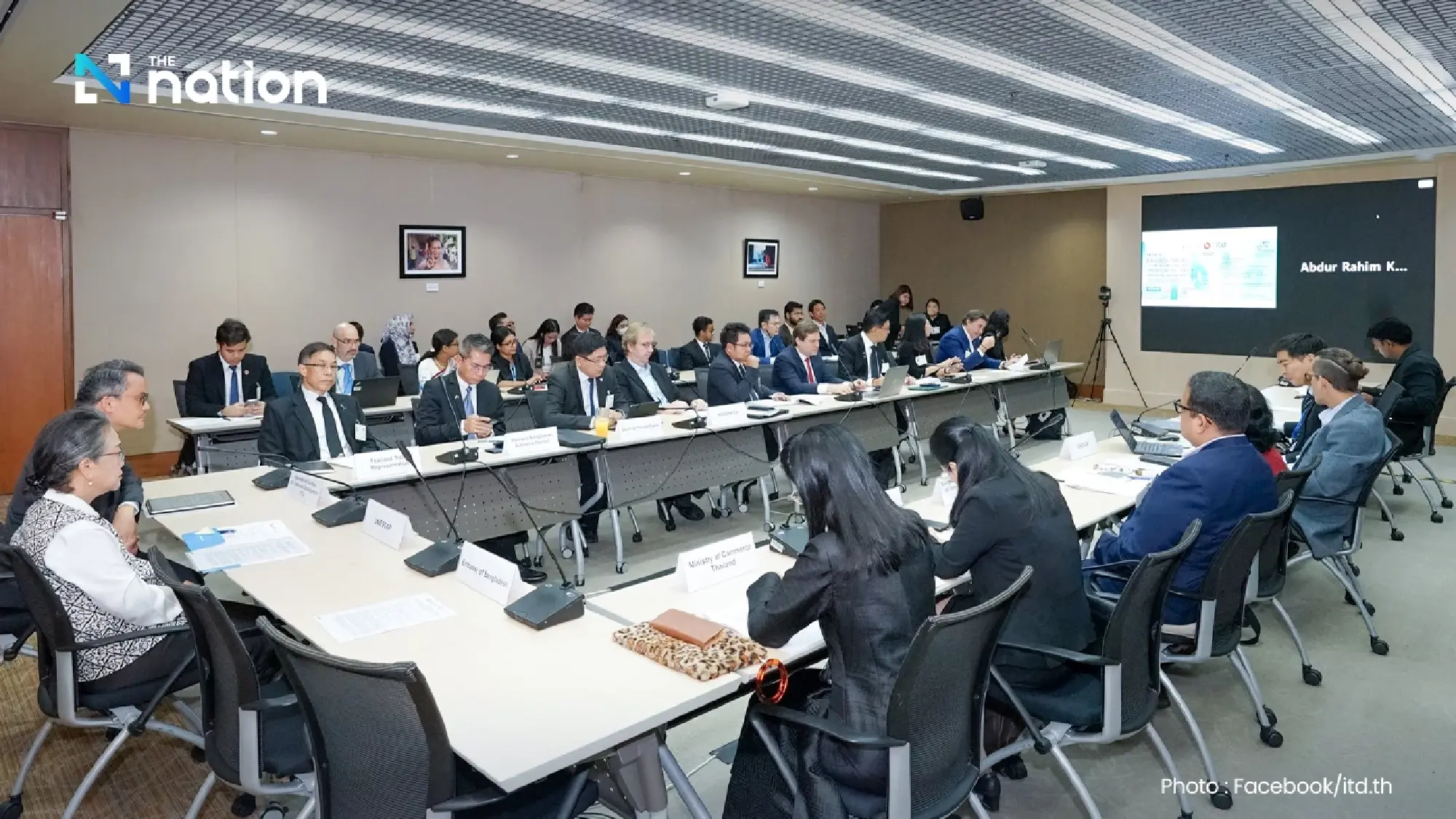
The potential benefits of a Thailand-Bangladesh FTA were discussed at a conference titled “Enhancing Bangladesh–Thailand Economic Engagement: Challenges, Opportunities, and the Way Forward in the Future Free Trade Agreement” at the United Nations Conference Centre.
The event was jointly organised by the International Institute for Trade and Development (Public Organization), or ITD, the United Nations Economic and Social Commission for Asia and the Pacific, or ESCAP, and the Embassy of Bangladesh in Thailand.


FTA seen as new growth engine
Experts from ESCAP and academic institutions in Bangladesh assessed that if both countries fully utilise a future FTA and promote mutual investment, economic activity between Thailand and Bangladesh could increase by more than 40%.
The agreement is expected to become a key mechanism for expanding trade in goods and services, increasing investment, strengthening regional supply chains and improving logistics connectivity between the Bay of Bengal and Southeast Asia.
The FTA push comes as Bangladesh prepares to graduate from least developed country status by 2029, a transition that will affect some trade privileges currently available to the country.

Bangladesh seeks new trade network after LDC graduation
Bangladesh Ambassador to Thailand Faiyaz Murshid Kazi and Abdul Rahim Khan, additional secretary at Bangladesh’s Ministry of Commerce, said Bangladesh was accelerating efforts to expand its network of free trade agreements with trading partners.
They said the move was aimed at preserving the country’s long-term economic competitiveness after it exits least developed country status.
Thailand was seen as an important partner with strong potential for cooperation in trade, investment and modern services, particularly medical tourism, consumer goods and healthcare services.
ESCAP offers technical and policy support
Ms Armida Salsiah Alisjahbana, executive secretary of ESCAP, said the UN agency placed importance on trade and investment facilitation, as well as technical support, to help businesses in both countries make effective use of a future FTA.
She said harmonising trade regulations and standards would be important in helping businesses gain full benefit from the agreement.
ESCAP also reaffirmed its readiness to support technical analysis, policy work and trade and investment facilitation to help both countries unlock the full potential of cooperation in goods, services, investment and regional supply-chain connectivity.
Trade worth around US$1bn in 2025
Umaporn Futrakul, deputy director-general of Thailand’s Department of Trade Negotiations, said trade between Thailand and Bangladesh was worth around US$1 billion in 2025.
Although bilateral trade remains imbalanced, it has continued to show growth potential. Thailand mainly exports industrial raw materials to Bangladesh, while importing textiles and seafood from Bangladesh.
She said Bangladesh’s graduation from LDC status would mean the country no longer enjoys duty-free, quota-free tariff privileges, known as DFQF. This has become a key factor pushing both countries to speed up their FTA feasibility study.
The two countries are currently holding exploratory discussions to prepare a negotiation framework and pave the way for a future FTA signing within 2026.
Ranong-Chittagong link could cut transport costs
Another major focus is the proposed logistics linkage between Thailand’s Ranong Port and Bangladesh’s Chittagong Port, along with Thailand’s Landbridge project.
The connection is seen as a way to reduce transport costs, improve goods distribution and strengthen trade potential in the Bay of Bengal region.
Supporters say better logistics links could help Thailand and Bangladesh become stronger gateways between South Asia and Southeast Asia, while increasing the Bay of Bengal’s role as an emerging global economic hub.
ITD backs wider economic cooperation
Supakit Charoenkul, executive director of ITD, said cooperation between Thailand and Bangladesh should not be limited to trade.
He said it also covered supply-chain connectivity, infrastructure development and the creation of new economic opportunities across South Asia and Southeast Asia.
ITD was ready to continue supporting knowledge exchange and capacity-building in trade and investment, he added.
