Anutin will lead a Thai delegation to Australia and New Zealand as trade rebounds, with dairy-import rules and high-value technology on the agenda.
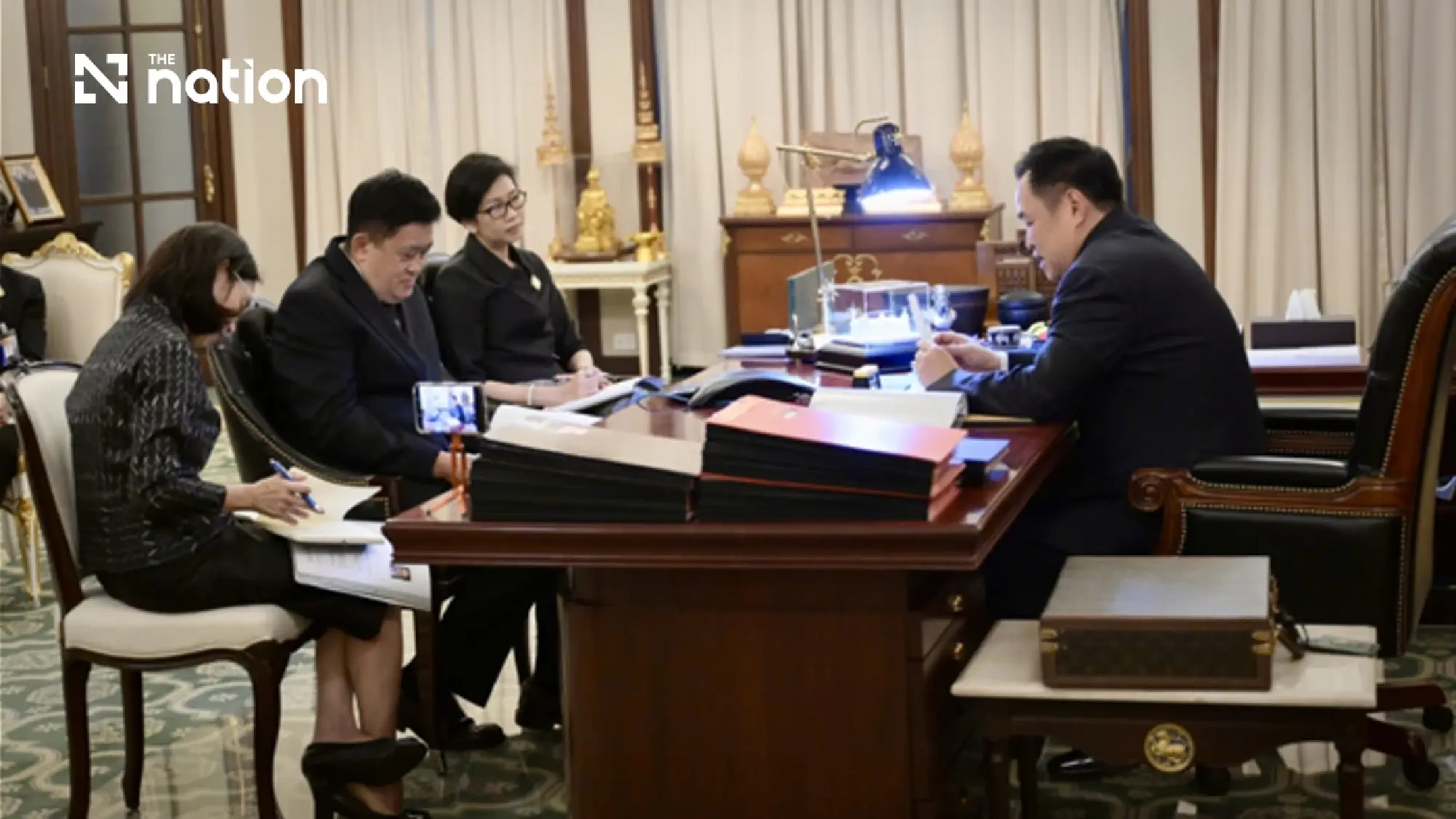
Prime Minister Anutin Charnvirakul will lead a delegation of Thai government and private-sector representatives on official visits to Australia and New Zealand from August 17-22, seeking to expand trade, investment and cooperation in innovation and high-value technology.
Dairy-import rules are also expected to feature in bilateral discussions, particularly New Zealand’s concerns about Thailand’s approval process for skimmed milk powder.
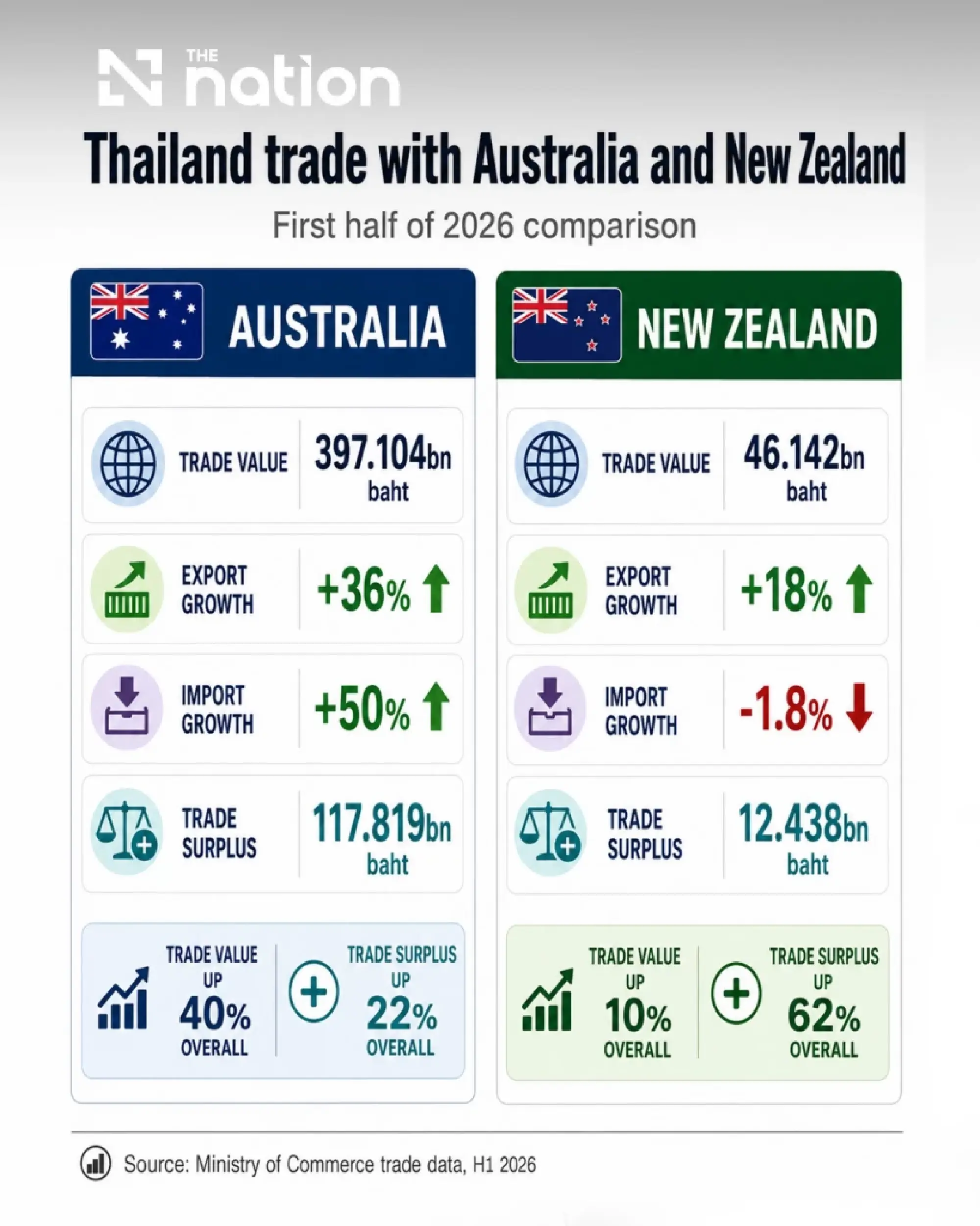
The mission follows strong growth in trade with both markets during the first six months of 2026. Thailand-Australia trade increased by 40%, while commerce with New Zealand rose by 10%.
Thailand’s trade surplus with Australia climbed by 22% during the period, while its surplus with New Zealand jumped by 62%.
The figures were compiled by the Information and Communication Technology Centre of the Office of the Permanent Secretary at the Commerce Ministry in cooperation with the Customs Department. The ministry’s trade-statistics system published data covering the first half of 2026 in July.
Australia trade rebounds by 40%
Thailand-Australia trade was valued at 570.742 billion baht in 2025, down by 9% from the previous year.
Thai exports fell by 9% to 394.813 billion baht, while imports from Australia declined by 10% to 175.929 billion baht. Thailand recorded a trade surplus of 218.883 billion baht, down by 8%.
The position reversed sharply during the first six months of 2026, when bilateral trade rose by 40% to 397.104 billion baht.
Thai exports to Australia increased by 36% to 257.461 billion baht, while imports surged by 50% to 139.642 billion baht. The resulting trade surplus reached 117.819 billion baht, an increase of 22%.
Thailand’s leading exports to Australia during the period were:
Motor vehicles, parts and accessories: 97.898 billion baht, down 1.4%
Gems and jewellery: 65.803 billion baht, up 2,059%
Air conditioners and components: 9.737 billion baht, down 4%
Computers, equipment and components: 7.628 billion baht, up 35%
Plastic pellets: 7.159 billion baht, up 42%
New Zealand trade surplus surges 62%
Thailand-New Zealand trade was worth 82.434 billion baht in 2025, a decline of 6%.
Thai exports fell by 8% to 51.676 billion baht, while imports declined by 2% to 30.758 billion baht. Thailand’s trade surplus narrowed by 14% to 20.918 billion baht.
In the first half of 2026, bilateral trade recovered by 10% to 46.142 billion baht.
Thai exports to New Zealand grew by 18% to 29.290 billion baht, while imports declined by 1.8% to 16.852 billion baht.
Thailand’s trade surplus consequently rose by 62% to 12.438 billion baht.
The principal Thai exports to New Zealand were:
Motor vehicles, parts and accessories: 13.666 billion baht, up 19%
Air conditioners and components: 1.469 billion baht, up 26%
Machinery and components: 1.144 billion baht, down 19%
Plastic pellets: 1.098 billion baht, up 60%
Iron, steel and related products: 843 million baht, up 75%
Dairy imports take centre stage
Milk and dairy products are Thailand’s largest import category from New Zealand.
Thailand imported dairy products worth 9.135 billion baht from New Zealand during the first six months of 2026, down by 8% from the corresponding period.
Full-year imports in 2025 were valued at 16.840 billion baht, an increase of 11%.
Dairy products ranked eighth among Thailand’s imports from Australia. Their value stood at 4.910 billion baht in 2025, down by 0.1%, before declining by 17% to 2.261 billion baht in the first half of 2026.
A source at the Agriculture and Cooperatives Ministry said bilateral talks during the visit were expected to cover obstacles affecting imports of milk and dairy products from both countries.
Discussions with New Zealand will take place within the framework of the Thailand-New Zealand Closer Economic Partnership Agreement, or TNZCEP. Dairy issues with Australia fall under the Thailand-Australia Free Trade Agreement, or TAFTA.
New Zealand is particularly concerned about Thailand’s process for approving skimmed milk powder imports.
Thailand divides its approval process into two periods: January to May and June to December. New Zealand considers the arrangement a restriction on both the quantity and timing of imports.
Thai authorities maintain that the system is intended to support domestic dairy farmers and reduce the impact of imported products on the local industry.
Thailand approved 100% of the volume requested by New Zealand and Thai businesses in 2026. However, the process continues to affect New Zealand suppliers and Thai manufacturers that use New Zealand skimmed milk powder as a raw material in food products made for export.
The affected businesses are seeking a review of the approval system and measures to reduce the disruption.
Canva and research cooperation on agenda
During the Australian leg of the visit, Anutin is scheduled to meet business representatives and executives of Canva Pty Ltd.
He will also visit the Commonwealth Scientific and Industrial Research Organisation, or CSIRO, and witness the signing of a letter of intent between CSIRO and Thailand’s National Science and Technology Development Agency.
Talks with Australia are expected to cover economic cooperation, agriculture, medicine and public health, innovation and dairy imports under TAFTA.
In New Zealand, the prime minister will attend activities bringing together Thai and New Zealand businesses to promote trade and investment.
He will also hold bilateral discussions intended to strengthen the two countries’ strategic partnership.
Dairy trade will remain a central issue, with both sides expected to explore whether import procedures can be improved while Thailand continues to manage the effects on its domestic dairy industry.